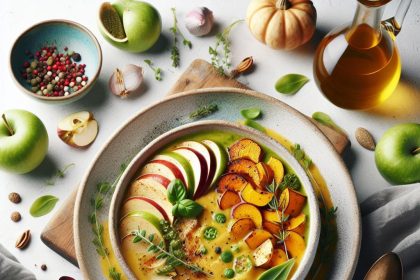

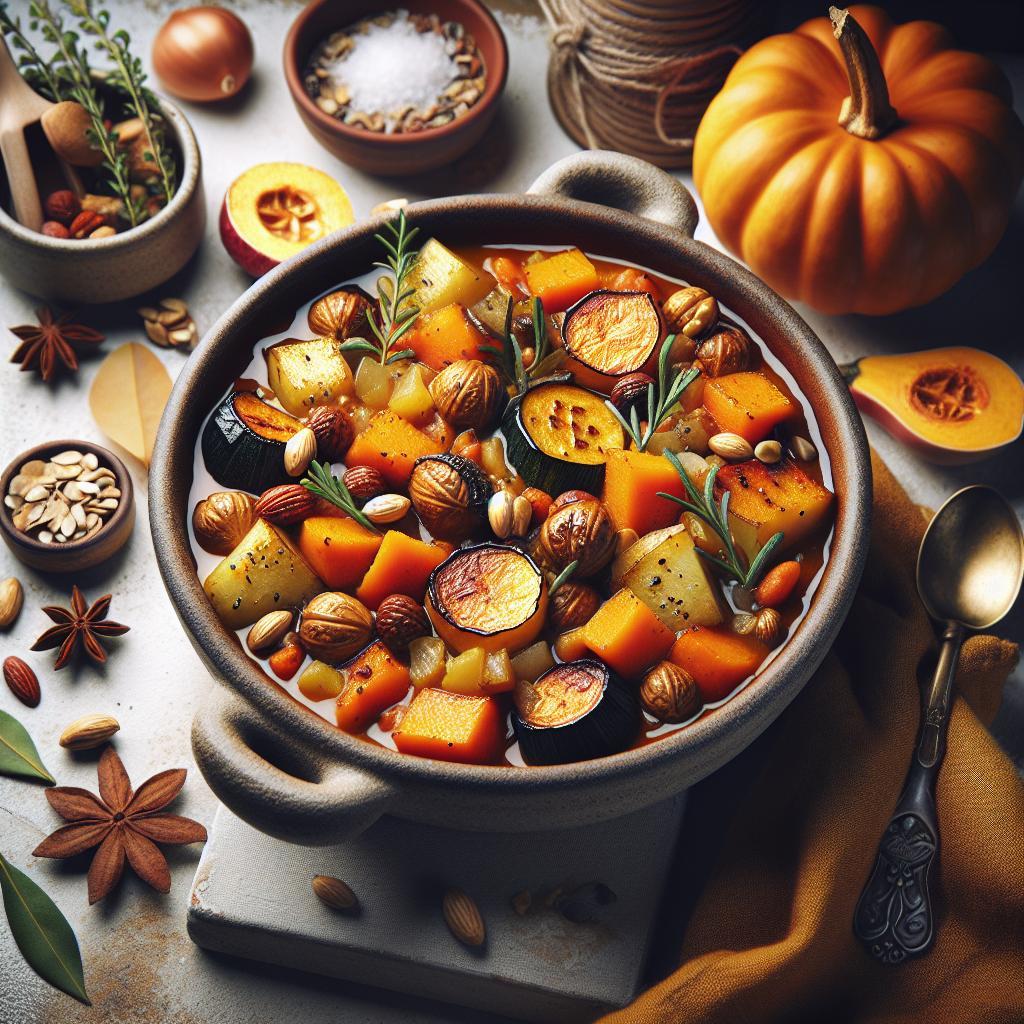

Hearty Roasted Squash Stew captures fall flavors with caramelized squash, warming spices, and a creamy finish. This recipe balances texture and depth to deliver a satisfying, plant-forward bowl you can serve for family dinners or meal prep.
- Choosing the Perfect Squash Varieties for Maximum Taste and Texture
- Step by Step Guide to Roasting and Simmering for Rich Depth
- Ingredients & Instructions
- Chef’s Notes & Tips for Success
- Serving Suggestions
- Nutritional Snapshot
- FAQ
- What makes a roasted squash stew ideal for autumn?
- Which squash varieties should I mix for the best texture?
- Can I make the stew ahead and freeze it?
- How do I make the stew more protein-dense?
- Is this recipe allergy-friendly?
- Concluding Remarks
- Roast first: Caramelize squash to concentrate sweetness and add browning depth.
- Mix varieties: Combine firm and tender squashes for texture contrast.
- Finish with fat: Add coconut milk or olive oil to round flavors and improve mouthfeel.
Choosing the Perfect Squash Varieties for Maximum Taste and Texture
Selecting the right squash varieties determines the stew’s flavor and mouthfeel. Use a combination of sweet, nutty, and buttery types to create layers of taste and maintain pleasing bite.
For guidance on squash types and cultivation, see squash varieties. Butternut and kabocha are especially reliable: butternut squash lends sweetness and creaminess, while kabocha delivers a dense, chestnut-like texture that roasts well.
Step by Step Guide to Roasting and Simmering for Rich Depth
Roasting builds brown, caramelized notes that boost the stew’s savory profile. Cut squash into uniform 1-inch cubes so pieces roast evenly and develop a consistent crust.
Use a high oven temperature (425°F / 220°C) and a lined baking sheet for consistent heat and easy cleanup. For background on the culinary science, consult roasting techniques to maximize Maillard reactions without overcooking.
Prep and Cook Time
Prep: 20 minutes. Roasting: 25–30 minutes. Simmering: 30–35 minutes.
Total: Approximately 1 hour 25 minutes. Plan time for cooling if you roast ahead; roasted squash stores well for a day refrigerated and speeds final assembly.
Yield & Difficulty
Yield: Serves 6 bowls. Difficulty: Easy to medium—clear steps and forgiving timing make this accessible to most home cooks.
Ingredients & Instructions
Organize ingredients before you cook: prep your squash, soak aromatics, and measure spices. Mise en place speeds the process and reduces the risk of missing steps.
Below you’ll find a concise ingredient list and stepwise instructions for roasting, sautéing, simmering, and finishing the stew. Follow the sequence to layer flavors properly.
Ingredients
- 3 cups butternut squash, peeled and diced
- 2 cups acorn squash, peeled and diced
- 2 cups kabocha squash, peeled and diced
- 2 medium sweet potatoes, peeled and cubed
- 1 large yellow onion, finely chopped
- 4 cloves garlic, minced
- 2 large carrots, diced
- 3 tablespoons extra virgin olive oil
- 6 cups vegetable broth, low sodium
- 1 cup full-fat coconut milk
- 1 teaspoon ground cumin
- 1 teaspoon smoked paprika
- 1/2 teaspoon ground cinnamon
- Salt and freshly ground black pepper, to taste
- Fresh sage and thyme sprigs for garnish
- Optional: 1/4 teaspoon red pepper flakes for a subtle kick
Instructions
- Prepare and roast the squash: Preheat oven to 425°F (220°C). Toss the diced squash with 2 tablespoons olive oil, salt, and pepper. Spread in one layer on a parchment-lined baking sheet and roast for 25–30 minutes, turning once, until pieces show golden edges and tender points.
- Sauté aromatics: Heat 1 tablespoon olive oil in a heavy pot over medium heat. Add onion and carrots with a pinch of salt; cook 6–8 minutes until softened and translucent.
- Add garlic and spices: Stir in minced garlic, cumin, smoked paprika, and cinnamon; cook 1–2 minutes until fragrant. Toasting spices briefly concentrates their oils and lifts the flavor profile.
- Combine and simmer: Add roasted squash, sweet potato cubes, and vegetable broth. Bring to a low boil then reduce heat and simmer uncovered for 30–35 minutes, until sweet potatoes are tender and the stew thickens naturally.
- Finish with coconut milk: Stir in coconut milk and adjust seasoning. Simmer 3–5 more minutes to integrate the cream and round the spices.
- Serve: Ladle into bowls and garnish with fresh sage and thyme. Add toasted seeds or a dollop of yogurt for texture and contrast.
Chef’s Notes & Tips for Success
Small technique tweaks make a big difference. Roast on a hot sheet and avoid overcrowding to ensure even browning rather than steaming.
Adjust final texture by mashing a portion of the cooked squash and sweet potato before adding coconut milk for a thicker stew, or add extra broth if you prefer a looser soup.
- Vegan protein: Stir in cooked lentils or chickpeas during simmering for added protein and bulk.
- Advance prep: Roast squash up to 24 hours ahead; store chilled and reheat in the stew during simmering.
- Spice swaps: Swap smoked paprika for regular paprika plus a pinch of chipotle for heat, or add nutmeg for warm aromatics.
To keep herb flavors bright, reserve a few fresh leaves for garnish and add tender herbs near the end of cooking. Strong winter herbs like rosemary can replace thyme for an earthier tone.
Serving Suggestions
This stew pairs well with rustic bread or a bright salad to cut its richness. Toasted seeds or crispy sage add texture and an herbaceous finish.
For visual contrast and bite, try a scattering of toasted pepitas; see general info on seeds at pumpkin seeds. A spoonful of herbed coconut yogurt also complements the spice profile.
Nutritional Snapshot
The bowl provides a balance of complex carbs, fiber, and healthy fats—about 280 kcal per serving as a snapshot estimate. Protein is modest unless you add legumes or grains.
For detailed diet planning, account for added toppings and side dishes. Use low-sodium broth to control sodium and swap full-fat coconut milk for a lighter option if needed.
| Nutritional Info (per serving) | Calories | Protein | Carbs | Fat |
|---|---|---|---|---|
| Hearty Roasted Squash Stew | 280 kcal | 5 g | 45 g | 8 g |

For more seasonal recipes, explore related entries in our collection of fall soups and stews on the site.
FAQ
Below are common questions with precise, actionable answers to help you execute this stew well at home.
What makes a roasted squash stew ideal for autumn?
Roasting concentrates sugars and creates caramelized notes that echo classic fall flavors. Combined with warming spices and a creamy finish, the stew offers both comfort and seasonal intensity.
Which squash varieties should I mix for the best texture?
Combine a creamy variety like butternut with a firmer type such as kabocha to get both body and bite. Mixing textures creates interest and prevents the stew from becoming one-note.
Can I make the stew ahead and freeze it?
Yes. Cool fully, portion into airtight containers, and freeze up to three months. Thaw in the refrigerator overnight and reheat gently on the stove, stirring to re-emulsify the coconut milk.
How do I make the stew more protein-dense?
Stir in cooked chickpeas, lentils, or a cooked grain like barley near the end of simmering. Toasted tempeh or pan-fried tofu cubes added at service time also increase protein and texture.
Is this recipe allergy-friendly?
The recipe is naturally dairy-free and can be gluten-free when you use certified gluten-free broth and toppings. Replace coconut milk if tree-nut concerns exist and verify product labels for allergens.
Concluding Remarks
This roasted squash stew gives rich autumn flavor without complex technique. It rewards small steps—roasting, toasting spices, and finishing with fat—to produce a nourishing, crowd-pleasing bowl.
Follow the recipe as written the first time, then adapt spice levels, texture, and add-ins to suit your household preferences. This stew scales well and freezes reliably, making it a practical choice for seasonal menus.

See also: roasted squash