
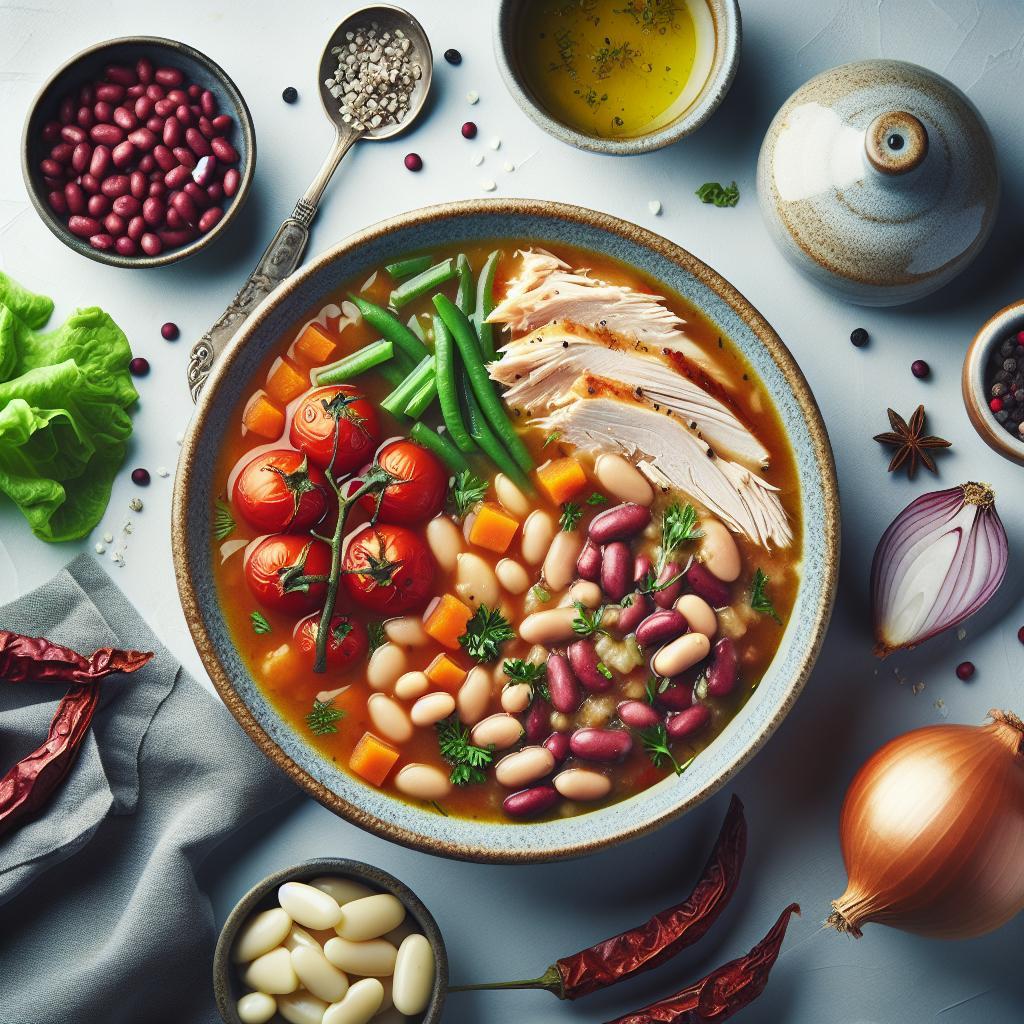

As autumn air sharpens and evenings cool, turkey soup earns its place at the table. This hearty turkey soup pairs tender lean meat with creamy legumes to deliver sustained protein, fiber, and comforting flavor in every spoonful.
- Quick Facts for Turkey Soup
- Ingredients for Turkey Soup
- Instructions for Turkey Soup
- 1. Prepare the beans
- 2. Sauté the aromatics
- 3. Add and brown the turkey
- 4. Build and simmer the broth
- 5. Combine beans and finish
- Tips & Variations for Turkey Soup
- Serving & Nutrition for Turkey Soup
- FAQ
- What makes turkey soup a classic comfort food?
- Why choose turkey over other meats for this soup?
- Which beans work best in turkey soup?
- Can I prepare turkey soup in advance?
- Is this soup suitable for a balanced diet?
- Final Thoughts on Turkey Soup
- Protein-forward: Lean turkey provides high-quality protein for satiety.
- Fiber-rich: White beans add texture and steady energy.
- Make-ahead friendly: Flavors deepen after refrigeration; it freezes well for batch cooking.
Quick Facts for Turkey Soup
Prep and cook timings help you plan efficient batch-cooking and reheating. They guide when to soak beans and when to begin the long simmer to develop depth.
Follow the timeline below for predictable results; adjust simmer times if you swap bean varieties or choose dark turkey meat that requires longer cooking.
Prep and Cook Time
Preparation: 20 minutes | Cooking: 1 hour 15 minutes | Total: 1 hour 35 minutes. These estimates assume pre-soaked dried beans.
If you use canned beans, reduce active simmer time and add them late to avoid excessive softening.
Yield
Serves 6 generous bowls, making turkey soup ideal for family meals or meal prep. Scale ingredients linearly for larger batches or halve for 2–3 servings.
This recipe balances portion size with nutrition, delivering lean protein and complex carbohydrates in each serving.
Difficulty Level
Easy to Medium — suitable for cooks who want layered flavor without advanced technique. Techniques used include soaking, sweating aromatics, searing, and gentle simmering.
A heavy-bottomed pot or Dutch oven promotes even heat and prevents scorching during the simmer that builds a clear, rich broth.
Ingredients for Turkey Soup
Use fresh, high-quality ingredients to maximize flavor with minimal effort. Choose low-sodium broth when possible to control final seasoning.
Olive oil or another neutral oil will give the fat needed to carry aromatics and to brown turkey properly; consider the oil’s smoke point for searing.
- 1½ pounds turkey breast, skinless and boneless, cut into 1-inch cubes
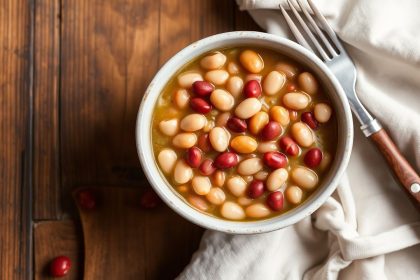
- 1 cup dried white beans (cannellini, navy, or Great Northern), rinsed and soaked overnight
- 1 large yellow onion, finely chopped
- 3 cloves garlic, minced
- 2 medium carrots, peeled and diced
- 2 stalks celery, diced
- 6 cups low-sodium chicken broth
- 2 tablespoons olive oil (or neutral oil)
- 1 teaspoon smoked paprika
- 1 teaspoon dried thyme
- 1 bay leaf
- Salt and freshly ground black pepper, to taste
- ½ cup fresh parsley, chopped
- Juice of ½ lemon (optional, for brightness)
For background on legumes and their nutritional role, consult reliable references such as the legume overview on legume. For notes on turkey as a poultry choice, see the encyclopedia entry for turkey.
Instructions for Turkey Soup
Execute the recipe in stages to control texture and to build a clear, layered broth. Take care during each phase—beans, aromatics, turkey, and simmer—to maintain structure and flavor.
Use a heavy pot for even heat distribution and to protect the stock from scorching during the long simmer that extracts flavor without clouding the liquid.
1. Prepare the beans
After soaking the beans overnight, drain and rinse them thoroughly. Place the beans in a pot, cover with fresh water, and bring to a gentle boil; then reduce heat and simmer until tender, about 45–60 minutes.
Drain cooked beans and set aside. If you use canned no-salt-added beans, rinse well and add them during the final simmer to prevent mushiness.
2. Sauté the aromatics
Heat the oil over medium heat in your heavy pot. Add onion, carrots, and celery; sauté until softened, about 6–8 minutes, stirring to avoid excessive browning.
Add minced garlic and cook 30–60 seconds more until fragrant. Properly softened aromatics form the flavor base that carries through the entire turkey soup.
3. Add and brown the turkey
Toss turkey cubes into the pot and season with salt, pepper, smoked paprika, and dried thyme. Sear gently until the pieces show light browning, about 4–6 minutes.
Avoid overcooking at this stage; you want surface color for flavor while keeping the interior tender for the final simmer.
4. Build and simmer the broth
Pour in the low-sodium broth and add the bay leaf. Bring to a slow boil, then reduce to a gentle simmer and cover; simmer 20–25 minutes to marry flavors without breaking down bean structure.
Skim any surface foam for clarity and maintain a low simmer to avoid over-reducing the liquid or shredding the turkey.
5. Combine beans and finish
Add the cooked beans to the pot and simmer uncovered for an additional 10–15 minutes. Taste and adjust seasoning with salt, pepper, and lemon if desired.
Remove the bay leaf before serving. Stir in chopped parsley just before plating to preserve its color and bright, herbal lift in the turkey soup.
Tips & Variations for Turkey Soup
Small adjustments change texture and flavor without complicating the process. Consider alternative proteins, bean types, or spice accents to tailor the soup to your palate.
For a heartier bowl, add chopped greens like kale or Swiss chard in the last 8–10 minutes of simmering. For a smoother mouthfeel, blend a portion of the soup and stir it back in for body.
Separate from the tip above, consider swapping turkey breast for dark meat if you want more gelatin and richness; increase simmer time slightly to render connective tissue.
Use canned beans to save time but add them late to prevent excessive softening. If you need a gluten-free option, verify that your broth and seasonings contain no hidden gluten.
Serving & Nutrition for Turkey Soup
Serve the turkey soup hot, garnished with parsley and an optional drizzle of extra-virgin olive oil or a small spoon of plain yogurt for creaminess. Fresh lemon wedges allow diners to adjust brightness at the table.
The recipe balances macronutrients: lean protein from turkey, complex carbohydrates and fiber from beans, and minimal fat when you use limited oil and low-sodium broth.
Store leftovers in airtight containers. Refrigerate up to 4 days; freeze up to 3 months for best quality. Reheat gently over low heat to avoid breaking down bean texture and to keep turkey tender.
For clear stock-making and clarification principles, refer to the culinary overview on culinary stock. For olive oil selection and its culinary properties, review the entry on olive oil.
| Nutrient | Per Serving |
|---|---|
| Calories | 320 kcal |
| Protein | 38 g |
| Carbohydrates | 28 g |
| Fat | 6 g |
FAQ
What makes turkey soup a classic comfort food?
Turkey soup offers warmth, texture, and satiety in a single bowl. The combination of rich broth, tender meat, and creamy beans creates a restorative meal that many cultures value.
Its simplicity and scalability also make turkey soup a practical choice for feeding families and for seasonal menus when you want nourishing food with minimal fuss.
Why choose turkey over other meats for this soup?
Turkey supplies lean, complete protein with a subtle flavor that allows herbs and aromatics to shine. It keeps the soup lighter in fat while still delivering satisfying mouthfeel after proper browning and simmering.
Using turkey breast shortens overall fat content; switching to dark meat increases richness and benefits from slightly longer cooking to tenderize connective tissue.
Which beans work best in turkey soup?
Cannellini, navy, or Great Northern beans perform reliably due to their creamy interiors and firm skins after cooking. They absorb broth and retain shape when simmered gently.
If you prefer a firmer bite, soak beans until just plump and test during simmering; harvest variations affect cooking time and water absorption.
Can I prepare turkey soup in advance?
Yes. This turkey soup improves after resting because flavors meld and deepen. Refrigerate for up to 4 days, and reheat on low to preserve texture.
For long-term storage, freeze portions in airtight containers for up to 3 months. Thaw in the refrigerator overnight before reheating slowly on the stovetop.
Is this soup suitable for a balanced diet?
Yes. It provides lean protein, complex carbohydrates, and fiber, and keeps added fat low if you use minimal oil and low-sodium broth. Portion control and side choices determine its place in meal planning.
Adjust salt and finish with lemon to control sodium while maintaining perceived flavor. For tailored guidance on nutrition, consult a registered dietitian.
Final Thoughts on Turkey Soup
Hearty turkey soup rewards simple, careful technique with satisfying comfort and nutrition. A modest set of ingredients transforms into a bowl that supports practical meal prep and steady satiety.
Use quality ingredients, follow the steps above, and adjust seasoning to taste. This classic turkey soup remains a dependable recipe for warming kitchens and feeding families efficiently.
See also: Turkey soup recipes | Bean soup recipes

See also: turkey soup