
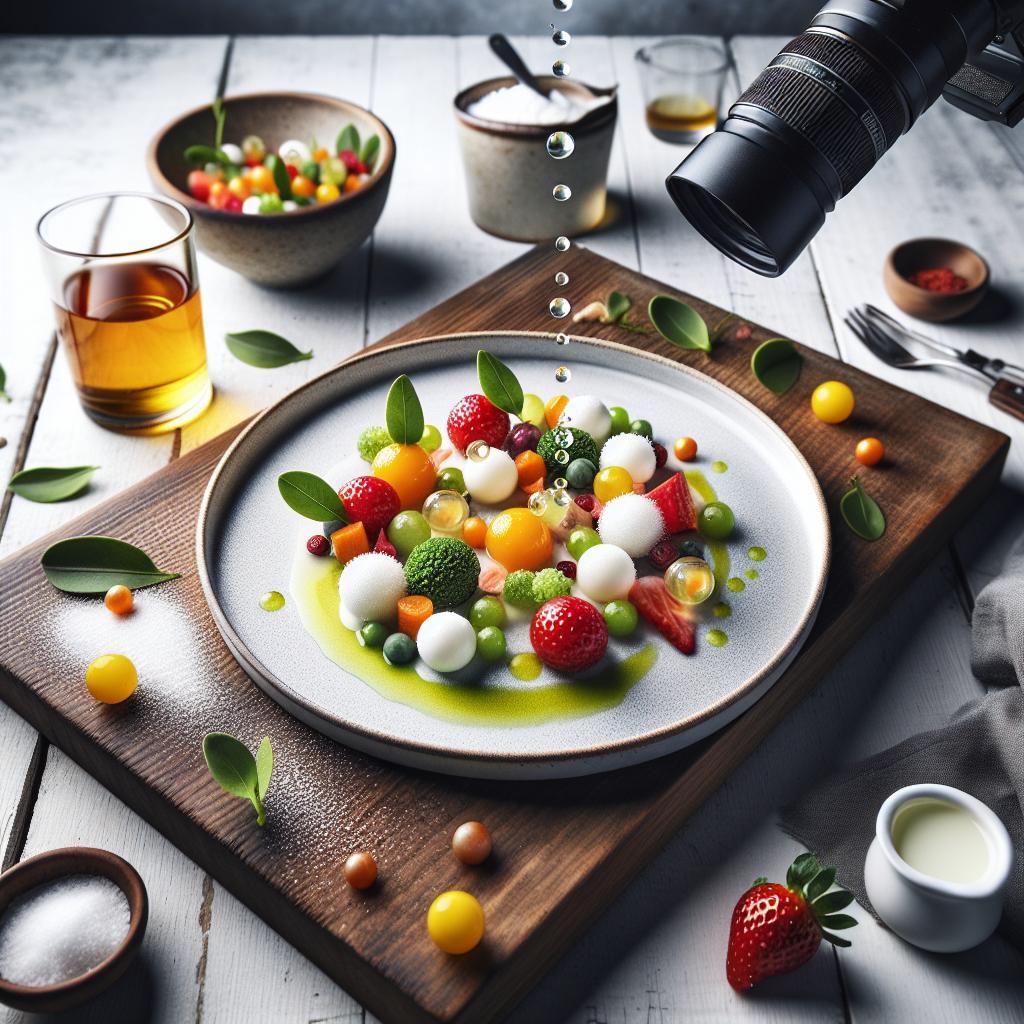

Mastering reverse spherification lets you trap vibrant flavors inside delicate, translucent spheres that burst on the palate. This guide focuses on reliably making calcium chloride spheres using proven ratios, timing, and handling techniques so you achieve consistent, restaurant-quality results.
- Key takeaway: Reverse spherification uses calcium inside droplets and alginate in the bath for stable, delayed gelation.
- Timing matters: A 1–2 minute soak usually yields best membrane thickness for small spheres.
- Prep is critical: Remove bubbles from the alginate bath and strain flavored liquids for clarity.
- Storage: Rinse and keep spheres cool; they hold texture longer than direct spherification.
What is reverse spherification?
Reverse spherification is a controlled chemical interaction between calcium ions and sodium alginate that forms a thin gel skin around a droplet. It differs from direct spherification because the calcium sits in the droplet and the alginate is in the surrounding bath, which prevents continued internal gelling.
This method suits drinks, fruit purées and other liquids where you want a liquid center that remains fluid for longer periods. For background on the culinary movement that popularized these techniques, see molecular gastronomy.
Science: why calcium and alginate form a gel
When calcium ions meet alginate chains they cross-link the polymers into a thin, elastic membrane. The reaction happens at the interface of two fluids, so droplet size, ion concentration and contact time control membrane thickness and strength.
Sodium alginate is a salt of alginic acid extracted from brown algae; it hydrates into a viscous solution suitable for forming hydrogels. Read more about sodium alginate to understand its viscosity and gelation properties.
Membrane formation mechanics
As a calcium-rich droplet enters the alginate bath, calcium ions diffuse outward and alginate chains at the surface bind quickly, creating a skin. The skin prevents rapid diffusion inward, which is why reverse spherification preserves a liquid center for longer.
For a technical perspective on ionic cross-linking and gel structures, consider the general chemistry of ionic gels and hydrogels which share similar network behavior.
Ingredients and equipment
Use precise measurements and clean equipment for repeatable results. Typical yields depend on droplet size; the recipe below produces roughly 20–30 five-milliliter spheres.
Core ingredients: 250 ml flavoured liquid (no added calcium), 2 g sodium alginate, 5 g calcium chloride, and 500 ml cold water for the bath. Use a digital scale and a syringe or small spoon for consistent droplets.
- Tools: blender, fine sieve, slotted spoon, two bowls (one for alginate bath, one for rinse), ice water.
- Optional: pipettes for micro-spheres, pH meter to check acidic liquids, and a tall narrow vessel to reduce surface disturbance.
Keep two internal reference pages handy while experimenting: molecular gastronomy basics and spherification recipes.
Step-by-step instructions
Follow these steps carefully. Small variances in concentration, temperature, or droplet size cause noticeable texture changes.
- Prepare alginate bath: Dissolve 2 g sodium alginate in 250 ml of your water (or 500 ml depending on bath volume) using a blender on low. Blend until smooth, then refrigerate for at least 30–60 minutes to remove foam and let trapped air escape.
- Make calcium solution: Dissolve 5 g calcium chloride into 500 ml cold water. Keep it chilled; cold solutions slow diffusion slightly and reduce over-gelling for larger droplets.
- Strain and load: Strain the flavoured liquid through a fine sieve to remove pulp. Load the calcium-rich liquid into a syringe or dropper for uniform drops.
- Create spheres: Hold the dropper just above the alginate surface and release small droplets steadily. Avoid splashing the bath; gentle drops maintain roundness and even membranes.
- Set timing: For small 5 ml spheres, a 1–2 minute soak produces a thin, burst-ready membrane. Increase time for firmer skins, or decrease time for ultra-delicate membranes.
- Rinse and chill: Use a slotted spoon to transfer spheres to an ice water bath immediately. Rinsing halts further cross-linking and firms the surface while preserving the liquid center.
- Plate and serve: Transfer spheres with a spoon or tweezers. Place them on cocktails, plates or desserts right before service to retain the soft center and glossy exterior.
Timing and texture control
Smaller droplets require less time. For example, micro-spheres (caviar style) can set in 10–30 seconds, while larger pearls need longer to develop a uniform membrane. Keep a log of times and concentrations for each batch to reproduce results.
Adjust calcium concentration if membranes form too quickly or become rubbery. Lowering concentration or contact time softens the outer gel while maintaining structure.
After the tip above, perform a single trial with your intended liquid and droplet size before plating for guests. Trial runs reduce waste and yield predictable outcomes.
Common problems and fixes
Cloudy spheres often result from bubbles or pulp in the alginate bath or flavoured liquid. Re-blend and vacuum out bubbles if possible, and always strain the liquid before loading.
No gel formation usually means insufficient calcium concentration, degraded salts, or incorrect alginate strength. Verify your measurements on a calibrated scale and replace old powders that have absorbed moisture.
- Spheres stick together: Avoid overcrowding in the bath and rinse spheres individually to separate them.
- Rubbery texture: Reduce soak time or lower calcium concentration in the droplet.
- Irregular shapes: Minimize surface motion in the bath and use consistent droplet release height.
Serving, storage and safety
Serve reverse spherification spheres immediately for the best burst-in-mouth effect. They pair well with cocktails, ceviche garnishes, plated desserts and cold starters where a liquid center creates contrast.
For short-term storage, keep spheres in chilled water and use within 4–6 hours for optimal texture. Avoid long storage in alginate baths; that will continue to stress the membrane.
Note: calcium chloride has a bitter taste at high concentrations; keep flavour balance by using minimal amounts and rinsing spheres before service. Handle chemicals with care and store powders in sealed containers away from humidity.
Advanced tips for consistent results
Control pH for highly acidic juices: very low pH can affect alginate performance. If your liquid is very acidic, buffer slightly or test small batches first to confirm membrane formation.
Use glycerin or small amounts of sugar to adjust viscosity of the droplet; slightly thicker liquids form cleaner, rounder spheres. Maintain equipment cleanliness to avoid cross-contamination between batches.
FAQ
What liquids work best for reverse spherification?
Liquids without added calcium or milk solids work best. Juices, cocktails, and clarified broths produce good membranes because they allow the calcium in the droplet to react cleanly with alginate in the bath.
If you must use dairy or high-calcium liquids, modify your approach by adjusting the bath composition or using direct spherification when appropriate.
How do I control membrane thickness?
Membrane thickness depends on calcium concentration, alginate concentration, droplet size and soak time. Reduce any of these variables to thin the membrane; raise them for thicker skins. Keep notes to repeat successful combinations.
Can I flavor or color the spheres?
Yes. You can add flavorings and colorants to the calcium solution or flavored liquid before spherification. Make sure additives are fully dissolved and do not introduce solids that block droplet flow or alter gelation chemistry.
How long will spheres last?
Reverse spherification spheres maintain a liquid core longer than direct spherification but still degrade over time. Expect optimal texture for several hours refrigerated; for service, produce batches to match service volume.
Where can I learn more technical background?
For further reading on the chemistry and culinary use of these materials, consult Wikipedia entries on calcium chloride and sodium alginate. These pages outline properties, safety notes and typical applications.
See also: spherification