
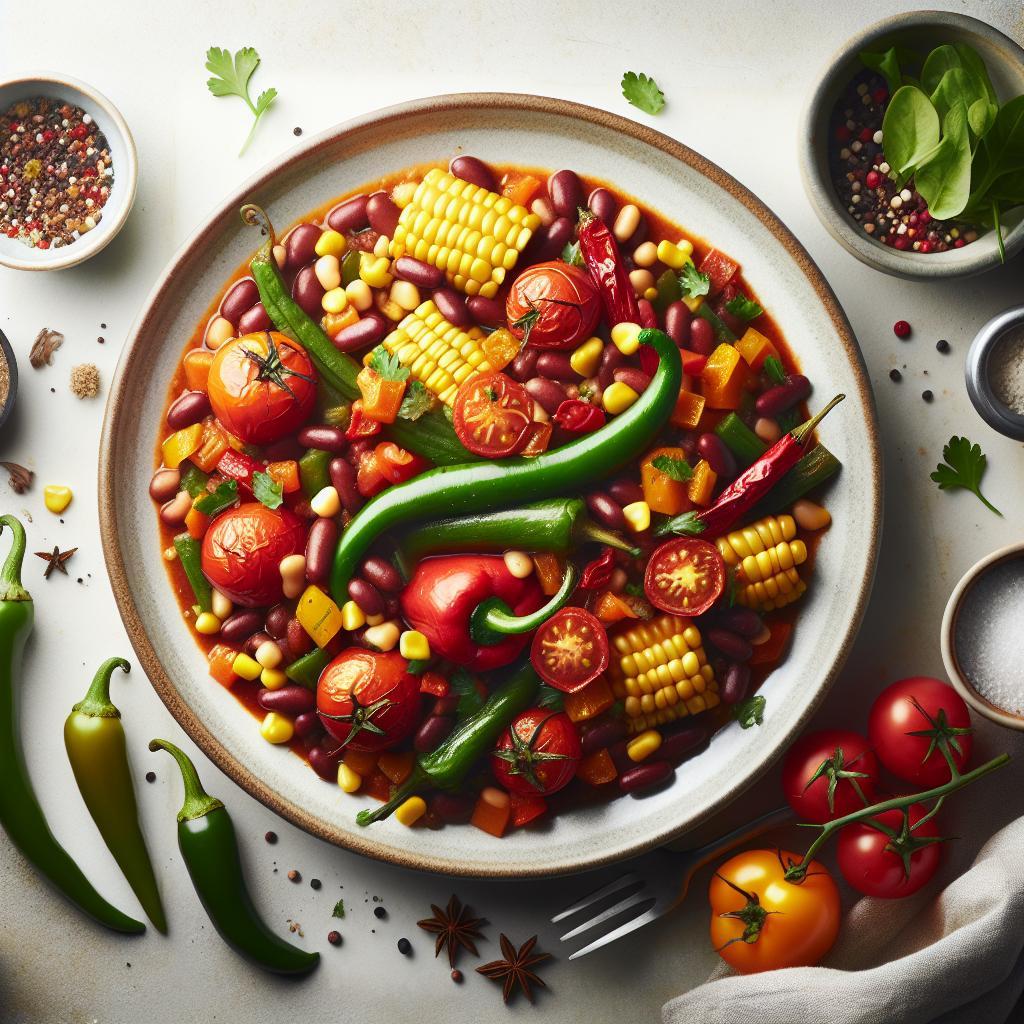

When a cold evening calls for comfort, a bowl of roasted vegetable chili answers with layered, smoky-sweet flavor. This approach uses caramelized seasonal produce, robust spices, and legumes to build a plant-forward chili that reheats and freezes well for meal prep.
- Roast first: Caramelization adds depth you can’t get from sautéing.
- Season smart: Smoked paprika, cumin, and a touch of cocoa lift savory and sweet notes.
- Make ahead: Flavor improves after a day; freeze portions for fast meals.
- Balance textures: Combine starchy, sweet, and umami vegetables for contrast.
Roasting Vegetables to Unlock Deep, Smoky Flavors
Roasting converts surface sugars and amino acids into complex aromas through Maillard browning and caramelization. For a concise technical reference on the process, see roasting (cooking).
Use high, even heat and a single layer on the sheet pan to promote color without steaming. Toss vegetables in oil and a light seasoning so heat concentrates flavors and preserves texture.
Choosing the Perfect Blend of Seasonal Veggies for Maximum Comfort
Start with a mix of starchy, sweet, and umami-rich vegetables to build a balanced bowl of vegetable chili. Tomatoes supply acidity and body; see the tomato entry for cultivar differences at tomato.
Autumn favors squash and sweet potatoes while summer gives zucchini and fresh peppers. Rotate vegetables with seasonality to keep texture and flavor vibrant across batches.
Balancing Spices and Ingredients to Elevate Classic Chili
A precise spice blend turns roasted vegetables into a full-flavored vegetable chili. Rely on smoked paprika and cumin for earth and warmth, add chipotle or cayenne for controlled heat, and finish with a small pinch of cocoa or cinnamon to round the profile.
Introduce spices in stages: bloom dry spices in the initial sauté to release volatile oils, simmer to marry the flavors, then finish with salt and acid adjustments. This staging prevents flatness and keeps aromatics lively.
Ingredient Roles and Protein Options
Beans and grains add body and satiety to a vegetable chili while roasted vegetables deliver concentrated flavor. For context on legumes and how they pair nutritionally with grains, consult bean references.
To boost protein, add cooked quinoa, lentils, or textured vegetable protein during simmering. Those additions increase mouthfeel and make the chili more filling for meat-eaters and vegetarians alike.
Tips for Serving and Storing Your Roasted Vegetable Chili
Serve chili hot with contrasting textures: crisp tortilla chips, toasted seeds, or fresh herbs brighten the bowl. Offer acidic elements like lime wedges or a spoon of yogurt to cut richness and sharpen flavor perception.
Cool the chili to room temperature before refrigerating. Store up to five days in the fridge and freeze portioned containers for up to three months to preserve quality for meal prep.
Prep and Cook Time
Preparation: ~20 minutes. Prep includes peeling, chopping, and seasoning vegetables; maintain consistent dice sizes for even roasting.
Roasting + Simmering: Roasting takes 25–30 minutes and simmering 40 minutes; total cook time is roughly 90 minutes for a standard batch.
Yield
This recipe yields about six generous portions — ideal for family meals or batch cooking. Scale liquids proportionally to keep the desired thickness when changing batch size.
For smaller or larger groups, multiply ingredient quantities and taste at the end to adjust salt and acid instead of at the start.
Difficulty Level
Medium: requires basic knife skills, timed roasting, and staged seasoning. The techniques reward attention to heat control and timing.
Once you practice the roast-then-simmer workflow, you can adapt the recipe to many vegetables and spice profiles with confidence.
Ingredients
The list below creates a balanced, aromatic vegetable chili. Use canned fire-roasted tomatoes for instant smoky depth; fresh-roasted tomatoes work when available.
- 2 large sweet potatoes, peeled and diced 1-inch
- 2 red bell peppers, seeded and quartered
- 1 large red onion, cut into wedges
- 8 oz cremini mushrooms, halved
- 3 tbsp olive oil
- 1 tsp smoked paprika
- 1 tsp ground cumin
- 1/2 tsp chipotle chili powder
- 1/4 tsp ground cinnamon
- 3 cloves garlic, minced
- 1 28-oz can fire-roasted diced tomatoes
- 1 15-oz can black beans, drained and rinsed
- 1 15-oz can kidney beans, drained and rinsed
- 2 cups vegetable broth
- 1 tbsp tomato paste
- 1 tsp unsweetened cocoa powder
- Salt and black pepper, to taste
- Fresh cilantro and sliced green onions, for garnish
- Optional: vegan sour cream or plain Greek yogurt for serving
For extra protein, add cooked quinoa or lentils during the simmer. To learn practical roasting and meal-prep steps, refer to our internal guide on vegetable chili basics and the roasted-veg meal-prep tips at roasted vegetable meal prep.
Instructions
Follow the steps to maximize texture and flavor. Keep roasted vegetables separate until final assembly to prevent them from breaking down.
- Preheat oven to 425°F (220°C). Line a large baking sheet with parchment.
- Toss sweet potatoes, bell peppers, onion, and mushrooms with oil and spices until evenly coated.
- Spread vegetables in a single layer and roast 25–30 minutes until tender and caramelized, stirring once for even color.
- While vegetables roast, heat a large pot over medium heat. Add a splash of oil and sauté garlic about 1 minute.
- Add tomato paste and cocoa; stir 1–2 minutes to toast and release flavor.
- Pour in fire-roasted tomatoes and vegetable broth. Bring to a boil, then reduce to a gentle simmer.
- Add black beans and kidney beans; simmer 20 minutes to blend flavors.
- Fold in roasted vegetables carefully. Simmer 8–10 minutes so textures marry without over-softening.
- Adjust seasoning with salt, pepper, or a pinch of cayenne. Finish with acid if needed — a squeeze of lime or a splash of vinegar brightens the bowl.
- Serve hot with cilantro, green onions, and optional yogurt or avocado.
Resting the chili 10–15 minutes off heat helps flavors settle and makes serving easier.
Tips for Success
Make it your own: Swap in roasted carrots, eggplant, or zucchini depending on seasonality. Keep dice sizes consistent for even roasting.
Boost protein: Add cooked lentils, quinoa, or textured vegetable protein to increase satiety and nutritional density without changing the flavor profile dramatically.
Serving Suggestions
Plate the chili in deep bowls and offer crunchy contrasts like crushed tortilla chips or toasted pepitas. Serve warm cornbread or steamed rice alongside to catch the sauce.
Brighten each bowl with a squeeze of lime and fresh herbs to lift the smoky base. For richness, garnish with avocado slices or a drizzle of cashew crema.
Nutritional Estimate (per serving)
| Nutrient | Per Serving |
|---|---|
| Calories | 320 kcal |
| Protein | 12 g |
| Carbohydrates | 48 g |
| Fat | 7 g |
FAQ
What makes roasted vegetable chili different from traditional chili recipes?
Roasted vegetable chili emphasizes caramelized, smoky vegetables rather than browned meat for depth. Roasting concentrates sugars and creates aromatics that add savory intensity similar to meat-based chilis.
Can this chili satisfy meat-eaters?
Yes. Concentrated roasted flavors combined with strategic spices and legumes produce a bold, hearty bowl. Adding grains or extra legumes increases mouthfeel and satiety comparable to a meat-based dish.
Which vegetables are essential for texture and flavor?
Bell peppers, sweet potatoes or squash, onions, and mushrooms provide a mix of sweetness, starch, and umami. Tomatoes add acidity and body; beans lend protein and creaminess.
How do I adjust heat and spice balance?
Control heat by varying chipotle or cayenne quantities. Add heat early to mellow it into the base, or finish with fresh jalapeño for bright, sharp heat. Always taste and correct salt and acid at the end.
Is this recipe freezer-friendly?
Yes. Cool completely, portion into airtight containers, and freeze up to three months. Thaw overnight in the refrigerator and reheat gently to preserve texture.
Roasted vegetable chili rewards attention to technique: precise roasting, staged seasoning, and careful finishing create a reliably flavorful, make-ahead meal. Use this template to adapt the recipe to seasonal produce and your preferred heat level.

See also: Vegetable Chili
See also: vegetable chili