
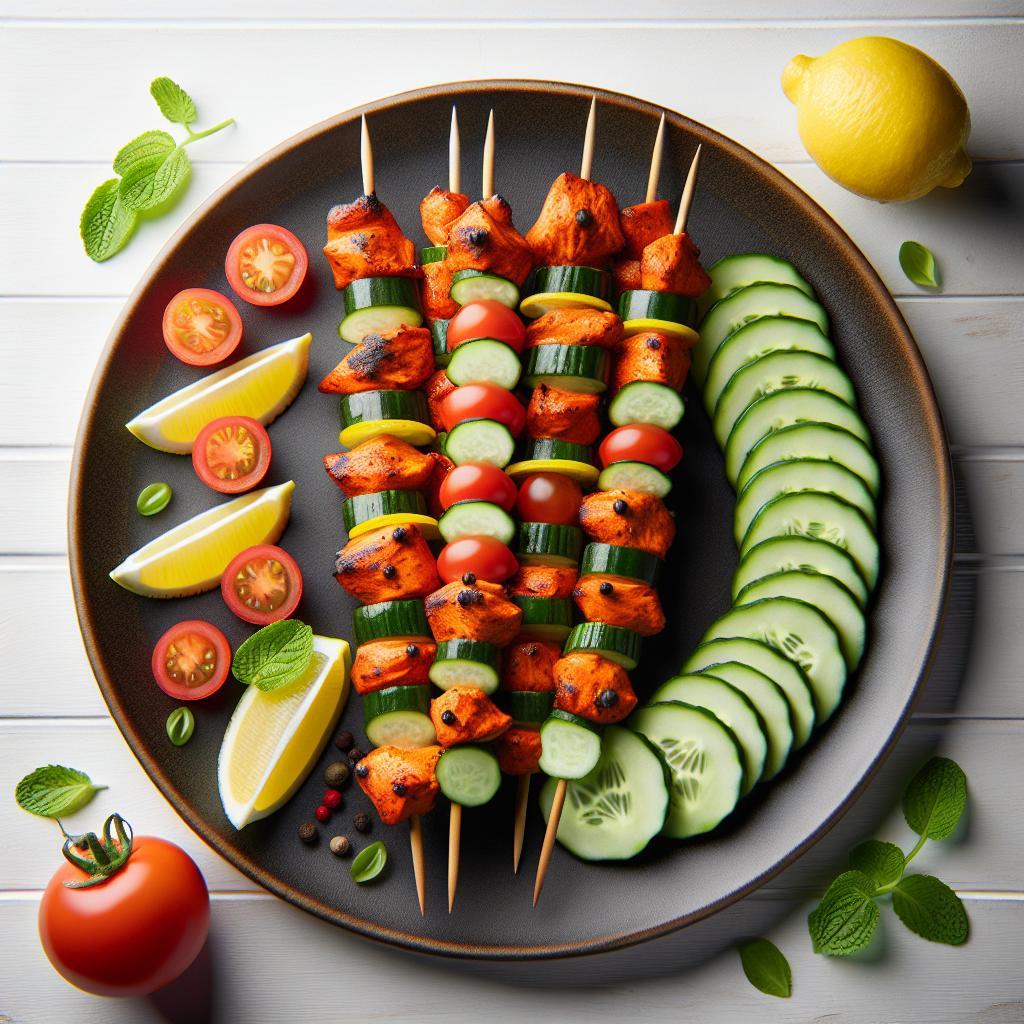

There’s something magnetic about chicken tikka skewers grilling over open flame—a blend of spice, smoke, and tender meat that rewards careful technique. This piece explains the steps and decisions that turn ordinary pieces of chicken into well-balanced, charred morsels.
- The origins and cultural context
- Mastering the marinade: science and practice
- Choosing authentic, high-impact ingredients
- Prep, timing, and temperature control
- Step-by-step cooking instructions
- Serving, plating, and complementary sides
- Tips for consistent, restaurant-quality results
- Nutritional snapshot and portioning
- FAQ
- Key takeaway: Long marination equals deeper flavor and juicier meat.
- Key takeaway: High, controlled heat creates the ideal char without drying.
- Key takeaway: Use thighs for better texture; adjust spices to taste.
- Key takeaway: Simple sides like raita or naan lift the whole plate.
The origins and cultural context
Chicken tikka traces to the Indian subcontinent and reflects centuries of layered culinary exchange. Readers who want the historical outline can reference the traditional entry on chicken tikka for background.
The classic method used a clay oven called a tandoor, which gives a distinct sear and smoky aroma. Replicating that texture at home requires careful heat control and timing when using a grill or pan.
Mastering the marinade: science and practice
Yogurt acts as both flavor carrier and tenderizer by mildly breaking down muscle fibers; a technical summary is available on the yogurt page. Use thick, unsweetened yogurt to avoid excess moisture during grilling.
Combine yogurt with aromatics and spice blends such as garam masala, turmeric, ground cumin, ginger, and garlic. The acid and enzymes in yogurt help the spices penetrate while preserving juiciness.
Practical marination notes
Chop chicken into uniform pieces—roughly 4-5 cm—so each piece cooks evenly. Coat the meat completely and refrigerate; 6–12 hours is minimum, overnight is optimal.
Reserve a small amount of marinade for basting only if you heat it beforehand to eliminate raw juices. This keeps the exterior moist without introducing contamination.
Choosing authentic, high-impact ingredients
Prefer boneless, skinless chicken thighs for consistent moisture and a forgiving texture under high heat. Thighs withstand longer exposure to flame without drying.
Use fresh ginger-garlic paste when possible, and choose a coarse garam masala for a more complex crust. Use lemon juice or a mild acid to balance richness and help with tenderizing.
Ingredient checklist
- 600 g boneless chicken thighs—trim fat and cut into uniform pieces.
- 1 cup thick unsweetened yogurt—acts as a tenderizer and binder.
- 2 tbsp lemon juice—brightens and mildly acidifies the meat.
- 1 tbsp ginger-garlic paste—fresh aroma is critical.
- 1 tbsp garam masala—for warm, aromatic notes.
- 1 tsp turmeric, 1 tsp ground cumin, 1 tsp red chili powder—adjust heat to taste.
- 2 tbsp mustard oil or vegetable oil—mustard oil gives authentic punch; use a neutral oil if preferred.
Prep, timing, and temperature control
Prep time runs about 15 minutes; marination requires 6–12 hours; cooking takes 12–15 minutes on a hot grill. These windows support both flavor development and proper food safety.
Target grill temperature is medium-high. Aim for direct heat to sear the surface quickly, then move to slightly cooler zones to finish if char risk rises. Use an instant-read thermometer to ensure a safe internal temperature of 165°F (75°C).
Step-by-step cooking instructions
Mix the marinade until smooth, then add the chicken pieces and turn to coat each piece evenly. Cover and chill; long contact time allows spices and acids to work without overcooking the surface.
Thread chicken onto skewers, leaving space between pieces for airflow. Preheat the grill, oil the grates lightly, and sear skewers over direct heat, turning every 3–4 minutes to build an even crust.
Finishing and resting
Cook until internal temperature reaches 165°F (75°C) and the exterior shows controlled charring. Rest the skewers for 5 minutes to let juices redistribute before serving.
For indoor alternatives, use a hot cast-iron pan or the broiler. These methods give comparable browning but need closer attention to avoid scorching.
Adjust the thickness of pieces to control cook time; thinner pieces reduce the risk of drying and allow more surface area to char.
Serving, plating, and complementary sides
Plate skewers over warm naan or basmati rice to absorb juices and provide textural contrast. Add fresh cucumber raita for cooling balance.
Finish with chopped cilantro, mint, and a light squeeze of lemon. Small garnishes, like pickled red onion or a tamarind drizzle, introduce acidity and lift the finished dish.
For readers wanting to expand spice knowledge, see the internal guide on essential spices for Indian cooking. For technique on flame management and flare control, consult our internal grilling basics resource.
Tips for consistent, restaurant-quality results
Use metal skewers if you grill often; they transfer heat and give more even cooking through the meat. If using bamboo, soak them for 30 minutes to prevent burning.
Prefer thighs over breasts when you want a forgiving window of doneness. If lean breast is used, reduce cook time and monitor with a thermometer.
- Do not overcrowd skewers: Leave gaps for heat circulation.
- Baste carefully: Heat any reserved marinade fully before applying.
- Rest the meat: A short rest finishes the cooking and improves texture.
Nutritional snapshot and portioning
Per serving, a typical portion provides substantial protein with moderate fat and low carbohydrates when paired with yogurt-based sides. Adjust oil and portion sizes to meet dietary goals.
This recipe yields roughly four servings and fits well as a main or appetizer in a multi-course meal. Scale spice levels and quantities for larger groups while keeping marination ratios consistent.
FAQ
How long should I marinate chicken for best results?
Marinate at least six hours; overnight delivers deeper flavor and better tenderization. Avoid marinating much beyond 24 hours to prevent a mushy texture from over-tenderization.
Can I replicate tandoor results at home?
You can imitate tandoor characteristics by using very high initial heat to sear and by adding a smoky element, such as briefly exposing skewers to live flame or using smoked spices. A cast-iron sear can also mimic the intense contact heat.
Should I use chicken thighs or breasts?
Choose thighs for juiciness and margin for error. Use breasts only if you prefer lean meat, and reduce cook time to prevent dryness. Uniform piece size helps either cut cook evenly.
How do I store leftovers safely?
Cool quickly and refrigerate within two hours. Store in an airtight container for 2–3 days. Reheat gently to avoid drying—brief oven warming or covered pan heating works well.
Can I make chicken tikka for vegetarians?
Yes. Use paneer or firm tofu as one-to-one swaps for chicken, and adjust marination time since these alternatives require less tenderization. Grill until a firm crust forms without over-softening.
Mastering chicken tikka skewers depends on three elements: marinade depth, heat management, and patient finishing. Apply these focused techniques and you will produce reliably juicy, well-charred skewers suitable for casual meals or special gatherings.

See also: Chicken Tikka