
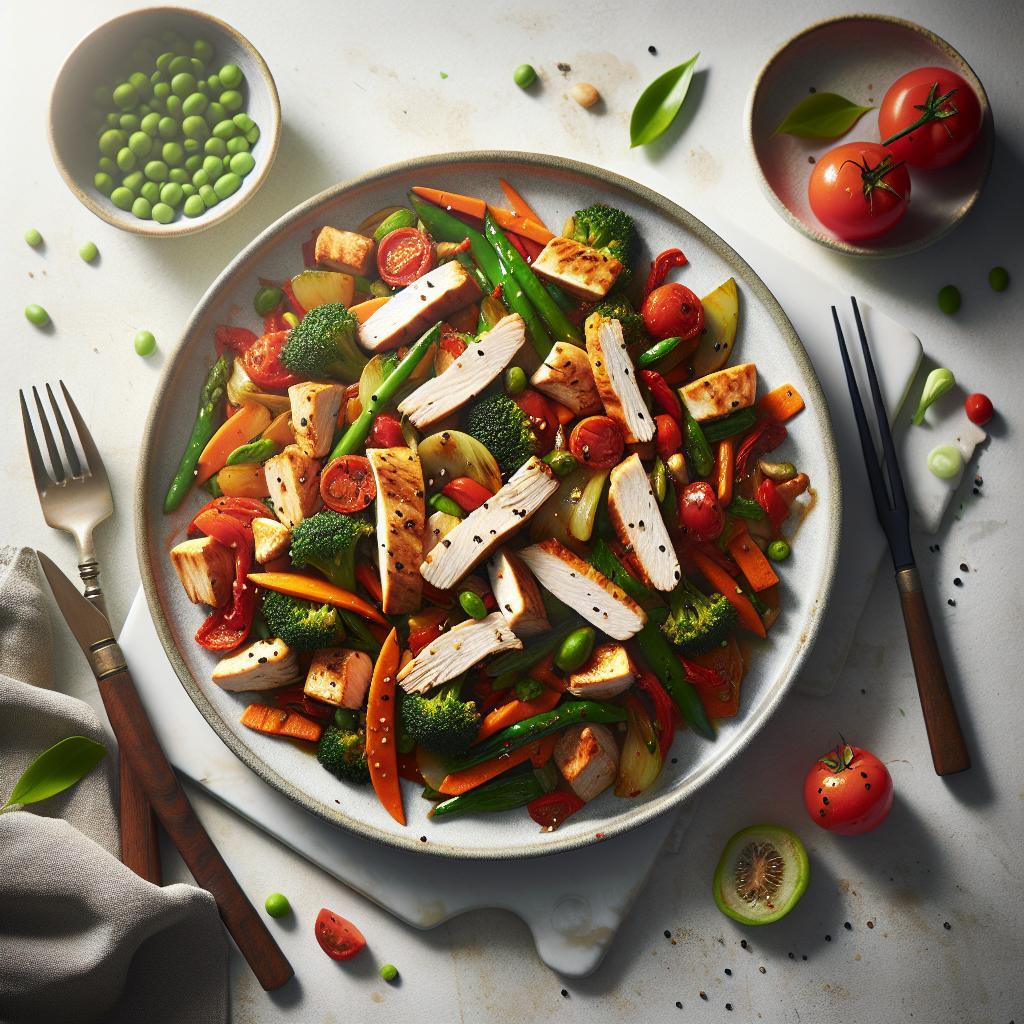

Sizzle & Savor a vibrant turkey and vegetable stir-fry that cooks fast and delivers bold flavor. This guide breaks the process into clear steps so you can get reliable results every time.
- Fast dinner: Ready in about 35 minutes for four portions.
- Lean protein: Ground turkey keeps the dish light while absorbing sauces.
- Texture-first: Stagger vegetable timing to keep crisp-tender bites.
- Scalable: Easy to double or tweak for family-style meals.
Why Turkey Works
Turkey makes an efficient, lean base for a stir-fry because it browns quickly and takes up flavors from marinades. As a form of poultry, it offers high protein with modest fat, so it pairs well with bold sauces.
Furthermore, ground turkey holds together while breaking into bite-sized pieces as it sears. For best texture, choose lean but not ultra-lean blends so the meat stays moist during high-heat cooking.
Prep and Cook Time
Preparation: 20 minutes. Do the chopping and mix the quick marinade first to let flavors start melding.
Cooking: 15 minutes. Use a hot wok or large skillet and move quickly so vegetables stay crisp. Total time: about 35 minutes for a four-serving meal.
Ingredients
The ingredients list balances protein, aromatics, and crunchy vegetables to create contrast. Use the exact vegetables below or swap based on season and availability.
When you shop, aim for fresh produce and recently packaged turkey for best flavor and safety. Replace soy sauce with alternatives for a gluten-free option if needed.
- 1 lb ground turkey (lean)
- 2 tbsp soy sauce (low sodium) — see note about soy sauce
- 1 tbsp freshly grated ginger
- 3 cloves garlic, minced
- 1 tbsp toasted sesame oil
- 1 tsp honey or maple syrup
- 1 large red bell pepper, julienned
- 1 medium carrot, thin diagonal slices
- 1 cup snap peas, trimmed
- 1 medium zucchini, half-moons
- 3 green onions, sliced
- 2 tbsp neutral oil (vegetable or canola)
- 1 tsp cornstarch dissolved in 2 tbsp cold water (optional thickener) — see cornstarch
- 1 tbsp toasted sesame seeds (optional)
- Fresh cilantro or lime wedges (optional)
Key Ingredients Explained
Ginger and garlic form the aromatic backbone and release essential oils when hit by high heat. Sesame oil finishes the dish with a toasty note, but avoid exposing it to long high heat to preserve flavor.
Soy sauce provides salt and umami; if you need gluten-free, swap for tamari or coconut aminos. The cornstarch slurry thickens the sauce quickly so it clings to meat and veg.
Optional Add-ins
Add broccoli florets, thin broccoli stems, or mushrooms for extra fiber and volume. Toasted nuts such as cashews or peanuts add crunch and a savory counterpoint to the tender turkey.
To boost heat, include a pinch of red pepper flakes or a teaspoon of sriracha in the sauce. For brightness, finish with lime or rice vinegar just before serving.
Instructions
Work in three phases: marinate, prep, and high-heat cook. This sequence keeps the cook time short and ensures balanced texture between meat and vegetables.
Keep ingredients staged so you can add items quickly; stir-frying moves fast and rewards organization. A wok or large heavy skillet gives the best sear and room to toss.
Marinate and Prep
Combine ground turkey with 1 tablespoon soy sauce, grated ginger, minced garlic, honey, and toasted sesame oil. Mix gently and let rest for at least 10 minutes or refrigerate up to one hour to deepen flavor.
Trim and cut all vegetables to uniform sizes to promote even cooking. Place them in the order you’ll add them: dense vegetables first, delicate ones last.
Cooking Steps
- Heat a large wok or skillet over medium-high heat until hot but not smoking. Add 1 tablespoon neutral oil and swirl to coat the surface.
- Add the marinated turkey and break it up with a spatula. Sauté until browned and just cooked through, about 6–8 minutes, stirring frequently.
- Push turkey to one side. Add remaining oil, then add carrots and snap peas first; cook 1–2 minutes to soften slightly.
- Toss in bell pepper and zucchini; stir for another 2–3 minutes until vegetables are vibrant and tender-crisp.
- Combine turkey and vegetables, pour in the remaining tablespoon soy sauce, and mix. If you want a thicker coating, stir in the cornstarch slurry and cook 30–60 seconds until the sauce glosses the ingredients.
- Remove from heat, add sliced green onions, and garnish with sesame seeds and cilantro. Serve immediately over rice or noodles.
Timing note: Keep skillet hot and avoid crowding to prevent steaming. Work in batches if your pan is small so each piece sears evenly.
After the safety note, cool the pan briefly if smoke becomes excessive and lower the heat a touch to maintain control. Proper ventilation preserves flavor and safety.
Tips for Success
Choose a pan that retains heat and gives you enough space to move ingredients. A crowded pan lowers the temperature and results in soggy vegetables rather than seared bites.
Salt sparingly during cooking because soy sauce adds sodium; adjust at the end after tasting. Remember that residual heat continues to cook food even off the burner.
Marinating longer adds depth but keep acidic components like vinegar or citrus minimal to avoid denaturing the protein. For meal prep, cook a larger batch and refrigerate in single-serve portions for quick reheats.
Serving Suggestions
Serve over steamed jasmine or brown rice for a classic meal. For low-carb plates, use cauliflower rice or whole-grain soba noodles to change the texture and calorie profile.
Garnish with lime wedges, chopped scallions, or extra sesame oil for a finishing touch. Adding roasted nuts gives crunch while a drizzle of chili oil amplifies heat for spice lovers.
Nutrition Snapshot
This recipe delivers a high-protein, moderate-calorie plate when portioned properly. The combination of lean turkey and mixed vegetables yields a nutrient-dense meal with fiber, vitamins, and minerals.
Adjust oil and sweeteners to tune calories. For a lower-sodium approach, choose low-sodium soy sauce and taste before adding extra salt.
| Nutrient | Per Serving |
|---|---|
| Calories | 320 kcal |
| Protein | 35 g |
| Carbohydrates | 15 g |
| Fat | 12 g |
FAQ
Why choose turkey for a stir-fry?
Turkey supplies lean protein and absorbs marinades well, which makes it a practical choice for quick-cook recipes. It cooks fast and pairs with strong flavors without dominating the dish.
What vegetables work best in a turkey stir-fry?
Use a mix of crunchy and tender vegetables: bell peppers, carrots, snap peas, and zucchini perform reliably. Aim for uniform cuts so each piece finishes at the same time.
How do I keep turkey tender and juicy?
Marinate briefly and avoid overcooking; ground turkey firms up quickly. High heat and short cook time lock in moisture while creating a savory crust.
Can I make this gluten-free?
Yes. Replace soy sauce with tamari or coconut aminos and verify that any added sauces or seasonings label themselves gluten-free. This swap preserves flavor while avoiding gluten.
How should I store leftovers?
Cool quickly and refrigerate in a sealed container for up to 3 days. Reheat gently in a skillet with a splash of water to restore moisture and texture.
Follow these steps and you will produce a consistent, well-balanced turkey and vegetable stir-fry. Master the heat, respect timing, and keep ingredients fresh to make this a regular weeknight winner.

For background on the cooking method, review the stir-frying technique. For more on specific ingredients and their culinary roles, consult the linked resources above.
See also: Turkey Stir-Fry