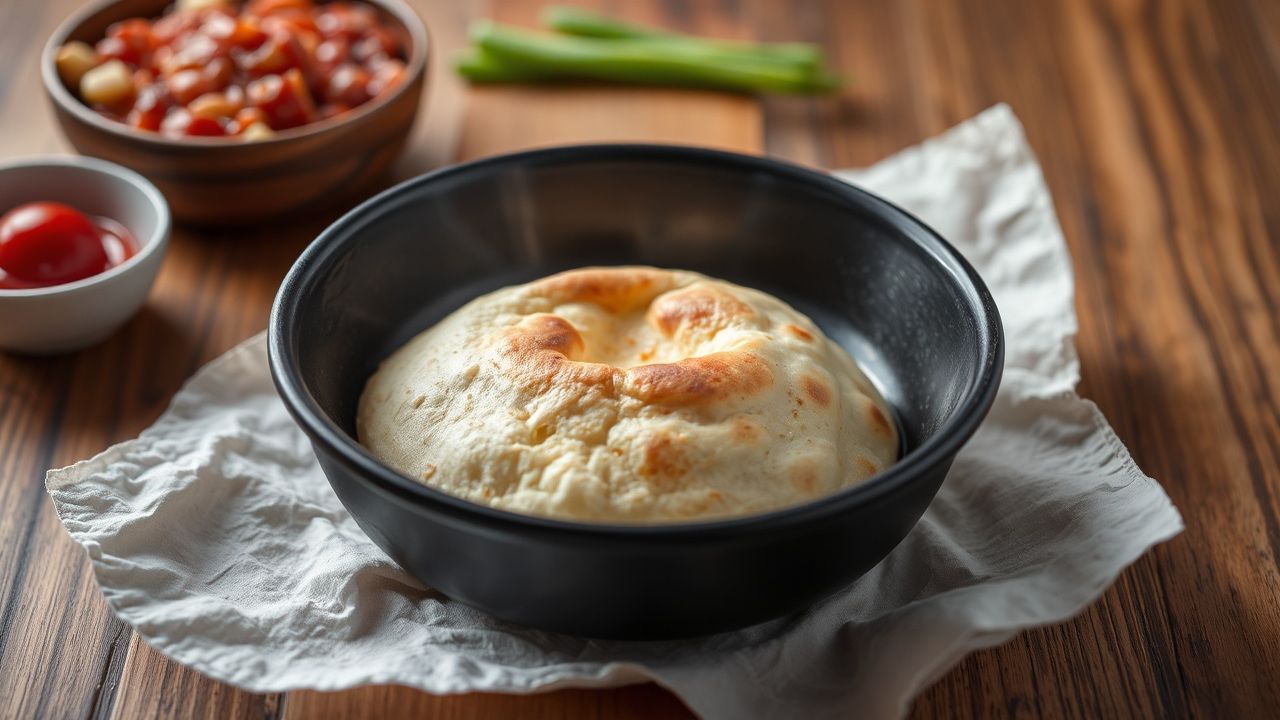

High heat is the single most reliable variable that turns a flat disk of dough into a soft, hollow pita pocket. When dough meets an oven or pan that holds intense, even heat, trapped moisture converts to steam and forces the layers apart in seconds. This process creates the airy interior and thin, tender crust that define an ideal pita.
- Why high heat works
- Equipment and temperature
- Prep and cook time
- Yield
- Difficulty level
- Ingredients
- Instructions
- Tips for success
- Serving suggestions
- Nutritional information (per pita)
- Q&A
- Why does pita bread puff up perfectly in high heat?
- Can you get a pocket without very high temperatures?
- What temperature range is ideal for baking pita?
- Does the type of oven affect puffing?
- How does dough hydration affect puffing?
- Insights and conclusions
- Quick steam expansion inflates the pocket within seconds.
- Gluten structure provides the elastic skin that traps steam.
- Heat-holding surfaces like stones or cast iron replicate traditional ovens.
- Short bake time prevents overbrowning while ensuring a full puff.
Why high heat works
High temperatures cause rapid phase change: water in the dough becomes vapor almost instantly. That sudden steam expansion lifts the dough into a two-layered pocket and sets the crust quickly, preventing collapse.
Thermodynamics drives the transformation, and you can observe the effect whether you bake on a hearth or fry on a skillet. For more on the food-science side, consult the primer on steam.
Rapid steam expansion
When dough surface temperature climbs past 100°C (212°F), contained water flashes to vapor and generates internal pressure. That pressure separates the dough into an inner and outer layer; the outer layer sets as the crust while the inside stays tender and hollow.
Because the event lasts only seconds, you need both a high starting temperature and a surface that keeps heat delivery constant. Therefore, preheating matters more than any single ingredient change.
Gluten network and elasticity
The dough must form a resilient gluten scaffold that stretches rather than tears as steam expands. Kneading and resting develop that network, which controls the speed and uniformity of the puff.
Use flour with sufficient protein to build elasticity and avoid overhydrating to the point the dough cannot hold its shape. For background on the protein structure, see gluten.
Equipment and temperature
Choose a surface that stores heat: a pizza stone, heavy cast-iron skillet, or steel will deliver the sudden thermal shock pita needs. Those materials act like a small hearth and minimize temperature drop when dough contacts the surface.
Set ovens or griddles to the highest safe setting you have—typically 450–500°F (232–260°C). Use an infrared thermometer or oven thermometer to verify actual surface temperature rather than relying on the dial.
Pan, stone, or steel?
Each surface performs differently. A preheated pizza stone radiates heat evenly, while cast iron transfers heat rapidly through conduction, which encourages a swift lift and blistering crust.
If you bake inside a home oven, use a preheated stone or steel on the middle or upper rack to approximate a hearth. For context on traditional tools and methods, review the technology behind the oven.
Prep and cook time
Preparation: 15 minutes. Proofing: 1–1.5 hours. Proper timing ensures the dough is relaxed and ready to expand without tearing.
Cooking: 8–12 minutes total for batches, with individual pitas taking 1–2 minutes per side. You need a steady workflow so shaped rounds go straight to the hot surface.
Yield
Recipe yields 8 medium pitas (about 6–7 inches in diameter). For larger or smaller pockets, scale dough ball size accordingly and adjust roll thickness.
Consistent portioning helps the oven or pan deliver identical heat to each round, which improves uniform puffing across a batch.
Difficulty level
Medium. You need to manage heat and handle the dough quickly, but the techniques are repeatable and scalable for home cooks. Mastery comes from attention rather than special ingredients.
With practice, you will time preheating, rolling, and cooking so moisture and structure align for reliable pockets every bake.
Ingredients
These simple ingredients combine into an elastic, steam-ready dough. Use quality flour and fresh yeast for a predictable rise and texture.
- 2 ¼ teaspoons (1 packet) active dry yeast
- 1 ¼ cups warm water (about 110°F/43°C)
- 3 cups all-purpose or bread flour (higher protein preferred)
- 1 teaspoon salt
- 1 tablespoon olive oil, plus extra for coating
- 1 teaspoon sugar or honey (optional)
Instructions
Follow the steps in order to develop structure and trap moisture. Work briskly once you shape the rounds so the dough retains its internal water until it meets heat.
- Activate the yeast: Dissolve sugar or honey in warm water, sprinkle yeast on top, and wait 5 minutes until foamy.
- Mix and knead: Combine flour and salt, add the yeast mix and oil, then knead 8–10 minutes until smooth and elastic.
- First rise: Oil a bowl, place dough inside, cover, and let double for 1–1.5 hours in a warm spot.
- Preheat surface: Heat your stone, steel, or cast iron to the highest safe temperature for at least 30 minutes.
- Shape: Divide dough into 8 balls, rest briefly, then roll to ~1/8 inch thickness and 6–7 inch diameter.
- Cook: Transfer one round to the hot surface. Cook 1–2 minutes until bubbles form, flip, and cook another 1–2 minutes. If puffing lags, press small bubbles gently to help the pocket form.
- Keep warm: Stack finished pitas in a clean towel to retain heat and moisture while you finish the batch.
After the batch, let the surface re-stabilize before adding more rounds to preserve consistent heat transfer. Consistency produces consistently puffed pitas.
Tips for success
Hydration balance matters: a slightly wetter dough creates more internal steam but demands faster handling. Find the sweet spot where the dough is tacky yet manageable.
Thickness control: Roll to about 1/8 inch. Thinner discs cook too fast and tear; thicker discs trap less steam and resist separation.
Rotate cooking positions on the pan if you notice hot spots. Variations in burner output or oven zones change how pitas brown and puff.
Serving suggestions
Split pitas to reveal the pocket and fill with grilled meats, vegetables, or falafel. They also pair perfectly with dips and spreads served at room temperature.
Try warm pitas with creamy hummus or use them as the base for sandwiches alongside roasted chicken and crisp salad. For oven-based baking guidance, see the internal guide on using a baking stone.
Nutritional information (per pita)
Estimate calories and macronutrients to plan meals. A standard medium pita is moderate in calories and provides usable carbohydrates for sandwiches and meals.
| Nutritional Information (per pita) | Amount |
|---|---|
| Calories | 170 kcal |
| Protein | 5 g |
| Carbohydrates | 34 g |
| Fat | 2 g |
Q&A
Why does pita bread puff up perfectly in high heat?
High heat causes the water inside dough to vaporize rapidly, and that steam inflates a pocket. The outer layer firms quickly and traps the air, creating the hollow center.
Can you get a pocket without very high temperatures?
Lower temperatures rarely produce a full pocket because steam forms too slowly and escapes rather than inflating the dough. You might get some lift, but not the consistent hollow center you want.
What temperature range is ideal for baking pita?
Aim for 450–500°F (232–260°C) surface temperature to produce rapid steam formation and a quick bake. Verify actual surface heat with a thermometer for best results.
Does the type of oven affect puffing?
Yes. Heat-retaining surfaces like stone or steel and cookware that transfers heat quickly improve puffing consistency. A home oven can mimic commercial ovens when you preheat a proper thermal mass.
How does dough hydration affect puffing?
More hydration increases available steam and supports fuller pockets but makes the dough stickier and harder to handle. Adjust flour and practice handling wet dough to balance steam potential with usability.
Insights and conclusions
High heat is the defining factor in creating a true pita pocket; it converts internal moisture to steam and separates dough layers in seconds. Build dough strength, control hydration, and present the rounds to a reliably hot surface to reproduce bakery-style results at home.
Practice the timing: preheat thoroughly, shape quickly, and cook with steady heat. With these controls in place, you will produce puffy, tender pitas that perform predictably across batches.
See also: Pita Bread