
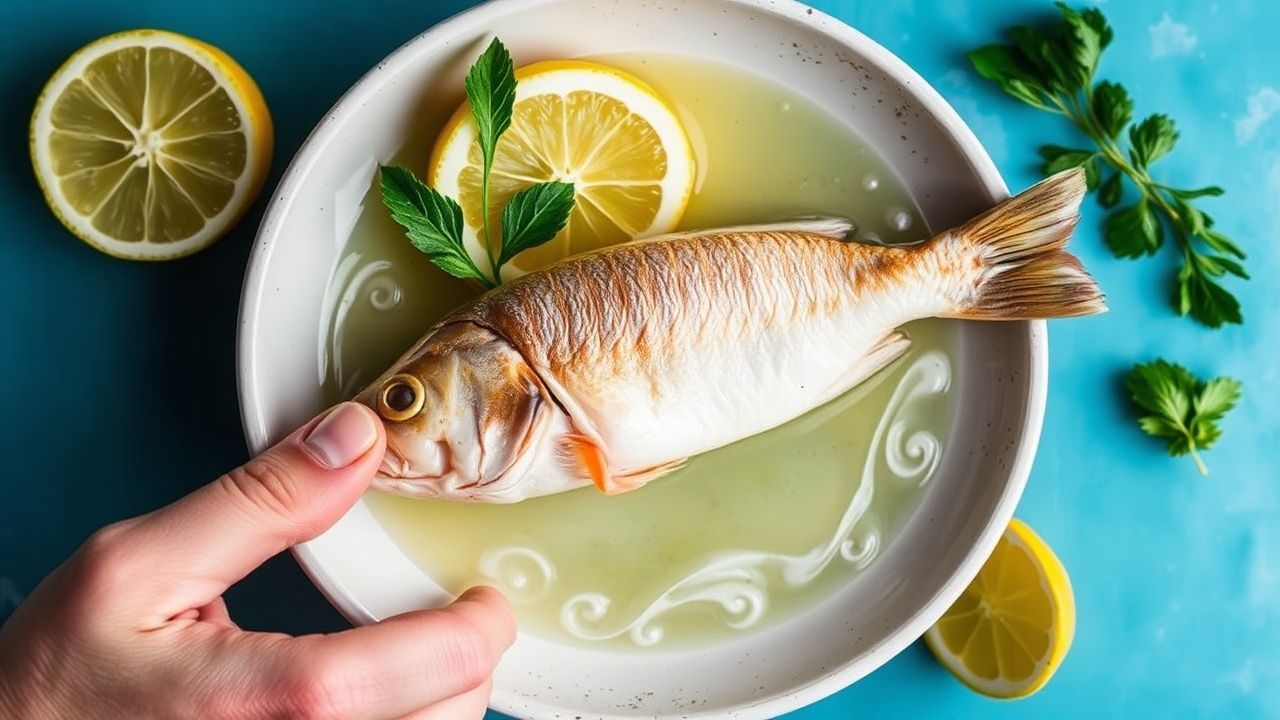

Acid cure with lemon denatures fish proteins and produces a cooked texture without heat. The citrus acid changes protein folding so flesh becomes opaque and firmer while remaining cold.
- What happens during an acid cure when lemon meets raw fish
- How acid alters proteins during an acid cure
- Why color and texture change under an acid cure
- Key variables for successful acid cure: time, acidity, temperature and cut
- Which acids produce the acid cure effect and how they differ
- Food-safety realities and limitations of an acid cure
- Best practices for safer acid curing
- Culinary applications and technique tips for acid cure
- Practical recipe guidelines for an acid cure
- Common technique mistakes and fixes when acid curing
- Summary: science, flavor, and safety of acid cure
- FAQ
- Acid denatures proteins: low pH unfolds muscle proteins and re-bonds them into firmer networks.
- Not a sterilizer: acid cure reduces some microbes but does not reliably eliminate parasites or all bacteria.
- Timing and pH matter: juice strength, contact time, and slice thickness determine the endpoint.
- Other acids work: lime, vinegar and fermented citrus create similar chemistry with distinct flavor.
What happens during an acid cure when lemon meets raw fish
When you apply lemon to raw fish as an acid cure, hydrogen ions from citric acid attack the protein’s charge landscape. That chemical action unfolds three-dimensional protein structures and changes mouthfeel in minutes.
The visible shift from translucent to opaque comes from new protein arrangements that scatter light differently. The result mimics heat-cooked flake and firmness while the tissue remains physically cold.
How acid alters proteins during an acid cure
At low pH, charged side chains on amino acids pick up or release protons and disrupt stabilizing salt bridges and hydrogen bonds. This process — protein denaturation — changes tertiary structure and exposes hidden regions.
Exposed hydrophobic patches then aggregate and form an intermolecular matrix. That new network traps water and changes the mechanical properties that we perceive as firmness and flaking.
Step-by-step molecular changes (acid cure mechanics)
First, hydrogen ions neutralize salt bridges and weaken hydrogen bonds inside muscle proteins. The native fold destabilizes and the polypeptide relaxes into an extended configuration.
Second, exposed hydrophobic areas cluster and form fresh contacts between chains. Finally, the reorganized protein matrix scatters light differently and produces the opaque, cooked look.
For background on protein structure and denaturation see protein and protein denaturation on Wikipedia.
Why color and texture change under an acid cure
The milky-white surface after an acid cure does not come from pigment loss; it results from increased light scattering by the altered protein matrix. Rearranged fibers refract light more strongly than the native proteins.
Texturally, acid-induced networks reduce the jelly-like quality of raw muscle and give a firmer, flakier bite. That mechanical change explains why we describe acid-cured fish as “cooked.”
Key variables for successful acid cure: time, acidity, temperature and cut
Four practical variables determine how far an acid cure proceeds: the curing medium pH, contact time, curing temperature, and fish thickness. Change any one and you change the outcome.
Thin sashimi-style slices in fresh citrus firm within minutes; a one-inch steak often needs an hour or more. Cold slows microbial growth and slightly slows the chemistry, so most chefs cure in the refrigerator.
Example timings and targets for acid cure
As a rule of thumb, thin slices commonly firm within 10–30 minutes in straight lemon or lime juice. Thicker pieces—one inch or more—may require 45–90 minutes to reach an opaque, flaky texture.
Species differences matter. Lean white fish such as sea bass or snapper react predictably, while oily fish change flavor and feel richer under acid because of fat content.
Which acids produce the acid cure effect and how they differ
Citric acid from lemon and lime works quickly because it lowers pH effectively and donates protons to the protein environment. Acetic acid in vinegar acts similarly but adds a distinct tang and alters mouthfeel.
Fermented citrus and other sour liquids achieve the same fundamental chemistry while adding aromatics, sugars, or fermentation byproducts that change the final dish’s flavor profile. For reference on common culinary acids see vinegar.
Food-safety realities and limitations of an acid cure
An acid cure changes proteins but does not reliably destroy all bacteria, viruses, or parasites. Heat inactivates many pathogens by both denaturing proteins and disrupting membranes; acid alone gives only partial microbial control.
Many chefs treat acid-cured seafood with the same precautions used for raw preparations: select high-quality suppliers, maintain cold storage, and follow supplier guidance on parasite control. For regulatory context see food safety.
Some parasites—most notably anisakid nematodes—require freezing to inactivate rather than acid exposure. For details on parasite risks see anisakiasis.
Best practices for safer acid curing
Keep fish chilled below 4°C (40°F) while you work and during marination. Cold slows pathogen growth and helps you control the timing of the acid cure reaction.
If you plan prolonged acid contact or prepare for vulnerable diners, consider freezing to supplier-recommended temperatures beforehand. Freezing kills many parasites that acid will not neutralize.
Work on clean surfaces, use separate utensils for raw fish, and squeeze fresh citrus to maintain predictable acidity. Ask your fishmonger about handling and whether the fish was previously frozen according to safety guidance.
Culinary applications and technique tips for acid cure
Acid curing underpins dishes such as ceviche and tiradito, and it shares chemistry with salt cures like gravlax where ionic strength and time change protein structure. Each technique balances acidity, salt, and time to reach the desired bite and taste.
Chefs often pair acid-cured fish with contrasting textures—crisp vegetables, crunchy grains, or toasted seeds—to offset the softening effect of the protein network. Aromatics (chilies, herbs, citrus zest) add flavor without altering the core chemistry.
For recipe ideas and variations, consult internal resources such as our ceviche recipes and the acid cure tag to compare times and acid sources.
Practical recipe guidelines for an acid cure
Select firm, low-fat white fish like sea bass, snapper, or halibut for steady, predictable results. Oily fish work but their fats alter both flavor and texture under acid.
Slice fish uniformly so acid penetrates consistently. Cover pieces evenly with citrus and note the clock; record times and juice volumes to repeat successful batches reliably.
Common technique mistakes and fixes when acid curing
Overlong marination can make fish overly firm and chalky; under-marination leaves an undesirable translucent center. Start conservatively with time and extend in small increments when testing.
Using bottled acidulants of unknown strength produces inconsistent results. Prefer freshly squeezed citrus or measure acidity by recipe standards for predictable outcomes.
Summary: science, flavor, and safety of acid cure
Lemon “cooks” fish by chemically changing protein structure: acid-induced denaturation unfolds proteins and allows new bonds that firm flesh and scatter light. The result resembles heat-cooked fish in texture and appearance without thermal denaturation.
This method preserves delicate flavors and highlights bright citrus notes, but it does not replace the microbial control offered by heat. Successful acid curing blends precise timing, careful sourcing, and attentive hygiene.
FAQ
How long does lemon take to “cook” fish?
Thin slices often reach the desired opaque texture in 10–30 minutes depending on juice strength. Thicker pieces may require 45–90 minutes; judge by texture rather than clock alone.
Does lemon make fish safe to eat?
No. Lemon reduces some microbial activity but does not reliably kill parasites or many bacteria. Use high-quality, properly handled fish and maintain refrigeration to reduce risk.
Can other acids replace lemon in an acid cure?
Yes. Lime, vinegar (acetic acid), and other acidic liquids denature proteins similarly while adding distinct aromatics. Choose the acid based on the flavor you want to highlight.
What fish species work best for an acid cure?
Lean, firm white-fleshed species give the most predictable texture changes. Oily fish will deliver richer flavor and a softer mouthfeel under acid.
How can I test doneness without over-curing?
Cut or test a small sample after the minimum recommended time. The ideal piece will be opaque and firm, yet still tender; remove the fish from acid immediately when you hit that point.
See also: internal resources: acid cure tag and ceviche recipes.
See also: acid cure