
By using this site, you agree to the Privacy Policy and Terms of Use.
Accept
CookOrBitCookOrBitCookOrBit
  • Home
  • About Us
  • Ingredient Science
    • Flavor & Aroma
    • Protein Chemistry
    • Sugar & Starch
    • Fats & Emulsions
  • Cooking Techniques
    • Searing & Grilling
    • Baking & Roasting
    • Boiling & Steaming
    • Low & Slow
  • Kitchen Experiments
    • DIY Ferments
    • Flavor Tests
    • Gadget Testing
    • Molecular Gastronomy
  • Food Myths
    • Searing Myth
    • 5-Second Rule
    • MSG Myths
    • Microwave Myths
  • Tools
  • More
    • Extra Picks
    • Quick & Easy
      • Breakfast Ideas
      • Desserts
      • Snacks
      • Soups
    • Global Flavors
      • Asian Street Eats
      • Latin Comforts
      • Mexican Flavors
      • Modern Mediterranean
CookOrBitCookOrBit
  • Home
  • About Us
  • Ingredient Science
  • Cooking Techniques
  • Kitchen Experiments
  • Food Myths
  • Tools
  • More
Search
  • Home
  • About Us
  • Ingredient Science
    • Flavor & Aroma
    • Protein Chemistry
    • Sugar & Starch
    • Fats & Emulsions
  • Cooking Techniques
    • Searing & Grilling
    • Baking & Roasting
    • Boiling & Steaming
    • Low & Slow
  • Kitchen Experiments
    • DIY Ferments
    • Flavor Tests
    • Gadget Testing
    • Molecular Gastronomy
  • Food Myths
    • Searing Myth
    • 5-Second Rule
    • MSG Myths
    • Microwave Myths
  • Tools
  • More
    • Extra Picks
    • Quick & Easy
    • Global Flavors
Follow US
  • Advertising Policy
  • Contact Us
  • Cookie Policy
  • Copyright Notice
  • Disclaimer
  • Privacy Policy
  • Terms of Service
By Fimaw.com
Unlocking Flavor: How Deglazing Captures Searing’s Essence
CookOrBit > Blog > Extra Picks > Unlocking Flavor: How Deglazing Captures Searing’s Essence
Extra Picks

Unlocking Flavor: How Deglazing Captures Searing’s Essence

William J. Kroll
By William J. Kroll
Published: November 1, 2025
Share
SHARE

In the world of cooking, searing is often hailed as the alchemist’s touch-transforming simple ingredients into captivating dishes with a tapestry of rich, caramelized flavors. Yet, the true magic often lies just beyond the sear, in a technique that unlocks and harnesses those browned bits clinging stubbornly to the pan. Enter deglazing: a culinary maneuver that captures the essence of searing, turning what might be discarded into a luscious foundation for sauces and gravies. This article delves into the art and science of deglazing, revealing how it elevates your cooking by preserving the depth and complexity born from the searing process, and inviting your palate on an unforgettable journey of flavor.

Contents
  • Prep and Cook Time
  • Yield
  • Difficulty Level
  • Ingredients
  • Instructions
  • Chef’s Notes: Tips for Success
  • Serving Suggestions
  • Q&A
  • Concluding Remarks

Unlocking Flavor: How Deglazing Captures Searing’s Essence

Unlocking flavor is an art and science rolled into one, especially when it comes to capturing the essence of searing through deglazing. Understanding how heat transforms proteins, fats, and sugars on a skillet’s surface reveals why that signature golden crust carries so much depth and complexity. Once the sear has worked its magic, the next crucial step is choosing the perfect deglazing liquid to dissolve that aromatic fond and elevate your dish with layers of rich, soulful flavor.

Prep and Cook Time

  • Prep Time: 10 minutes
  • Cook Time: 20 minutes
  • Total Time: 30 minutes

Yield

Serves 4 generously, perfect for a family dinner or intimate gathering.

- Advertisement -

Difficulty Level

Medium – great for home cooks looking to refine their technique and flavor mastery.

Ingredients

  • 2 tbsp olive oil, extra virgin for searing
  • 4 boneless chicken breasts, patted dry
  • Salt and freshly ground black pepper, to taste
  • 1 medium shallot, finely minced
  • 1/2 cup dry white wine (such as Sauvignon Blanc), or preferred deglazing liquid
  • 1/2 cup chicken broth, low sodium
  • 1 tsp fresh thyme leaves, finely chopped
  • 1 tbsp unsalted butter, cold, cut into pieces
  • 1 tsp honey (optional, to balance acidity)

Instructions

  1. Preheat your skillet over medium-high heat until shimmering. Add olive oil and swirl to coat.
  2. Season chicken breasts liberally with salt and pepper. Place them into the skillet, leaving space between pieces. No overcrowding!
  3. Sear the chicken without moving until a deep golden crust forms, about 4-5 minutes per side. Use tongs to flip carefully. Remove and set aside on a warm plate.
  4. Reduce heat to medium. Add minced shallot to the hot skillet; sauté until translucent and fragrant, about 2 minutes, stirring frequently.
  5. Pour in the white wine to deglaze, scraping up all the caramelized bits (fond) from the pan’s bottom with a wooden spoon. These browned morsels hold the concentrated flavors of searing’s essence.
  6. Allow liquid to reduce by half, intensifying the aroma and flavor, approximately 3-4 minutes.
  7. Add chicken broth and thyme, stirring to combine. Return the chicken to the pan, spooning some sauce over each piece.
  8. Simmer gently until the chicken is cooked through, about 6-8 minutes.
  9. Finish with cold butter and a drizzle of honey to balance acidity and add a silky texture; stir until melted and the sauce is glossy.
  10. Adjust seasoning with salt and pepper as needed. Remove thyme stems if used whole, then serve immediately.

Chef’s Notes: Tips for Success

  • Selecting Deglazing Liquids: White wine offers brightness and a nuanced acid profile, but alternatives like sherry, cider, or even balsamic vinegar provide exciting flavor twists. Experiment according to your dish’s mood.
  • Capturing Aromatics: Never rush sautéing shallots or aromatics-they coax out foundational fragrance that perfectly complements the rich fond.
  • Balancing Sauces: Honey or a pinch of sugar elegantly softens the acid of wine or vinegar without overpowering.
  • Make Ahead: The sauce can be prepared ahead and gently reheated; add butter last minute for freshness and shine.
  • Troubleshooting: If fond sticks too firmly, deglaze over a slightly higher heat, and add more liquid to coax it loose without burning again.

Serving Suggestions

Present your succulent chicken breast layered with sauce onto warm plates, garnished with a sprinkle of fresh thyme and a wedge of lemon for brightness. Pair with creamy mashed potatoes or roasted seasonal vegetables to soak up every last drop of that luscious fond-enhanced sauce. A crusty baguette alongside is ideal for mopping the pan and savoring the full spectrum of flavor.

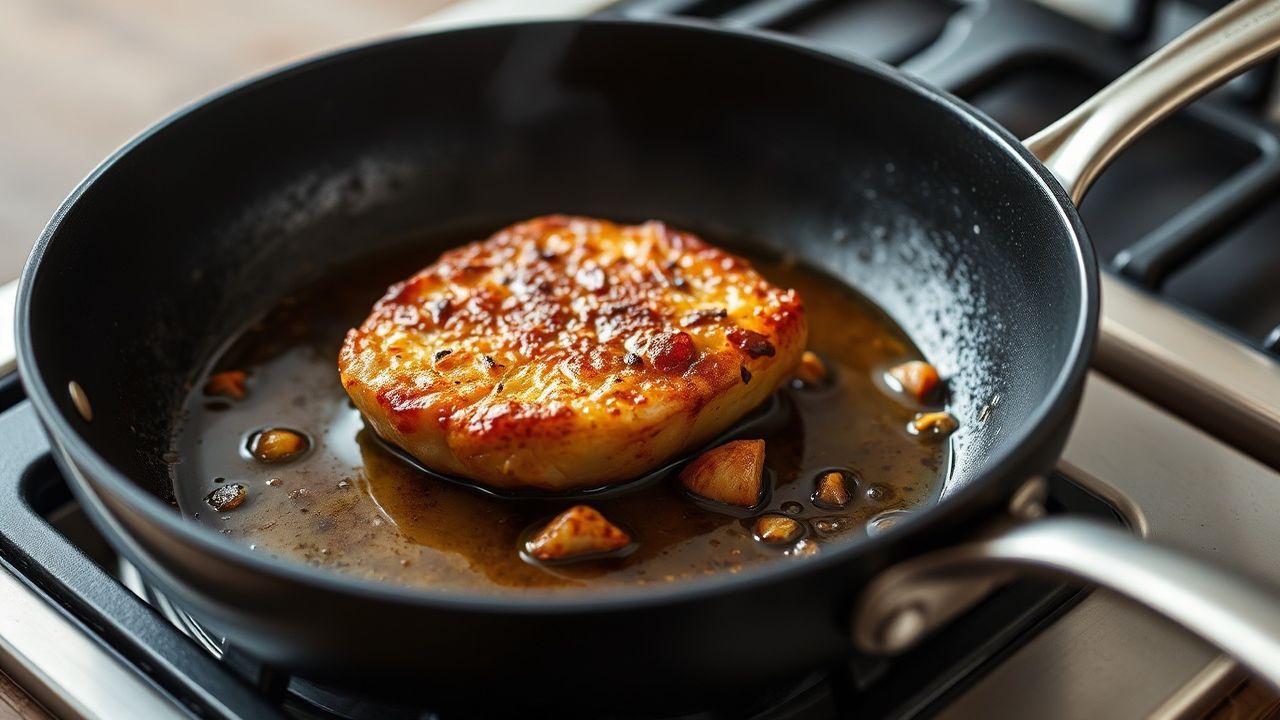
Unlocking flavor by deglazing captures searing's essence - sizzling skillet with golden seared chicken and shimmering sauce

- Advertisement -
Nutrient Per Serving
Calories 320 kcal
Protein 38 g
Carbohydrates 5 g
Fat 14 g

Discover more about enhancing sauces with aromatics and techniques at our Ultimate Guide to Sauces. For a deeper scientific dive, visit ScienceDaily on the Maillard Reaction.

Q&A

Q&A: Unlocking Flavor – How Deglazing Captures Searing’s Essence

Q1: What exactly is deglazing, and why is it so important in cooking?
A1: Deglazing is the magical process of adding liquid-like wine, broth, or even water-to a hot pan after searing meat or vegetables. This liquid loosens and dissolves the caramelized browned bits (fond) stuck to the pan, capturing the concentrated flavors that searing creates. It transforms these bits into a rich, complex sauce, elevating the dish from good to unforgettable.

- Advertisement -

Q2: What are those browned bits, or “fond,” and why should I care about them?
A2: Fond is the flavor-packed residue that clings to your pan when you sear food at high heat. Those tiny caramelized pieces are bursting with savory, nutty, and umami goodness-the very essence of why searing adds depth to dishes. Deglazing scrapes up these hidden treasures and reincorporates them, making sure none of that flavor goes to waste.

Q3: Can I deglaze with any liquid, or are some better than others?
A3: The choice of liquid matters and depends on the flavor profile you want. Wine adds acidity and complexity, broth adds savory depth, vinegar brings brightness, and even juices or sake can offer unique twists. Water works too if you’re going for simplicity, but the more flavorful your deglazing liquid, the richer your sauce becomes.

Q4: When is the best time to deglaze during cooking?
A4: Right after searing and before you add other ingredients like vegetables or starches. The pan should still be hot so the fond can dissolve easily. Pour your liquid in, let it bubble and reduce, scraping the pan with a wooden spoon to release all those clinging bits, and voilà-a sauce base emerges.

Q5: How does deglazing improve the overall taste of a dish?
A5: It multiplies flavor! Searing caramelizes surfaces, creating complex tastes, but sometimes those flavors stay stuck on the pan. Deglazing retrieves and amplifies those bursts of savoriness, blending them into your sauce or stew. It turns a good sear into a deeply immersive flavor experience that coats your palate with every bite.

Q6: Can deglazing work with vegetarian or vegan dishes too?
A6: Absolutely! Deglazing is a technique, not a meat-only trick. Whether you’re roasting mushrooms, caramelizing onions, or sautéing tofu, fond forms on the pan bottom, hiding layers of flavor. Use vegetable broth, wine, or plant-based liquids to harvest those flavors, creating vibrant sauces that showcase the seared essence of your plant-forward meals.

Q7: Any tips for mastering deglazing like a pro?
A7: Keep your pan hot but not smoking, choose a liquid that complements your dish, and don’t rush-allow the deglazing liquid to simmer and reduce slightly for maximum flavor concentration. Always scrape gently to lift the fond without breaking the fond’s complexity. With practice, deglazing becomes your secret weapon for culinary richness.


Unlocking flavor is about honoring every element your cooking creates-deglazing makes sure searing’s essence never stays behind. It’s the stroke of genius that turns simple cooking into an artful symphony of taste!

Concluding Remarks

As the final swirl of deglazing liquid meets the caramelized gold at the pan’s base, the essence of searing is set free-transforming mere bits of browned residue into a symphony of complex, savory notes. Unlocking flavor through deglazing is both an art and a science, a simple technique that captures the soul of a dish and elevates it to new heights. So next time you sear, don’t leave those flavorful treasures behind; embrace the magic of deglazing, and watch your cooking sing with richer, deeper taste. After all, every drop tells a story-a story of heat, transformation, and the rich rewards of culinary curiosity.
Unlocking Flavor: How Deglazing Captures Searing's Essence

Brighten Your Snack Time with Roasted Red Pepper Hummus
Savor Chicken Satay: A Flavorful Journey with Spicy Peanut Sauce
Hearty Beef and Bean Burrito Bowls: Flavorful Fiesta Bowls
Protein Powder Magic: Boosting Recipes with Power and Taste
Fluffy Southern Cathead Biscuits: Timeless Recipe Unveiled
TAGGED:anddeglazinghowtheunlockingyour
Share This Article
Facebook Pinterest Whatsapp Whatsapp LinkedIn Telegram Threads
What do you think?
Love0
Sad0
Happy0
Sleepy0
Angry0
Dead0
Wink0
Previous Article The Science Behind a Tender, Juicy Steak’s Perfect Interior The Science Behind a Tender, Juicy Steak’s Perfect Interior
Next Article Zesting Science: Unraveling Citrus’ Flavorful Secrets Zesting Science: Unraveling Citrus’ Flavorful Secrets
Savor the Season: Roasted Squash and Apple Soup Delight
Extra Picks
Bake Fresh Delight: The Art of Homemade Pita Bread
Extra Picks
Roasted Cauliflower & Chickpea Curry: A Flavorful Feast
Extra Picks
Hearty Roasted Vegetable Stew: A Flavorful Comfort Dish
Extra Picks

Tags

and are art baked beef behind brighten broccoli butter cabbage carrot cauliflower cheese chemistry chicken chickpea chili coconut cooking cozy cracking crafting creamy crisp crispy crust does dough dry easy egg exploring fish flavor flavorful food for garlic golden grill guide happens healthy hearty heat how inside keto lemon magic make master mastering meat microwave pasta perfect perfectly power protein rice roasted safe Salad savor savoring savory science searing secret secrets sizzling sous squash steak sugar sweet testing that the tips top turkey ultimate umami unlock unlocking unraveling unveiling vegetable velvety water what when whipping wholesome why with your zesty
February 2026
M T W T F S S
 1
2345678
9101112131415
16171819202122
232425262728  
« Jan    

You Might Also Like

Unlocking the Heat: Understanding Convection in Grills
Searing & Grilling

Unlocking the Heat: Understanding Convection in Grills

William J. Kroll
William J. Kroll
November 16, 2025
The Science Behind Crafting the Ultimate Smash Burger Flavor
Extra Picks

The Science Behind Crafting the Ultimate Smash Burger Flavor

William J. Kroll
William J. Kroll
October 29, 2025
Master the Art of the Perfectly Boiled Potato Every Time
Boiling & Steaming

Master the Art of the Perfectly Boiled Potato Every Time

William J. Kroll
William J. Kroll
September 30, 2025
Sear It Right: Unlocking the Secret to Perfectly Cooked Food
Searing Myth

Sear It Right: Unlocking the Secret to Perfectly Cooked Food

William J. Kroll
William J. Kroll
September 29, 2025
How Fat Unlocks and Carries Flavor: The Secret Ingredient
Flavor & Aroma

How Fat Unlocks and Carries Flavor: The Secret Ingredient

William J. Kroll
William J. Kroll
November 10, 2025
Unlocking Flavor: Why Your Vegetarian Meal Feels Incomplete
MSG Myths

Unlocking Flavor: Why Your Vegetarian Meal Feels Incomplete

William J. Kroll
William J. Kroll
November 7, 2025
Follow US
By Fimaw.com © All Rights Reserved.
  • Advertising Policy
  • Contact Us
  • Cookie Policy
  • Copyright Notice
  • Disclaimer
  • Privacy Policy
  • Terms of Service
Welcome Back!

Sign in to your account

Username or Email Address
Password

Lost your password?