

In the world of chocolate, tempering turns melted cocoa into a glossy, firm, and snappy finished product. This piece explains the precise temperature stages, crystal formation, and practical methods that professionals use to get consistent results.
- What tempering chocolate is and why it matters
- Prep and Cook Time
- Yield and Difficulty
- Ingredients and tools
- Step-by-step instructions
- Alternative tempering methods
- Tips for success
- Serving suggestions and plating ideas
- Nutritional information and storage
- FAQ
- What does it mean to temper chocolate?
- Can I temper without special equipment?
- Why does chocolate bloom and how does tempering prevent it?
- Which chocolates need tempering?
- How do I know my chocolate is perfectly tempered?
- In Retrospect
- Key takeaway: Tempering aligns cocoa butter into stable beta crystals for shine and snap.
- Timeframe: Small batches take about 20–35 minutes from start to finish.
- Methods: Seeding, tabling, and machine tempering all work—choose by batch size.
- Tools matter: Use a reliable thermometer and dry utensils for success.
What tempering chocolate is and why it matters
Tempering is a controlled heat-and-cool routine that stabilizes the fat crystals in chocolate. It creates the glossy surface, firm snap, and stable shelf life that define professional chocolate.
At the molecular level, tempering promotes the formation of the stable beta crystal form in cocoa butter. Stable crystals resist bloom and give chocolate its desirable texture; see tempering (chocolate) for the technical background.
Prep and Cook Time
Preparation: 15 minutes. Gather equipment: heatproof bowl, precise thermometer, spatula, and dry bowls for seeding.
Tempering: Expect about 20 minutes of temperature control for a 300 g batch. Small adjustments add a few minutes for testing and reheat cycles.
Yield and Difficulty
Yield: This guide targets approximately 300 g of tempered chocolate—enough for small molds or coating a dozen truffles.
Difficulty: Medium. You need steady attention to temperature and clean, dry tools. The technique rewards practice.
Ingredients and tools
Use high-quality couverture chocolate with a higher cocoa butter percentage for reliable tempering. Couverture melts smoothly and forms stable crystals more predictably than compound coatings.
Essential tools: a digital probe thermometer (±0.5 °C), a heatproof bowl for a double boiler, a marble slab or spatula for tabling, and clean dry utensils.
- 300 g couverture chocolate (55% cocoa or higher is ideal)
- Digital thermometer
- Heatproof bowl and saucepan
- Parchment paper or silicone mats for testing
Step-by-step instructions
These steps describe the commonly used seeding method, which works reliably for home and small-batch production. The method uses melted chocolate and added solid chocolate pieces to guide crystal formation.
Work in a cool, dry place and keep water away from chocolate—moisture causes chocolate to seize and ruin tempering attempts.
- Chop evenly: Chop the chocolate into small, uniform pieces so they melt and cool evenly.
- Melt two-thirds: Place two-thirds of the chocolate in a heatproof bowl over gently simmering water. Heat until 45–50 °C (113–122 °F) for dark chocolate. Stir continuously to avoid local overheating.
- Seed and cool: Remove the bowl from heat and add the remaining third of chopped chocolate. Stir until the mixture cools to 27–28 °C (80–82 F). The added solids act as seeds to form stable crystals.
- Rewarm to working temp: Warm the chocolate slightly to 31–32 °C (88–90 F) for dark chocolate. Keep the temperature steady while you work—this is the working range for molding and coating.
- Test set: Spread a small amount on parchment and let it set at room temperature. Properly tempered chocolate sets within 5–10 minutes and shows a glossy surface and clean snap.
- Use immediately: Keep the bowl on a warm surface set below the maximum working temperature or use a tempering device for longer work periods.
If the chocolate thickens or loses shine, gently reheat to the upper working temp and re-seed if necessary. Reheating above the initial melt temperature will destroy the desired crystal structure.
Alternative tempering methods
Tabling involves pouring melted chocolate onto a cool marble slab, spreading and manipulating it to seed crystals before returning it to a warm bowl. This method gives chefs tactile control over crystallization.
For larger batches, a tempering machine automates temperature cycling and agitation. Machines reduce hand error and maintain working temperature for long production runs.
Tips for success
Temperature control wins: Use a reliable thermometer and record readings. Small deviations change the crystal forms you produce.
Work quickly but deliberately. Keep the workspace free of drafts and direct heat sources that cause uneven cooling.
If you plan to explore shaping and decoration, check internal resources like advanced chocolate molding and chocolate basics to build reliable workflows.
Serving suggestions and plating ideas
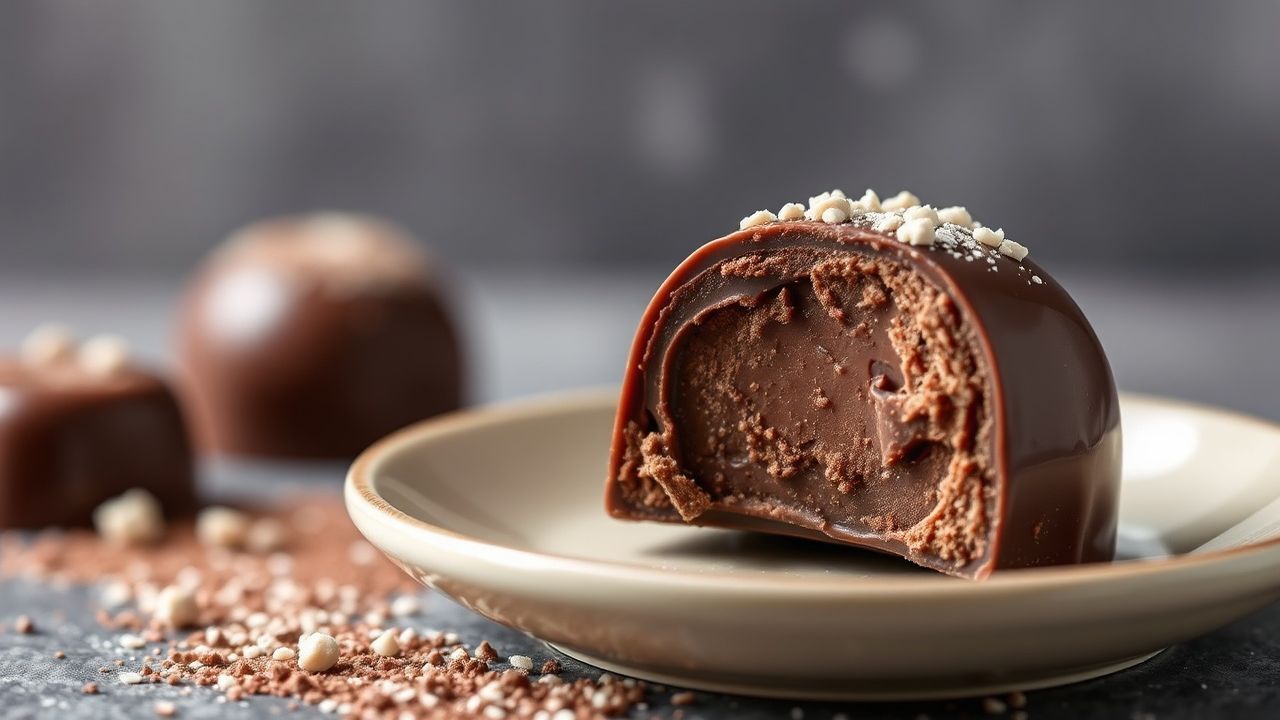
Tempered chocolate makes elegant shards, shell-coated truffles, glossy bars, and crisp decorations. Use tempered shells for filled chocolates to get a professional thin shell that snaps cleanly.
Light garnishes—flaked salt, toasted nuts, or edible gold dust—complement the shine and texture. Pair with strong coffee or a balanced dessert wine to showcase chocolate complexity.
Nutritional information and storage
Typical values vary by chocolate type and added ingredients. For plain dark chocolate, expect roughly 550 kcal per 100 g with around 35 g fat, 45 g carbohydrates, and 7 g protein.
Store tempered chocolate in a cool, dry place away from strong odors. Ideal storage is 15–18 °C at 50–60% relative humidity. Rapid temperature swings cause bloom and reduce shelf appeal.
| Calories | Protein | Carbs | Fat |
|---|---|---|---|
| 550 kcal | 7 g | 45 g | 35 g |
FAQ
What does it mean to temper chocolate?
Tempering means melting and cooling chocolate to produce stable beta crystals in the cocoa butter. The result is a glossy, firm product with a clean snap.
Can I temper without special equipment?
Yes. You need a reliable thermometer and dry tools. The seeding method works well at home; tabling works for those comfortable working quickly on a cool surface.
Why does chocolate bloom and how does tempering prevent it?
Bloom appears when fat or sugar migrates to the surface, leaving a dull, dusty film. Proper tempering creates stable fat crystals that resist migration and prevent fat bloom.
Which chocolates need tempering?
All chocolates containing cocoa butter—dark, milk, and white—benefit from tempering. Compound coatings with vegetable fats do not require cocoa-butter tempering.
How do I know my chocolate is perfectly tempered?
Tempered chocolate sets quickly at room temperature, shows a bright sheen, and snaps cleanly. Run a small test on parchment before committing to coating or molding.
In Retrospect
Tempering bridges precise temperature control and practical technique. Mastering it takes deliberate practice, and each batch teaches small improvements.
Use reliable tools, work in dry conditions, and follow temperature ranges for your chocolate type. With consistent technique you achieve the glossy finish and satisfying snap that define trained chocolate work.
Further reading on the chemistry and materials used in chocolate work includes authoritative sources on cocoa butter, the broader topic of chocolate, and the physical process of crystallization.
See also: Tempering Chocolate