
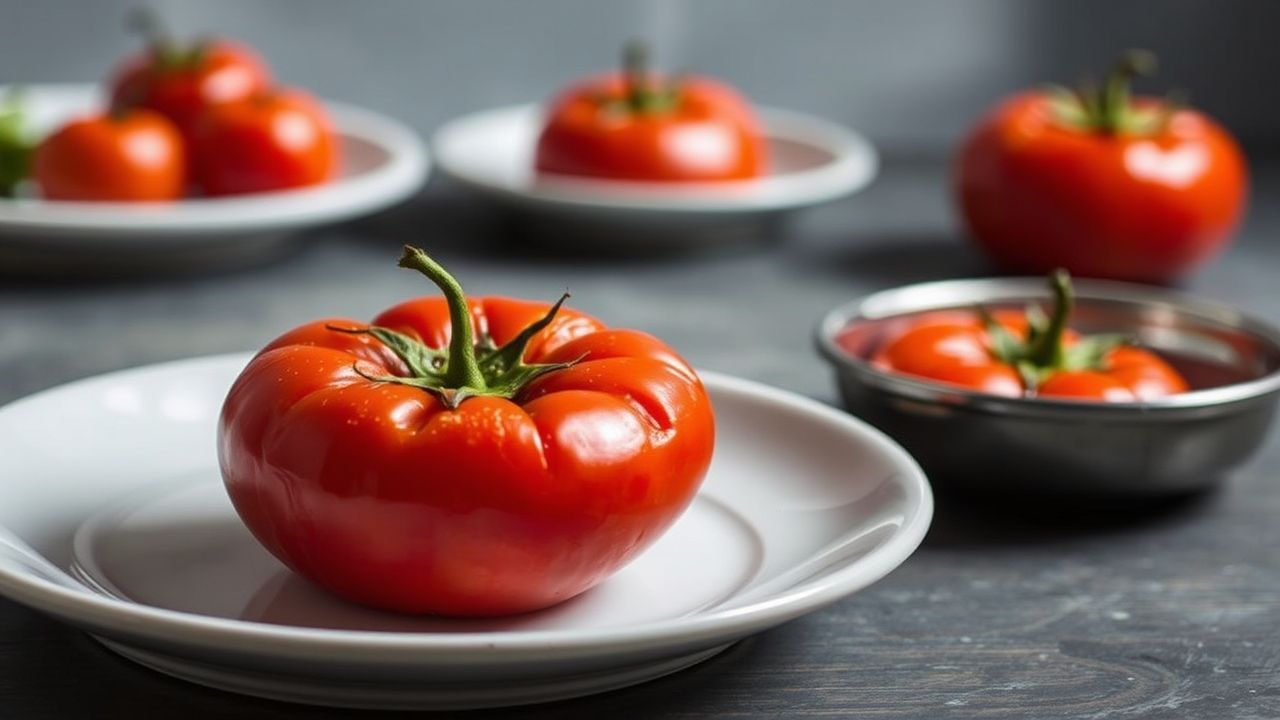

Roasting tomatoes converts bright, acidic fruit into concentrated, savory jewels by driving chemical changes that transform sugars, amino acids, and acids into richly flavored compounds. Precise heat, time, and simple seasonings let you control caramelization, Maillard browning, and volatile aroma release to craft reliably delicious results.
- Slow, controlled heat amplifies natural sugars and umami for depth.
- Surface browning (Maillard) delivers savory, nutty notes.
- Moisture management concentrates flavor without collapsing texture.
- Simple seasonings tune acidity and aroma for balance.
The Science of Sweetness and Acidity in Roasting Tomatoes
Roasting changes tomato chemistry at the molecular level. Water evaporates, concentrating sugars and organic acids such as citric and malic acid, which reduces perceived sharpness and increases sweetness.
As temperature rises, reducing sugars react with free amino acids in a sequence known as the Maillard reaction, producing brown pigments and savory aroma compounds. Additionally, caramelization of sugars generates sweet, toasty flavors that complement Maillard-derived notes.
How Texture and Water Activity Change
Roasting reduces water activity by evaporating moisture, which concentrates soluble solids and thickens the flesh. This change improves mouthfeel and allows volatile aroma compounds to dominate the eating experience.
Cell wall breakdown releases pectins and soluble sugars, softening the fruit while the exterior develops a more structured, slightly chewy edge. For explanation of water movement and solute effects, consider basic osmotic principles that guide moisture migration during heating.
Prep & Timing
Preparation: 10 minutes. Roasting: 45–60 minutes at 300°F (150°C) for slow concentration, or 20–40 minutes at 375–425°F (190–220°C) for faster caramelization.
Choose the time/temperature trade-off that matches your goal: lower temp preserves acidity and gently concentrates sugars; higher temp accelerates Maillard reactions and surface browning. Adjust based on tomato size and water content.
Yield
Serves 4 as a side or component for other dishes. Yield varies with tomato type and degree of shrinkage after roasting.
Difficulty Level
Easy to medium: the technique relies on time and observation rather than advanced skills. With practice, results become highly consistent.
Ingredients
Use ripe, meaty varieties such as Roma or plum for predictable texture and fewer seeds. Ripe fruit provides a favorable sugar-to-acid ratio that responds best to heat-driven flavor development.
- 2 pounds ripe Roma tomatoes, halved lengthwise
- 3 tablespoons extra virgin olive oil
- 1 teaspoon kosher salt
- ½ teaspoon freshly ground black pepper
- 3 cloves garlic, peeled and left whole
- 1 tablespoon fresh thyme leaves or 1 teaspoon dried thyme
- 1 teaspoon balsamic vinegar (optional, to finish)
Instructions
Preheat the oven to your chosen temperature. Arrange halved tomatoes cut side up on a parchment-lined baking sheet to encourage evaporation and browning of the exposed surface.
Drizzle with olive oil, then season with salt, pepper, and thyme; nestle whole garlic cloves among the halves. Roast until the flesh becomes tender and edges show golden-brown caramelization; timing depends on temperature and tomato size.
- 300°F / 150°C: Roast slowly for 45–60 minutes for balanced concentration and gentle browning.
- 375–425°F / 190–220°C: Roast 20–40 minutes for faster surface browning and more pronounced Maillard notes.
- Finish: Remove when edges brown and flesh is tender; cool slightly and, if desired, finish with a splash of vinegar to brighten flavor.
Tips for Success
Selecting tomatoes: Firm, ripe fruit yields the best concentration. Large beefsteaks can work, but they require longer roasting and may produce more liquid.
Surface preparation: Halve lengthwise to expose more flesh and maximize caramelized surface area. Light oiling promotes even heat conduction and better browning.
Moreover, taste at the 30–45 minute mark when using moderate heat to decide whether to extend roasting. For underripe tomatoes, a pinch of sugar or a drizzle of honey before roasting compensates for low reducing sugar content and improves caramelization.
How Seasonings Influence Chemistry
Salt draws moisture out through osmotic action, concentrating sugars and amplifying perceived sweetness. Oils distribute heat and help extract fat-soluble aroma compounds, improving aroma delivery on the palate.
Herbs contribute volatile terpenes and phenolics that meld with Maillard and caramel notes. Acidic finishes such as a light vinegar splash restore balance by lifting the flavors and rounding the profile.
Serving Suggestions
Use roasted tomatoes as a component to elevate many dishes. They pair with creamy cheeses, rustic breads, pastas, and vinaigrette-driven salads to add concentrated sweetness and savory depth.
For a simple application, mound roasted halves on fresh mozzarella or burrata with basil leaves and a pinch of flaky salt. Alternatively, pulse many roasted tomatoes with a drizzle of olive oil for a quick, intensely flavored sauce.
Nutrition & Storage
Roasting concentrates calories and sugars per serving due to moisture loss, though per-tomato nutrient density remains high for vitamins and antioxidants. Fat content increases slightly when oil is added.
Store leftovers refrigerated in an airtight container for up to 3 days. Reheat gently or use them cold to add contrast to salads and composed plates.
| Nutritional Info (per serving) | Calories | Protein | Carbs | Fat |
|---|---|---|---|---|
| Roasted Tomatoes | 90 | 2g | 8g | 6g |
FAQ
Why do roasted tomatoes taste sweeter than raw ones?
Heat reduces water content and concentrates natural sugars, which elevates perceived sweetness. Furthermore, thermal reactions create new flavor compounds that complement and enhance fruit sugars.
Which chemical reactions produce savory notes during roasting?
The Maillard reaction between reducing sugars and amino acids forms complex, savory and nutty compounds. Caramelization of sugars also contributes sweet and toasty flavors that work with Maillard products.
How should I adjust roasting for juicier vs. meatier varieties?
For juicier tomatoes, use higher heat with shorter time to encourage surface browning while limiting collapse. For meatier varieties, slower roasting at moderate temperature concentrates flavor uniformly without drying the interior.
Can I add sugar or honey to improve caramelization?
Yes. A light sprinkle of sugar or a small drizzle of honey helps under-ripe tomatoes reach desirable caramelization. However, use sparingly to avoid cloying sweetness and to preserve acidity balance.
How do I preserve roasted tomatoes for longer storage?
Refrigerate in airtight containers for short-term use (up to 3 days) or freeze portions for longer storage. Alternatively, preserve in a sterilized jar covered with oil and refrigerate, which extends usable life while adding flavor.
Final note: Controlled heat, attention to moisture, and minimal seasonings let the tomato’s natural chemistry deliver refined, layered flavors. Apply these principles consistently to produce reliable, restaurant-quality roasted tomatoes at home.
See also: Roasted Tomatoes