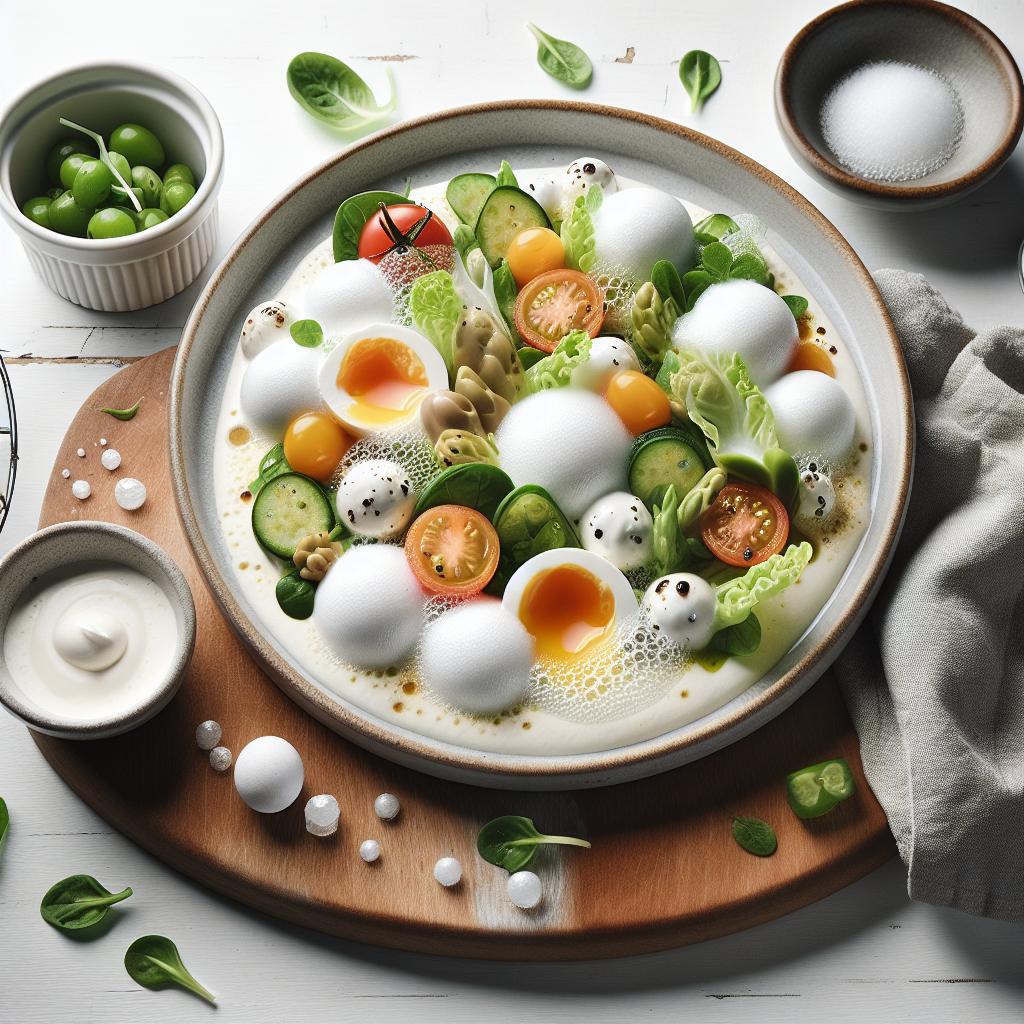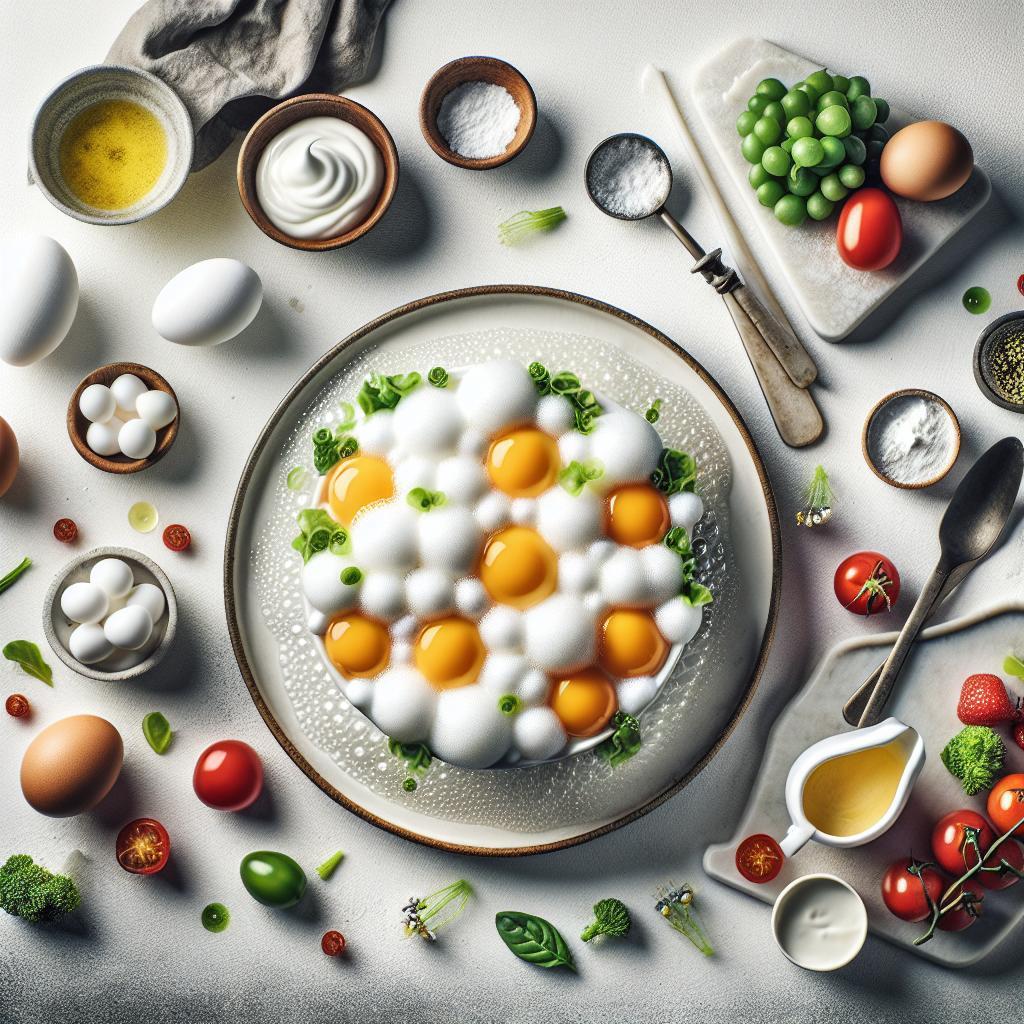

There’s a quiet alchemy happening every time you whip egg whites into a glossy foam-an ethereal dance of proteins stretching and interlocking to create the foundation of meringues, mousses, and soufflés. But have you ever wondered what truly keeps these airy clouds stable, resisting the urge to collapse? The secret lies not just in the beating but in a fascinating partner: heat. In this article, we embark on a scientific adventure to unlock the foam magic, exploring how the gentle touch of warmth transforms fragile egg white bubbles into steadfast culinary wonders. Prepare to delve into the chemistry behind the classic kitchen phenomenon and discover how heat stabilizes egg whites, turning simple ingredients into stunning creations.
Unlocking foam magic fundamentally begins with understanding how heat transforms delicate egg white proteins into a resilient network. This process, essential to creating light, airy meringues or luscious soufflés, reveals the science behind egg white foam formation – a subtle alchemy where heat acts as a stabilizing force.
Prep and Cook Time
- Preparation: 10 minutes
- Cooking/Baking: 15 – 20 minutes (depending on the recipe)
- Cooling: 10 minutes
Yield
- Serves 4 to 6, depending on dish size
Difficulty Level
- Medium – requires careful technique and timing but fully achievable with attention
Ingredients
- 4 large egg whites, at room temperature
- 1/4 teaspoon cream of tartar (or a few drops of lemon juice as an acidifier)
- 1/2 cup superfine sugar, divided
- A pinch of salt
Instructions
- Using a clean, dry bowl (preferably glass or metal), gently whisk 4 large egg whites with a pinch of salt until frothy.
Tip: Ensure no trace of yolk or grease to maximize foam volume. - Add cream of tartar to help stabilize the foam by slightly lowering pH and strengthening protein bonds.
- Increase whisking speed to medium-high until soft peaks form, then start adding half of the superfine sugar gradually, beating continuously.
Tip: Slowly incorporating sugar encourages smoother, denser, and more elastic foam. - Prepare a double boiler setup: bring water to a gentle simmer in a pot; place the bowl with egg whites over it, without direct contact with water.
- Gently apply heat, whisking constantly until the mixture reaches about 140°F (60°C) or feels warm to the touch. This heat helps proteins partly denature and bond strongly, improving foam stability.
Tip: Use a thermometer to avoid overheating-too much heat causes curdling. - Remove from heat and transfer the bowl to a stand mixer or use a hand mixer to whip on high speed.
- Add the remaining superfine sugar in small increments as you whip until you reach glossy, stiff peaks.
Tip: Perfect stiffness means the peaks stand tall without drooping yet remain shiny and smooth. - Use immediately for your favorite recipe or pipe into shapes and bake as directed to set the foam matrix permanently.
Tips for Success
- Room Temperature Egg Whites: Warm egg whites whip better because their proteins unfold more easily for foam formation.
- Fresh Eggs Work Best: Older eggs tend to lose some foam-forming ability; freshness enhances volume and stability.
- Acidifiers Stabilize Foam: Cream of tartar or lemon juice increases foam lifespan by supporting stronger protein networks post-whipping.
- Controlled Heat: Applying gentle heat via a double boiler carefully strengthens foam without cooking or prematurely coagulating proteins.
- Use the Right Sugar: Superfine sugar dissolves quickly, preventing gritty textures and improving foam integrity.
- Equipment Avoidance: Never use plastic bowls or beaters with oily residues that inhibit foam formation.
Serving Suggestions
- Top delicate pavlovas with fresh berries and a dusting of powdered sugar for an elegant dessert that highlights perfectly stabilized foam.
- Whip the foam into soufflé bases and add complementary flavors like vanilla bean or citrus zest for a refined, airy treat.
- Pipe into decorative shapes, lightly bake until crisp on the outside but soft inside, and serve with a drizzle of chocolate or berry coulis.
- Garnish with edible flowers or mint leaves to enhance visual appeal and aroma, making the dish truly irresistible.
| Nutrient | Per Serving (approx.) |
|---|---|
| Calories | 75 kcal |
| Protein | 15 g |
| Carbohydrates | 10 g (from sugar) |
| Fat | 0.1 g |

For further insights on whipping techniques and ingredient interactions, explore our detailed guide on Mastering Meringue Techniques. For scientific background, the Food Hydrocolloids Journal offers comprehensive research on protein network structures in egg white foams.
Q&A
Q&A: Unlocking Foam Magic: How Heat Stabilizes Egg Whites
Q1: What exactly is the “foam magic” behind egg whites?
A1: The magic happens when egg whites are whipped into a frothy foam full of tiny air bubbles. Proteins in the egg whites unravel and trap air, creating a delicate network that gives meringues, soufflés, and angel food cakes their light, airy texture. It’s like turning a simple ingredient into a cloud!
Q2: How does heat come into play in stabilizing these fluffy egg white foams?
A2: Heat acts as the secret wizard in this process. When gently warmed, the proteins in egg whites undergo a transformation called denaturation-they unfold and then form stronger bonds with each other. This “sets” the foam structure, locking in air pockets so the foam stands tall and doesn’t collapse.
Q3: Why can’t we just whip egg whites and skip the heat?
A3: Whipping alone creates the foam but leaves it fragile and prone to deflating. Without heat, the protein networks remain loose and can’t hold the air long-term. Heat gives the foam resilience, allowing it to maintain volume in the face of moisture or gravity’s pull.
Q4: Is there a perfect temperature range to heat egg white foam for stabilization?
A4: Yes! Usually, a gentle warm-up between 140°F to 160°F (60°C to 71°C) does the trick. Too cool, and proteins won’t fully set; too hot, and proteins may over-coagulate, turning grainy or tough. Precision is key to that silky, stable foam.
Q5: Are there kitchen tricks to applying heat effectively without “cooking” the foam?
A5: Absolutely! One classic method is creating a double boiler: place the bowl with egg whites over simmering water, whisking continuously. This gentle, indirect heat stabilizes the foam gradually. Another tip is folding in heated sugar syrup during whipping-classic Italian meringue style-which cooks the proteins and sugar simultaneously for superstable foam.
Q6: Does adding heat change the taste or texture of the egg white foam?
A6: When done right, heat enhances texture without altering flavor – you get a more robust, glossy foam. If overheated, though, the texture can become grainy, and a cooked egg flavor might emerge. So it’s a delicate dance to unlock the foam’s full potential while keeping it delicious!
Q7: Can heat stabilization work for all egg white foam applications?
A7: Nearly all! From airy soufflés to marshmallows, heat stabilization provides structure and durability. However, raw foam is preferred in some recipes for a lighter, more tender crumb-like some cakes. Chefs choose their foam’s fate based on the final dish’s mood.
Q8: What’s the takeaway for home cooks wanting to master egg white foam?
A8: Understand that whipping is just the start; heat is the foam’s best friend. Embrace gentle warming techniques to stabilize your peaks. With this knowledge, you’re equipped to create ethereal desserts that stand proud-and maybe even a little magical.
Future Outlook
As we’ve uncovered the science behind the delicate dance of heat and egg whites, it becomes clear that unlocking foam magic is no mere culinary whimsy-it’s a precise harmony of physics and chemistry. Heat, when applied with care, transforms fragile, airy egg whites into stable, luscious peaks that hold their shape and texture. Whether you’re crafting a cloud-like soufflé or a glossy meringue, understanding how temperature stabilizes these proteins empowers you to elevate everyday recipes into culinary wonders. So next time you whisk, remember: heat isn’t just warmth-it’s the secret ingredient that turns simple eggs into a masterpiece of foam and flavor.