
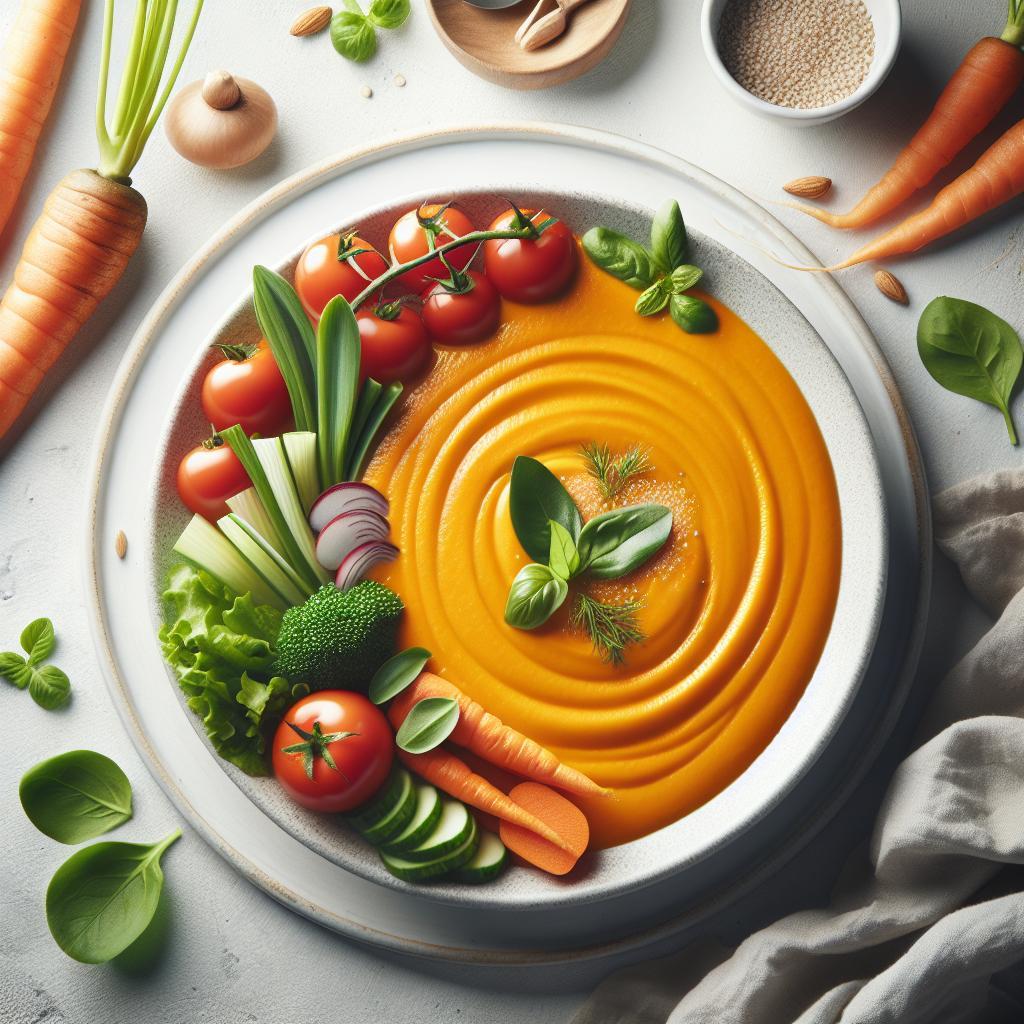

Velvety creamy carrot soup delivers warm, silky texture and bright, natural sweetness in each spoonful. This recipe emphasizes simple technique, nutrient-rich ingredients, and reliable timing so you reproduce excellent results every time.
- A Practical Introduction
- Prep and Cook Time
- Yield and Difficulty
- Ingredients that Elevate Flavor and Boost Nutrition
- Mastering the Art of Achieving Creamy Texture without Cream
- Step-by-step Instructions
- Innovative Serving Suggestions to Enhance Your Carrot Soup Experience
- Tips for Storing and Reheating While Maintaining Freshness and Taste
- Chef’s Notes
- Nutrition and Functional Benefits
- FAQ
- Key takeaway: Use starchy potato or root for natural creaminess without dairy.
- Quick cook: Ready in about 45 minutes, including prep and simmering.
- Flavor balance: Acid (lemon) and a touch of fat (olive oil or coconut milk) lift sweetness.
- Make-ahead friendly: Flavors deepen after resting overnight.
A Practical Introduction
This carrot soup shows how modest ingredients create a refined, comforting dish you can rely on for weeknight dinners or small gatherings.
The method prioritizes aroma-building, even simmering, and controlled blending to reach a true velvety mouthfeel while keeping the recipe accessible.
Prep and Cook Time
Preparation: 15 minutes. Cooking: 30 minutes. The timeline assumes medium heat and a single simmer stage so the root vegetables soften uniformly.
Plan for a short resting period after blending. Allowing the soup to sit for 5 minutes lets steam disperse and flavors settle before final seasoning adjustments.
Yield and Difficulty
Yield: Serves 4 generously. This quantity fits a 4- to 6-quart pot and blends well in a household immersion or countertop blender.
Difficulty: Easy. The recipe relies on basic sautéing and pureeing techniques that deliver high-impact texture and flavor with minimal effort.
Ingredients that Elevate Flavor and Boost Nutrition
Below are the tested ingredients that produce a well-rounded, nutritious bowl. The list focuses on items that enhance texture, balance sweetness, and improve shelf life.
When possible, choose fresh, firm carrots and a low-sodium broth to control final salt and taste. For specific background on carrots, reference the carrot entry on Wikipedia.
- 1 lb (450 g) fresh carrots, peeled and chopped – naturally sweet and rich in beta-carotene.
- 1 medium yellow onion, finely diced – builds aromatic depth.
- 2 cloves garlic, minced – gives a warm, savory base.
- 1 tbsp extra-virgin olive oil – a stable, heart-healthy fat for sautéing.
- 4 cups low-sodium vegetable broth – light, flavor-forward liquid base.
- 1 tsp fresh grated ginger – adds freshness and digestive support.
- 1/2 tsp ground cumin – earthiness and subtle warmth.
- 1 large baking potato, peeled and diced – starch to create natural creaminess without dairy.
- 1 tbsp unsweetened coconut milk – plant-based cream alternative; see coconut milk for composition notes.
- Salt and freshly ground black pepper, to taste.
- Fresh lemon juice, from ½ a lemon – brightens and balances sugars.
- Fresh parsley or chives, finely chopped – for garnish and herbaceous lift.
Mastering the Art of Achieving Creamy Texture without Cream
Start by sweating the onions in olive oil until soft and translucent; this step releases sugars and forms the aromatic base. Add garlic, ginger, and cumin next so the spices bloom without charring.
After coating the carrots and potato with the aromatics, add broth and simmer gently until all root vegetables are tender. Avoid a rolling boil; a gentle simmer yields even cooking and preserves color.
Technique Notes
Use an immersion blender for quick, controlled pureeing directly in the pot. If using a countertop blender, blend in small batches and vent the lid slightly to avoid pressure buildup.
Finish with a small amount of coconut milk and a squeeze of lemon. These two simple adjustments both round the mouthfeel and brighten the final flavor profile.
Step-by-step Instructions
Heat the olive oil in a large pot over medium heat and add the diced onion. Sauté until the onion turns translucent and tender, about 5 minutes.
Add minced garlic, grated ginger, and ground cumin and stir for 1–2 minutes until fragrant. Then add chopped carrots and diced potato and stir to coat with aromatics.
Pour in the vegetable broth and bring to a gentle boil, then reduce heat to a simmer. Cover and cook for about 25 minutes, or until the carrots and potato yield easily to a fork.
Remove from heat and puree the mixture until smooth using an immersion blender or work in batches in a countertop blender. Stir in the unsweetened coconut milk and fresh lemon juice, and adjust seasoning with salt and pepper.
Return to low heat for 3–5 minutes to let the flavors meld, stirring occasionally. Serve hot with chosen garnishes or sides.
Innovative Serving Suggestions to Enhance Your Carrot Soup Experience
Present each bowl with a swirl of additional coconut milk or a dollop of Greek yogurt for contrast in texture and temperature. Sprinkle toasted seeds or nuts to introduce a crunchy element that pairs well with a silky base.
Consider finishing touches such as a pinch of smoked paprika, a dusting of nutmeg, or a crack of black pepper to diversify each spoonful. Pair with warm whole-grain bread or a simple green salad for a balanced meal.
Tips for Storing and Reheating While Maintaining Freshness and Taste
Cool the soup completely before transferring it to an airtight container to refrigerate for up to 4 days, or freeze up to 3 months. Proper cooling and sealing preserve texture and safety.
Reheat gently over low heat, stirring frequently to maintain that velvety texture. If the soup thickens, whisk in a splash of broth or water to restore consistency.
Thaw overnight in the refrigerator for best results and always re-season after reheating with lemon or black pepper to revive brightness. Store in single-serving containers for simple reheating and portion control.
Chef’s Notes
Roasting the carrots before sautéing deepens sweetness through caramelization and adds a complex, roasted flavor to the final soup. This small extra step rewards time with intensified taste.
Substitute potato with peeled celeriac or parsnip for a varied texture and flavor profile. These alternatives retain creaminess while shifting the aromatic character of the soup.
Make-ahead tip: The soup often tastes better the next day after flavors meld. Prepare one day in advance for easier hosting and deeper flavor development.
Nutrition and Functional Benefits
This recipe emphasizes vegetables and moderate fat to keep calories controlled while delivering vitamins, fiber, and antioxidants. Carrots provide provitamin A as beta-carotene; see the beta-carotene reference for conversion and health context.
Per serving estimates will vary with ingredient brands and portion sizes, but a typical bowl contains moderate calories, low fat, and meaningful fiber to support satiety and digestive health.
| Nutrient | Per Serving |
|---|---|
| Calories | 150 kcal |
| Protein | 3 g |
| Carbohydrates | 30 g |
| Fat | 4 g |
| Fiber | 6 g |
For broader context on this food category and serving traditions, consult the general soup encyclopedia entry.
Small recipe tweaks, like adding a protein element (lentils or beans), shift the bowl toward a fuller meal while keeping preparation simple and consistent.
FAQ
How do I make this soup vegan and dairy-free?
Use unsweetened coconut milk or an unsweetened almond milk alternative in place of any dairy. Ensure any garnish like yogurt is switched to a plant-based option to keep it fully vegan.
Substituting olive oil for butter and verifying labels on broth are vegan-friendly completes the conversion without changing technique.
Can I freeze the soup and how long will it keep?
Freeze the cooled soup in airtight containers for up to 3 months. Label containers with the date and portion size to manage inventory and thawing.
Thaw in the refrigerator overnight and reheat gently on the stove, adjusting seasoning and acid after reheating to recover brightness.
What gives the soup its velvety texture?
Natural starch from a baking potato or a similar root vegetable provides body and smoothness. Controlled blending and a small amount of fat (coconut milk or oil) finish the mouthfeel.
Passing the soup through a sieve and briefly whisking with a little warm liquid at the end refines the texture to a restaurant level.
How can I boost the protein content without harming texture?
Add cooked red lentils during the simmer stage and blend them with the vegetables; they integrate smoothly and increase protein without grainy texture. Alternatively, stir in pureed white beans for creaminess and protein.
Adjust seasoning after adding legumes, as they absorb salt and can mute acidity; finish with lemon to restore balance.
What are good garnish and pairing ideas?
To add contrast, use toasted pumpkin seeds, crushed roasted almonds, or fresh herb chiffonade. A light dusting of smoked paprika introduces a smoky accent that complements carrot sweetness.
Pair the soup with crusty whole-grain bread, a sharp grilled cheese, or a fresh herb salad to provide texture contrast and make a complete meal.

This carrot soup balances texture, flavor balance, and nutrition while remaining easy to scale. Use the technique notes and chef tips to refine the final bowl and adapt the recipe for seasonal or dietary needs.
See also: carrot soup