
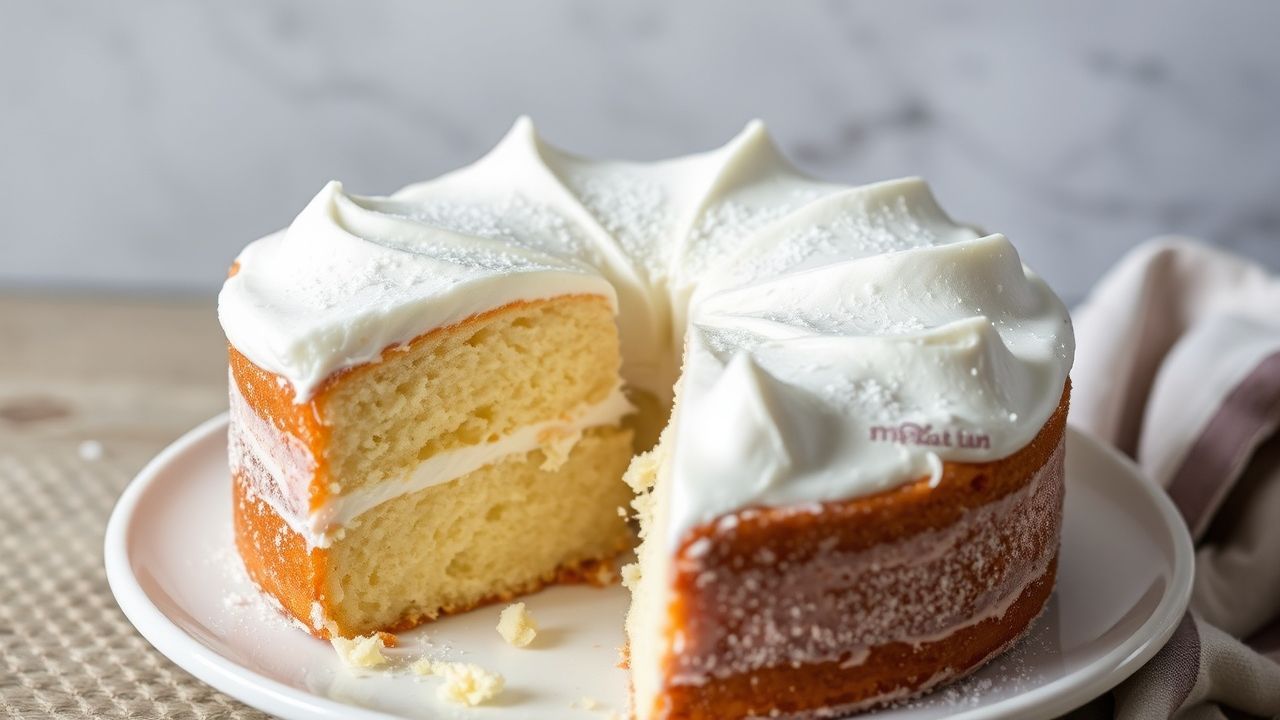

Fluffy, delicate, and ethereal as a cloud, angel food cake depends on disciplined technique and predictable chemistry. This guide explains the physical and chemical steps that transform simple egg whites and sugar into a stable foam and a tall, tender cake.
- Prep and Cook Time
- Yield and Difficulty
- Ingredients
- Instructions
- The Chemistry of Whipping
- Baking and Cooling
- Tips for Success
- Serving Suggestions
- Nutrition
- FAQ
- What makes angel food cake so light?
- Why are egg whites the star ingredient?
- How does sugar influence whipping and texture?
- Why invert the pan immediately after baking?
- Can I substitute egg whites with an alternative?
- Key Takeaways
- Precise whipping produces a stable foam that traps air without collapsing.
- Gradual sugar addition stabilizes proteins while preserving volume.
- Temperature and pan preparation determine rise and crumb structure.
- Acid and folding technique fine-tune foam strength and uniformity.
Prep and Cook Time
Plan your work to avoid rushed steps: egg whites respond to timing and temperature. Having ingredients measured and equipment ready reduces the chance of mistakes that deflate the foam.
Set aside at least 1 hour 60 minutes for baking and cooling to ensure structure sets fully. Clean, dry tools and a cold oven thermometer help preserve consistent results.
- Preparation: 25 minutes
- Baking: 35 minutes
- Cooling: 1 hour
Yield and Difficulty
This recipe yields 10–12 slices and requires steady hands more than advanced skills. The technique focuses on control: whipping, sugar timing, and delicate folding.
Label this as medium difficulty because the margin between under-whipping and over-whipping is narrow. Rehearse the whipping stages and practice folding to build confidence.
Ingredients
Use reliable, purpose-driven ingredients. Each component plays a specific physical role: egg whites create the foam, sugar stabilizes it, and cake flour provides a light starch matrix.
- 12 large egg whites at room temperature
- 1 ½ cups superfine sugar, divided
- 1 cup cake flour, sifted
- 1 ½ teaspoons cream of tartar
- ¼ teaspoon salt
- 1 teaspoon pure vanilla extract
- Optional: zest of 1 lemon or ½ teaspoon almond extract
Instructions
Work methodically: preheat the oven, prepare equipment, and sift dry ingredients ahead of whipping. A clean, dry bowl and whisk are non-negotiable—even a trace of fat prevents proper foam formation.
Follow the sequence below exactly, and transfer batter to the pan immediately after folding to retain maximum air. Bake and invert the pan right away to lock the structure while hot.
- Preheat the oven to 350°F (175°C). Use a 10-inch tube pan that is clean and completely ungreased.
- Sift the cake flour and ½ cup of the superfine sugar together twice to aerate and remove lumps; set aside.
- Beat the egg whites in a large, spotless bowl with cream of tartar and salt until foamy on medium speed.
- Increase speed to high and add remaining sugar one tablespoon at a time until glossy, stiff peaks form.
- Fold in vanilla and optional zest gently.
- Carefully fold the sifted flour mixture into the whites using sweeping motions with a rubber spatula until just combined.
- Transfer the batter to the tube pan and smooth the surface lightly. Bake about 35 minutes until the top springs back.
- Invert the pan immediately onto a cooling rack and let cool completely—about 1 hour—before releasing the cake from the pan.
The Chemistry of Whipping
Understanding how proteins and air interact gives you predictable control. Egg white proteins unfold under shear, creating a network that traps air as minute bubbles and forms a foam.
That protein network eventually coagulates under heat and locks the structure in place. For background on egg-white composition and behavior, consult the Egg white overview.
Protein networks and foam mechanics
Mechanical agitation causes proteins such as ovalbumin to unfold and realign at the air–water interface, where they form a cohesive film. This film resists coalescence of bubbles and sustains volume during early baking.
As temperature rises, those proteins denature and set, stabilizing the foam into a spongy solid. For technical context on proteins and their folding behavior, see Protein.
Role of sugar and acid
Sugar delays rapid protein bonding by drawing water and moderating interactions, yielding a finer, more stable foam. Add sugar gradually during whipping to slow coagulation and preserve peak volume.
Acids such as cream of tartar lower pH and promote more even protein unfolding, strengthening the foam network. Read more about cream of tartar chemistry at Cream of tartar.
Baking and Cooling
Bake at the specified temperature so proteins set steadily without over-browning or drying. An oven that runs hot will over-coagulate the surface and reduce final volume.
Invert the pan immediately after baking to let gravity support the foam while it cools and sets. This step prevents the structure from collapsing under its own weight.
Tips for Success
Small technique adjustments yield consistent, repeatable results. Control variables—room temperature egg whites, spotless equipment, and measured sugar additions—to achieve predictable outcomes.
Practice recognizing stages of whipped egg whites: glossy soft peaks, glossy firm peaks, and stiff dry peaks. Stop at glossy stiff peaks to maintain moisture and structure.
- Egg whites at room temperature whip to greater volume and faster than chilled whites.
- Use superfine sugar so it dissolves fully and yields a smooth meringue.
- Fold gently to preserve trapped air; turn the bowl and use wide strokes.
- Cool inverted to avoid shrinkage and maintain height.
Serving Suggestions
Angel food cake pairs with high-acid or creamy accompaniments that balance its subtle sweetness. Fresh berries, citrus curds, or a light whipped cream add contrast without weighing the cake down.
Dust with powdered sugar or serve thin slices with macerated fruit for an elegant presentation. For recipe cross-reference, explore related techniques at molecular-gastronomy-basics and practical methods at baking-basics on this site.
Nutrition
Nutrition values vary with ingredient choices and portion size, but a typical slice is low in fat and moderate in carbohydrates. The cake derives most calories from sugar and starch.
| Nutrient | Per Slice (1/12) |
|---|---|
| Calories | 140 |
| Protein | 4g |
| Carbohydrates | 30g |
| Fat | 0.1g |
FAQ
What makes angel food cake so light?
Egg whites whipped into a stable foam trap countless tiny air bubbles, which expand during baking and create lift. The coagulation of proteins during heating locks that airy structure into place.
Why are egg whites the star ingredient?
Egg whites contain proteins that form films around air bubbles when whipped, producing a strong but lightweight network. Their lack of fat allows proteins to bond tightly, which is essential for foam stability.
How does sugar influence whipping and texture?
Gradual sugar addition stabilizes the foam by slowing protein bonding and helping retain moisture. Too much sugar added too early will weigh the foam down and reduce volume.
Why invert the pan immediately after baking?
Inversion supports the delicate foam while it cools and the protein matrix continues to set. Cooling upside-down prevents collapse and preserves maximum height.
Can I substitute egg whites with an alternative?
Some substitutes like aquafaba mimic foaming but produce different textures and flavors. For classic rise and crumb, real egg whites remain the most reliable option.
Apply these science-based techniques and you will bake taller, more consistent angel food cakes. For a practical primer on flour and its role in baked structure, consult the Flour reference.
Key Takeaways
Every successful angel food cake depends on controlled whipping, measured sugar timing, and immediate cooling. Treat each step as a mechanical and chemical process to produce predictable results.
Master these variables and you transform simple ingredients into an elegant, cloudlike dessert with consistent height and tender crumb.
See also: angel food