

Perfect grilled cabbage wedges begin with an understanding of structure, heat, and timing. Cabbage is a cultivar of Brassica oleracea, and its dense leaf layers behave predictably when exposed to dry heat and acids.
- At a glance: Control heat to caramelize without collapsing the wedge.
- Acid and oil in a short marinade tenderize and boost flavor without sogginess.
- Direct sear plus moderate cooking yields crisp edges and tender cores.
Prep and Cook Time
Plan for efficient workflow: active prep is short, but a brief rest in the refrigerator improves results. Total clock time depends on whether you marinate and on grill temperature control.
Typical timings work well for home grills and provide a reliable baseline for adjustments. Use these numbers to estimate and to scale for larger batches.
- Preparation: 15 minutes
- Marination: 30 minutes to 1 hour (optional)
- Grilling: 12-15 minutes
- Total: Approximately 1 hour to 1 hour 30 minutes
Yield
This method yields about four servings when using a medium head of cabbage cut into six wedges. Each wedge holds enough flavor to act as a hearty side or light vegetarian main.
Adjust wedge size to serve more people or to create smaller, shared tasting portions. Keep the core intact so wedges hold shape during the sear.
Difficulty Level
Skill required: Easy to Medium. The technique relies on timing and heat management rather than advanced knife work. Even beginners can produce consistent results with a thermometer and a visual checklist.
Intermediate cooks will benefit from refining charcoal or gas temperature control and experimenting with spice blends. The payoff is reliably crisp edges and a tender interior.
Ingredients
Use fresh, firm cabbage for the best texture and flavor. A tighter head gives sweeter results and resists falling apart on the grill.
Keep seasonings simple to highlight the vegetable; acid and oil matter most for heat transfer and cell softening.
- 1 medium green cabbage, cut into 6 wedges with core intact
- 3 tablespoons olive oil
- 1 tablespoon apple cider vinegar or fresh lemon juice
- 2 teaspoons smoked paprika
- 1 teaspoon garlic powder
- 1 teaspoon sea salt
- ½ teaspoon freshly ground black pepper
- ½ teaspoon crushed red pepper flakes (optional)
- Fresh herbs (thyme or parsley) for garnish
- Grated Parmesan or vegan cheese (optional)
Instructions
Follow a clear sequence: rinse, cut, season, rest briefly, then sear and finish. The core keeps leaves aligned and allows even heat conduction from outer to inner layers.
Heat and contact time determine caramelization and tenderness. The science behind surface browning is the same Maillard chemistry used across roasting and searing techniques.
- Prepare the wedges: Rinse the cabbage and pat dry. Slice into 6 equal wedges, leaving the core attached to hold the layers together.
- Make the marinade: Whisk together olive oil, apple cider vinegar, smoked paprika, garlic powder, sea salt, black pepper, and red pepper flakes. The acid and oil help soften cellulose and speed flavor uptake.
- Marinate briefly: Brush or toss each wedge in the dressing. Chill for 30 minutes if time allows; short marinades soften outer leaves without soaking the wedge.
- Preheat the grill: Heat to medium-high, roughly 400°F/200°C. Good heat control matters for searing and for avoiding a burned exterior with an undercooked interior. See Grilling for equipment and fuel notes.
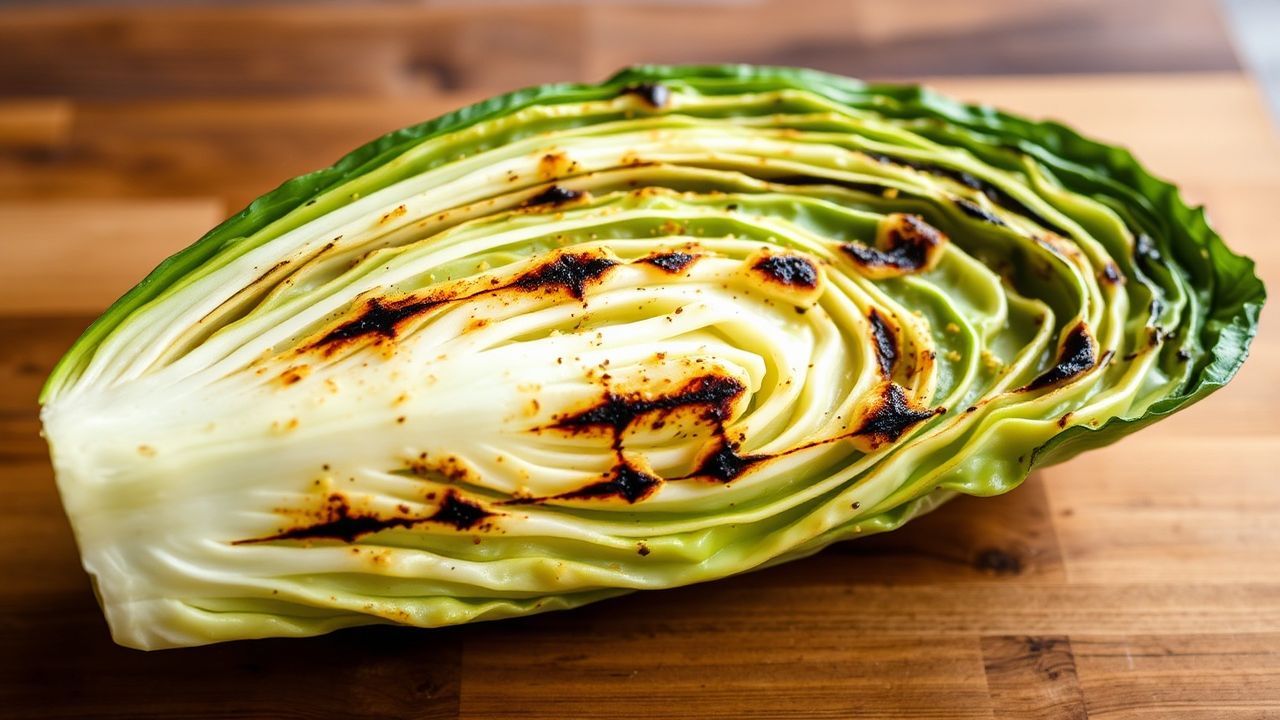
- Sear cut side down: Place wedges on the grill cut side down. Sear 5–7 minutes until golden with blistering; then flip and grill 5–8 minutes until tender when pierced.
- Check doneness: Test with a skewer or knife; it should slide through with modest resistance. The interior should be soft but still hold structure.
- Finish and serve: Transfer to a platter, garnish with herbs and cheese if desired, and add a final drizzle of olive oil for shine.
Tips for Success
Understand the balance of moisture and heat: too much low heat produces limp leaves; too much high heat chars before the inside softens. Aim for quick surface browning and steady internal heating.
Thicker outer leaves need more time; smaller heads require less. Adjust times and watch for visual cues rather than relying on fixed minutes alone.
Keep at least one neutral paragraph between Expert Insight and any caution notes. That helps readers process practical tips before safety advice.
Serving Suggestions
Serve wedges with contrasting textures and acids to balance smoky richness. A spoonful of herbed yogurt or chimichurri brightens each bite and adds moisture without sogginess.
For heartier plates, place wedges on creamy polenta or a bed of quinoa salad. Toasted nuts, seeds, or pomegranate seeds add crunch and visual appeal.
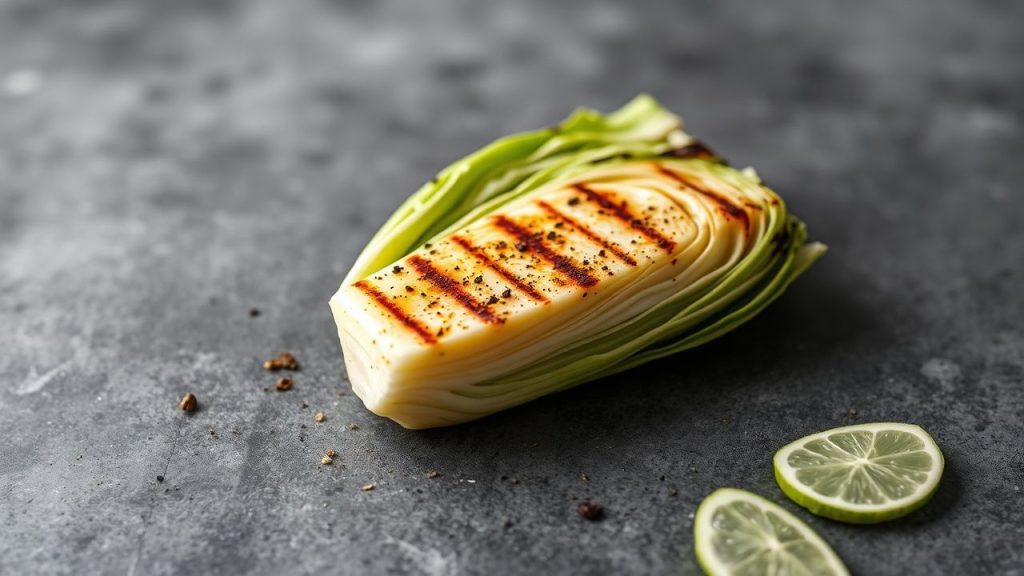
Use the wedge as a plated centerpiece or slice it into sections for shared platters. The contrast between charred edge and buttery center is the goal.
Why the Science Works
Two chemical processes create the flavor and color you see: the Maillard reaction and caramelization. Both transform sugars and amino acids into flavorful, aromatic compounds.
Learn these basics and you can manipulate texture and taste. See Maillard reaction and caramelization for the mechanisms behind browning.
On a cellular level, controlled acid and heat change cellulose and pectin behavior, loosening leaf structure without turning wedges to mush. For reference on plant cell walls, consult Cellulose.
Nutritional Snapshot
Grilled cabbage keeps most vitamins intact while concentrating flavor. Minimal oil keeps calories modest and the dish nutrient-dense.
Seasoning choices alter sodium and fat counts, so adjust to dietary needs without sacrificing technique. The table below gives a typical per-serving breakdown.
| Nutritional Component | Per Serving |
|---|---|
| Calories | 120 kcal |
| Protein | 4 g |
| Carbohydrates | 10 g |
| Fat | 8 g |
Q&A
The questions below address common technique and flavor concerns. Answers focus on actionable steps you can test at the grill.
Use these responses as a checklist while you practice. Small changes in timing or temperature yield consistent improvements.
Q1: What makes grilling cabbage wedges different from boiling?
Grilling applies dry, high heat that produces surface browning and smoke flavors. Boiling simply softens the vegetable without creating Maillard-derived complexity.
Q2: Why keep the core intact?
The core acts as a spine that holds leaves together during searing and flipping. Removing it causes layers to separate and scatter on the grates.
Q3: How do I avoid a burnt exterior and raw center?
Control distance from heat and use two-zone cooking if necessary. Sear on high briefly, then move to a cooler zone to finish gently.
Q4: Does marinating change texture?
A short acidic marinade loosens outer fibers and speeds caramelization. Overlong marination can saturate the wedge and reduce the desired bite.
Concluding Remarks
Mastering grilled cabbage wedges comes down to control: of heat, timing, and seasoning. Each variable contributes predictably to texture and flavor when you apply consistent tests.
Practice with one wedge as a test-run and adjust temperature or resting time before cooking the full batch. That approach saves time and yields repeatable, high-quality results.
FAQ
How do I choose the best cabbage for grilling?
Select a medium, firm head with densely packed leaves and no soft spots. Tighter heads tend to be sweeter and hold up better to searing.
Can I prepare wedges ahead of time?
You can trim and marinate wedges up to 4 hours ahead; refrigerate them covered. Grill just before serving to preserve crisp edges.
What if I only have a stovetop pan?
Use a cast-iron skillet to mimic grill contact and sear the cut side. Finish in the oven at 375°F to allow the interior to tenderize evenly.
Are there vegan finishing options?
Yes. Swap Parmesan for a nutritional yeast or a sprinkle of toasted sesame for umami. Drizzle tahini or a lemon vinaigrette for richness.
How should I store leftovers?
Cool wedges to room temperature, then refrigerate in an airtight container for 2–3 days. Reheat briefly under a broiler or in a hot skillet to restore edge crispness.
See also: grilled cabbage