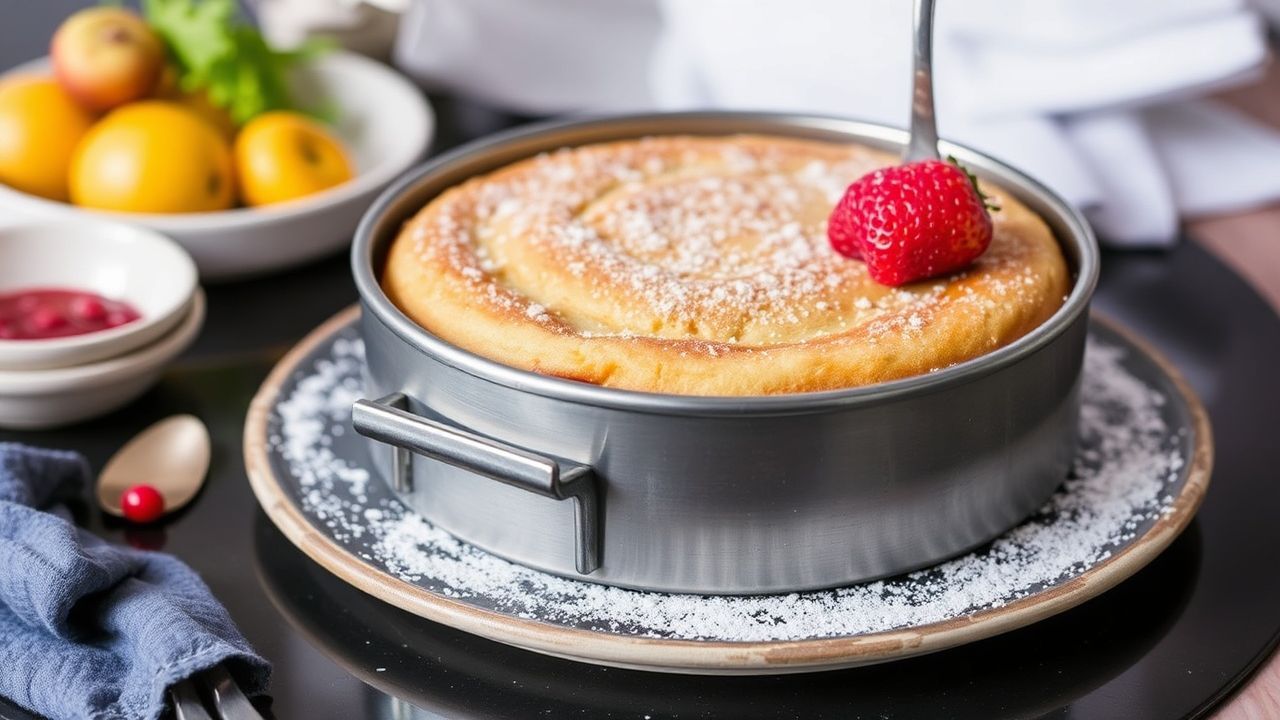

There is a practical kind of kitchen magic in a springform pan. Bakers prize the removable side and tight latch because they let delicate desserts emerge intact with minimal handling.
- What is a springform pan?
- Why use a springform pan?
- Choosing the right pan
- Classic Cheesecake: Prep, Yield, and Difficulty
- Tips for success
- Care, maintenance, and troubleshooting
- Serving suggestions
- FAQ
- What exactly is a springform pan?
- Can I use a springform pan for regular layer cakes?
- How do I prevent leaks during baking?
- Are springform pans oven-safe at high temperatures?
- How do I remove a stuck cheesecake cleanly?
- Final notes
- Easy release: The latch removes sides without flipping the cake.
- Versatile: Works for cheesecakes, tarts, quiches and layered mousses.
- Simple care: Hand wash and check the seal for leaks before use.
- Pro tip: A water bath reduces cracking for custard-style bakes.
Below you will find clear explanations, a tested cheesecake method, care instructions, and troubleshooting advice. Each section keeps steps short and practical so you can get better results faster.
What is a springform pan?
A springform pan is a round bakeware assembly with a flat base and a cylindrical side that fastens with a latch. When you unlock it, the side expands and lifts away from the base, leaving fragile bakes undisturbed.
The design suits recipes that cannot be inverted or handled roughly. It differs from a standard cake tin because you do not need to flip the cake to remove it; this reduces damage to crèmes, custards, and layered cakes.
Design and materials
Most springform pans feature an aluminized steel or carbon steel ring and base. Some include a silicone gasket to reduce leaks and simplify unmolding.
Higher-end models may use nonstick coatings or heavier-gauge metal for even heat transfer. Choose size and material based on recipe type and oven performance.
Why use a springform pan?
Use a springform pan when structural integrity matters. Cheesecakes, chilled mousses, and delicate tarts keep sharp edges and smooth surfaces because the side removes cleanly.
The pan also helps when you build layered desserts directly in the ring. Without aggressive flipping, you preserve layers and decorations that would otherwise break.
For savory cooking, you can make quiches and terrines that keep their shape at the table. These pans work well when presentation matters as much as flavor.
For background on baking techniques relevant to these recipes, see baking and for specific examples consult the cheesecake article.
Choosing the right pan
Select the proper diameter and depth before you start. A 9-inch pan is standard for many cheesecake recipes, while smaller sizes suit individual servings.
Check the latch and base fit. A snug, even seam prevents batter leaks and produces clean sides. If the pan advertises a silicone gasket, expect fewer leaks with loose batters.
Size and fit considerations
Match pan size to recipe volume to avoid overflow or underfilled layers. Pay attention to depth when you plan tall layered desserts.
When buying, test the ring on the base for wobble or misalignment. A stable connection makes a noticeable difference in final presentation.
Classic Cheesecake: Prep, Yield, and Difficulty
Preparation: 15 minutes prep, about 45 minutes bake, plus cooling and chill time. This timing fits a standard 9-inch springform pan.
Yield: Serves 8–10. Difficulty: Medium; this recipe requires some technique but rewards patience with smooth results.
Ingredients
Use room-temperature dairy for a smooth batter and even bake. Keep ingredients measured and ready to streamline the process.
- 1½ cups graham cracker crumbs (finely crushed)
- ½ cup unsalted butter, melted
- 2 tablespoons granulated sugar
- 24 oz cream cheese, softened to room temperature
- 1 cup granulated sugar
- 1 teaspoon vanilla extract
- 3 large eggs, at room temperature
- 2/3 cup sour cream
- 2/3 cup heavy cream
- Fresh berries and mint leaves for garnish
Instructions
Follow steps in order and keep the oven temperature steady. A water bath (bain-marie) reduces surface cracking on custard-style cheesecakes; learn more about bain-marie techniques here.
- Prepare the crust: Combine graham crumbs, melted butter, and 2 tablespoons sugar. Press evenly into the bottom of a well-greased 9-inch springform pan and chill briefly in the refrigerator.
- Make the filling: Beat cream cheese until smooth. Add 1 cup sugar and vanilla, mixing until uniform.
- Add eggs one at a time: Blend each egg in on low speed to preserve a silky texture.
- Fold in dairy: Gently mix in sour cream and heavy cream until smooth and homogeneous.
- Pour and bake: Pour batter onto the chilled crust. Bake at 325°F (160°C) for about 45 minutes. For best results, place the pan in a water bath to stabilize oven temperature and reduce cracks.
- Cool and chill: Let the cheesecake cool in the oven with the door ajar for 1 hour, then refrigerate 4 hours or overnight after sealing the pan.
- Release the sides: Run a knife around the edge, unlock the latch, and lift the ring. Garnish and slice with a hot, dry knife for clean cuts.
Tips for success
Little adjustments produce much better results. Use room-temperature ingredients, avoid overbeating, and allow adequate chilling time for the cheesecake to set.
Seal potential leak points with a strip of parchment around the base if you expect a loose batter. Also, test for wobble in the assembled pan before adding batter.
Space the pan correctly in the oven to ensure even air flow. Rotate neither too early nor too often; minor rotation after the first 30 minutes can correct hot spots in older ovens.
Care, maintenance, and troubleshooting
Hand wash the pan and dry it thoroughly. Moisture left at the latch will accelerate corrosion and can warp the ring over time.
If you notice leaks, inspect the seam and consider a silicone-sealed pan for future purchases. Replace bases that bend or rings that fail to lock squarely.
When storing, separate the ring from heavy items to avoid bending. A warped ring affects sealing and bake outcomes.
Serving suggestions
Finish cheesecakes with simple, fresh toppings like a berry compote or lightly whipped cream. Keep garnishes minimal to highlight the dessert’s texture and structure.
For savory bakes, unmold directly onto a serving plate and trim any uneven edges with a hot knife. Pair quiche slices with a crisp green salad for balanced plating.
For more gear recommendations, visit our internal tools guide at best baking tools and view practical cheesecake finishing techniques at cheesecake tips.
FAQ
What exactly is a springform pan?
A springform pan is a two-piece bakeware set consisting of a base and a removable side that fastens with a latch. The side releases to allow delicate or layered bakes to be removed without flipping.
Can I use a springform pan for regular layer cakes?
You can, but standard cake pans often yield easier removal for sturdy sponge cakes. Use a springform when the cake is fragile or when you want to assemble layers inside the ring.
How do I prevent leaks during baking?
Ensure the ring and base align perfectly and consider a silicone gasket or a parchment collar for added security. Wrapping the pan in foil helps when using a water bath.
Are springform pans oven-safe at high temperatures?
Most steel springform pans tolerate standard baking temperatures up to 450°F (232°C). Check manufacturer guidance for nonstick coatings and avoid broiling settings that exceed recommended limits.
How do I remove a stuck cheesecake cleanly?
Run a thin spatula or knife around the inside edge after chilling, then unlock the latch slowly. If the cake clings to the base, chill longer until it firms and releases more easily.
Final notes
The springform pan is a practical tool for anyone who values both structure and presentation. With proper selection, careful technique, and simple maintenance, it will expand your recipe possibilities.
Use short testing runs when trying a new pan or recipe. That habit saves time and helps you identify the right size, depth, and care approach for consistently excellent results.
See also: Springform pan