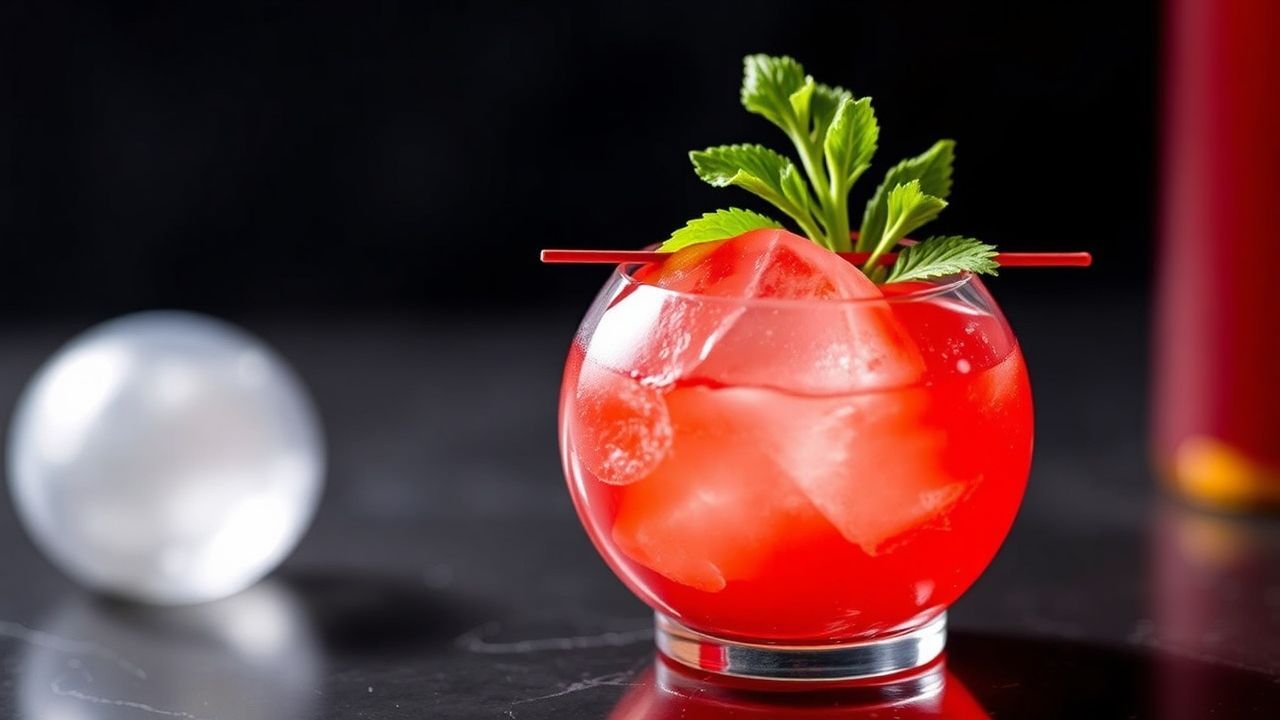

Capture the savory intensity of a classic Bloody Mary in a compact, bursting orb. This guide explains exact ratios, technique, and safety so you can make reliable Bloody Mary spheres with consistent texture and flavor.
- Key takeaways: precise alginate and calcium balance yields clean membranes.
- Fresh tomato juice and layered seasoning preserve signature savory notes.
- Rinse and refrigerate spheres briefly; consume within 24 hours for best texture.
Prep and Cook Time
Preparation: 25 minutes. Chilling and setting: 1 hour. These windows include blending, degassing, and a short resting period for the alginate to hydrate.
Plan active time for precise drops into the calcium bath and a 2–3 minute setting per sphere. Staying organized improves yield and reduces wasted base liquid.
Yield
This recipe yields six Bloody Mary spheres, which will typically serve three cocktails if you use two spheres per serving. Adjust quantities linearly if you need more spheres for a party.
Small-batch scaling preserves control of alginate concentration. For larger batches, mix the alginate in separate vessels and combine slowly to avoid over-thickening.
Difficulty Level
Difficulty: Medium. Spherification requires accurate weighing and gentle handling rather than advanced culinary skill. A digital scale and syringe or calibrated spoon improve consistency.
Expect a learning curve around drop size and setting time; practice with plain tomato juice first. Many professionals treat initial trials as calibration runs before serving to guests.
Ingredients
Core ingredients deliver the classic Bloody Mary profile while the functional ingredients enable spherification. Use fresh tomato juice, horseradish, lemon, Worcestershire, and hot sauce for the base.
Functionals include sodium alginate and calcium chloride; measure alginate to within 0.1 g and dissolve calcium chloride in cold water for the bath. Read more about sodium alginate and its role in gelling.
- 2 cups freshly squeezed tomato juice
- 1 tbsp freshly grated horseradish
- 1 tsp smoked paprika
- 1 tsp celery salt
- 1/2 tsp ground black pepper
- 2 tbsp freshly squeezed lemon juice
- 1 tbsp Worcestershire sauce
- 1 tsp hot sauce, or to taste
- 1/2 tsp smoked sea salt (optional)
- 1 tbsp vodka (optional)
- 1.5 tsp sodium alginate
- 5 cups cold water (for bath)
- 5 g calcium chloride
Instructions
Start by building a smooth Bloody Mary base. Blend tomato juice with seasonings, lemon, horseradish, Worcestershire, hot sauce, vodka if using, and strain to remove pulp for a clean membrane.
Slowly incorporate sodium alginate while blending at low speed to avoid clumping. Allow the mixture to rest 15 minutes so trapped air escapes and the alginate hydrates; this improves sphere clarity.
- Prepare the base: Blend ingredients until fully integrated and smooth.
- Add alginate: Sprinkle alginate slowly while blending; blend 2 minutes then rest 15 minutes.
- Mix calcium bath: Dissolve calcium chloride in cold water and stir thoroughly until clear.
- Form spheres: Use a syringe or special spoon to drop measured droplets into the calcium bath; let set 2–3 minutes.
- Rinse: Remove spheres with a slotted spoon and rinse gently in cold water to remove residual calcium.
- Store: Refrigerate spheres submerged in fresh tomato juice and use within 24 hours for optimal texture.
Control drop size and timing; small changes change membrane thickness. Practice on one set of droplets to dial in ideal setting time before making the full batch.
Safety and Handling
Calcium chloride is a food-safe salt but tastes bitter if not rinsed off the spheres. Always rinse spheres in clean, cold water after removal from the bath to neutralize surface residue.
Use food-grade sodium alginate and calcium chloride only; avoid household chemicals. For a primer on the culinary technique, consult the entry on spherification and related methods in molecular gastronomy.
Tips for Success
Fresh ingredients drive flavor. Use high-quality tomato juice and freshly ground spices; this reduces the need for heavy seasoning and preserves the subtlety of the sphere’s center.
Maintain chilled solutions to slow reactions and improve control. Keep both the base and the calcium bath refrigerated until you are ready to form spheres to prevent premature gelling.
Serving Suggestions and Storage Tips for Maximum Freshness
Serve spheres chilled on a small spoon, in a shot glass, or drop them into a sparkling wine for a savory fizz. Garnish simply: celery, olive, or microherbs provide visual balance without overwhelming the sphere.
Store spheres submerged in fresh tomato juice in an airtight container at refrigerator temperature. Avoid freezing because ice crystals will rupture the gel membrane and ruin texture.
Explore variations using infused vodkas or smoked salts while preserving alginate ratios. For foundational spherification practice and recipes, check our internal guide at ‘/recipes/spherification-basics’ and browse classic variations at ‘/recipes/bloody-mary-classics’.
Nutrition Info per Sphere
The following is an estimate per sphere. Nutrition depends on tomato juice brand and any added vodka or thickening agents.
Use nutrition data as a guideline for menu labeling and portion control. Adjust if you increase size or add rich garnishes.
| Calories | Protein | Carbs | Fat |
|---|---|---|---|
| 35 kcal | 1 g | 5 g | 0.1 g |
FAQ
What is a Bloody Mary sphere?
A Bloody Mary sphere is a small gel membrane encapsulating the classic cocktail flavors. The membrane forms by exposing a sodium alginate solution to calcium ions, which cross-link to create a thin, edible skin.
Why spherify a Bloody Mary instead of serving it in a glass?
Spherification concentrates flavor and turns drinking into a tactile experience. Guests get an immediate flavor burst when the membrane breaks, and the presentation elevates typical brunch service.
How do I avoid bitter taste from calcium chloride?
Rinse spheres in cold water immediately after removing them from the calcium bath. Brief, gentle rinses remove residual calcium and prevent off-flavors that mask the cocktail profile.
Can I make the spheres non-alcoholic?
Yes. Simply omit vodka and consider adding a small amount of pickle brine or olive brine for savory complexity. Non-alcoholic bases often require the same alginate ratio for texture control.
How long can I store the spheres?
Store refrigerated and submerged in fresh tomato juice; consume within 24 hours for best texture. Extended storage softens the membrane and dilutes the concentrated flavor.
See also: Bloody Mary