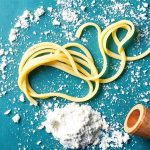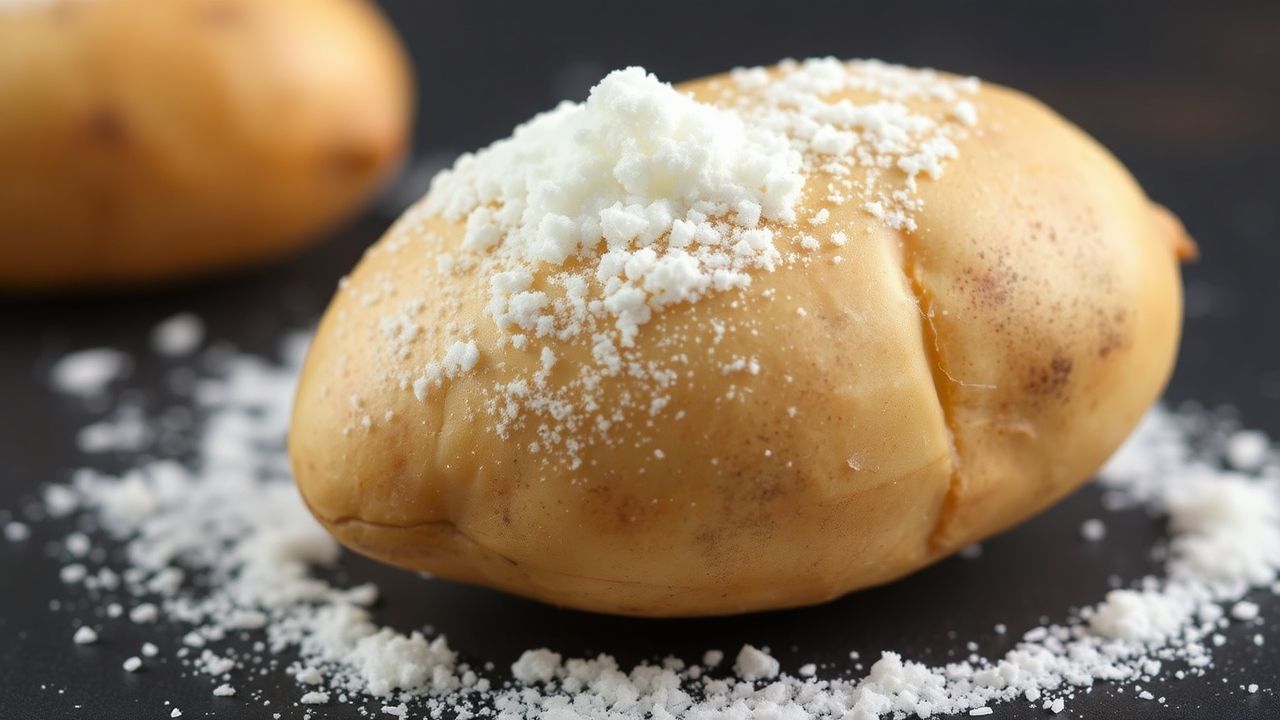

Potato starch is a fine, white powder extracted from the potato tuber that combines purity with functional versatility. Chefs and manufacturers prize it for neutral flavor, strong thickening power, and reliable performance in cold and frozen systems.
- Potato Starch Origins and Extraction Techniques
- Culinary Uses and Health Benefits
- Innovative Industrial Applications and Eco-Friendly Solutions
- Tips for Storage, Handling, and Maximizing Freshness
- Classic Potato Starch Dumplings Recipe
- Q&A
- What is the difference between potato starch and potato flour?
- Can potato starch replace wheat flour one-to-one?
- Does potato starch keep after refrigeration?
- Is potato starch allergenic?
- How does potato starch compare to tapioca or corn starch?
- FAQ
- Pure starch: a gluten-free thickener that works at low temperatures.
- Functional: adds crispness to batters and tenderness to baked goods.
- Sustainable potential: used in biodegradable applications and textiles.
- Storage tip: keep dry, cool, and airtight to prevent clumping.
Potato Starch Origins and Extraction Techniques
Potato starch comes from the storage tissue of the potato tuber. Producers extract starch by mechanically releasing granules, separating them from fibers and proteins, then drying the concentrated sediment to a white powder.
The basic industrial steps include washing and crushing the tubers, water-based separation, multiple filtrations, and controlled drying. These steps preserve granule integrity and functional properties such as gelatinization temperature and particle size distribution.
Key botanical and chemical context
The raw material is the common potato, a starchy tuber rich in carbohydrates. The starch itself is a polysaccharide composed mainly of amylose and amylopectin; its ratio influences texture and gel clarity.
For technical readers, consult the general starch entry for molecular structure and thermal behavior. Understanding granule size helps predict thickening power and freeze–thaw stability.
Culinary Uses and Health Benefits
In the kitchen, potato starch thickens sauces without cloudiness and crisps coatings when used in batters. Its neutral taste preserves the original flavor of a dish while providing glossy texture and a clean mouthfeel.
From a nutritional standpoint, potato starch can act as a resistant starch after cooling, feeding beneficial colon bacteria and supporting digestive health. The resistant form is best described in specialist literature and summarized in the resistant starch article.
[TIP]Expert Insight: Use potato starch to finish sauces at the end of cooking. Mix with cold water to form a slurry, add slowly while whisking, and heat briefly to activate thickening without overcooking.
Gluten-free cooking
Potato starch plays a central role in gluten-free baking because it improves crumb softness and moisture retention. Bakers often blend it with protein-containing flours for structure and with hydrocolloids when elasticity is needed.
For recipe inspiration, see our internal gluten-free resource at /gluten-free-baking, which lists blends and substitution strategies tailored to home and commercial baking.
Innovative Industrial Applications and Eco-Friendly Solutions
Manufacturers use potato starch in biodegradable films, paper coatings, and as a binder in non-food products. Its renewable origin and compostability make it a candidate for reducing reliance on synthetic polymers.
For an overview of environmental terms and concepts, refer to the biodegradable page. Researchers test blends of starch with other biopolymers to enhance mechanical properties and water resistance.
Textiles and pharmaceuticals
In textile finishing, potato starch provides sizing and improves fabric handle before further treatments. In pharmaceuticals, formulators may use starch as an excipient for tablet binding and controlled-release matrices.
These applications demand consistent particle size and moisture content; manufacturers specify quality grades for food versus industrial use to ensure regulatory compliance and product performance.
Tips for Storage, Handling, and Maximizing Freshness
Store potato starch in an airtight container in a cool, dry pantry to maintain powder flow and prevent moisture uptake. Avoid storing above heat sources or in direct sunlight because heat and humidity accelerate caking.
For long-term retention of functional properties, some brands recommend refrigeration in a sealed container. Let refrigerated starch return to room temperature before use to avoid condensation.
[WARNING]Pro-Caution: Do not store potato starch near strong-smelling items. Its neutral powder readily absorbs odors, which compromise flavor neutrality in delicate sauces and baked goods.
Classic Potato Starch Dumplings Recipe
These dumplings showcase potato starch’s binding and tenderizing effects. The recipe scales well and adapts to dietary needs using simple substitutions.
Read the steps fully before you start. For more potato-based recipes, visit our internal recipe hub at /recipes/potato-dumplings.
- Prep Time: 15 minutes
- Cook Time: 20 minutes
- Yield: 4 servings
- Difficulty: Medium
Ingredients
- 2 cups mashed potatoes, cooled
- 1 cup potato starch
- 1 large egg (or flax egg for vegan)
- 1 tsp salt
- 1/4 tsp freshly ground black pepper
- 2 tbsp unsalted butter, melted (for serving)
- Fresh herbs for garnish
Instructions
- Combine cooled mashed potatoes, egg, salt, and pepper in a large bowl. Blend gently until uniform.
- Add potato starch gradually, folding until the dough holds together without becoming stiff.
- Form dumplings with lightly floured hands into 1.5-inch balls; avoid overworking the dough to keep texture light.
- Boil salted water and cook dumplings in batches. When dumplings float, cook 3–4 minutes more to ensure doneness.
- Drain carefully, dress with melted butter, and garnish with herbs. Serve immediately with your chosen sides.
Chef’s Notes
- Using cooled potatoes improves binding and reduces stickiness.
- Replace the egg with aquafaba for a vegan option; texture will change slightly.
- Pan-fry leftover dumplings for a crisp exterior and soft interior.
Serving Suggestions
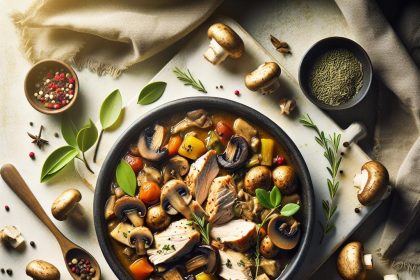
Pair dumplings with acid-rich sides like sauerkraut or a bright beet salad to cut brightness through starch. A light mushroom cream sauce balances the tender crumb.
For presentation, finish with toasted breadcrumbs or fried shallots to add crunch and contrast.
Nutritional Information Per Serving
| Calories | Protein | Carbs | Fat |
|---|---|---|---|
| 210 | 5g | 38g | 4g |
Q&A
Common questions about potato starch, answered concisely.
What is the difference between potato starch and potato flour?
Potato starch contains only the extracted starch granules; potato flour is whole potato dehydrated and ground. Flour retains fiber and protein and imparts a stronger potato flavor.
Can potato starch replace wheat flour one-to-one?
No. Potato starch lacks gluten and protein, so it cannot match wheat flour’s structural properties. Use it as a thickener or blend it with other flours in gluten-free formulas.
Does potato starch keep after refrigeration?
Yes. Unopened, it stays stable for months in a cool, dry place. Once opened, keep it airtight and avoid moisture; refrigeration can extend shelf life but avoid condensation.
Is potato starch allergenic?
Potato starch is low-allergen and naturally gluten-free, making it suitable for many restricted diets. Individuals with potato-specific allergies should avoid it.
How does potato starch compare to tapioca or corn starch?
Potato starch typically has larger granules, providing stronger thickening at lower temperatures and clearer gels. Tapioca gives chewiness, and corn offers neutral thickening with different freeze–thaw behavior.
FAQ
Is potato starch suitable for high-temperature frying?
Yes. Potato starch crisps quickly and forms a light, crunchy crust. Use it in coatings mixed with a small percentage of flour for adhesion on proteins and vegetables.
How much potato starch should I use as a thickener?
Start with a 1:2 ratio (starch:liquid) by volume for medium-thick sauces, adjusting in small increments. Make a cold slurry first to prevent lumps and add near the end of cooking.
Can potato starch be used in cold applications?
Potato starch requires heat to fully gelatinize, but when used as pre-gelatinized (modified) starch, it can thicken cold systems. Check product labeling for pre-gelatinized grades.
Where can I read more technical details?
For botanical, chemical, and processing context, consult the Wikipedia entries on potato, starch, and resistant starch. Those pages summarize core concepts used by industry professionals.
Final note: Potato starch combines reliable functionality with clean flavor. Use it strategically in recipes and formulations to exploit its thickening, crisping, and moisture-retaining properties.
See also: Potato starch