
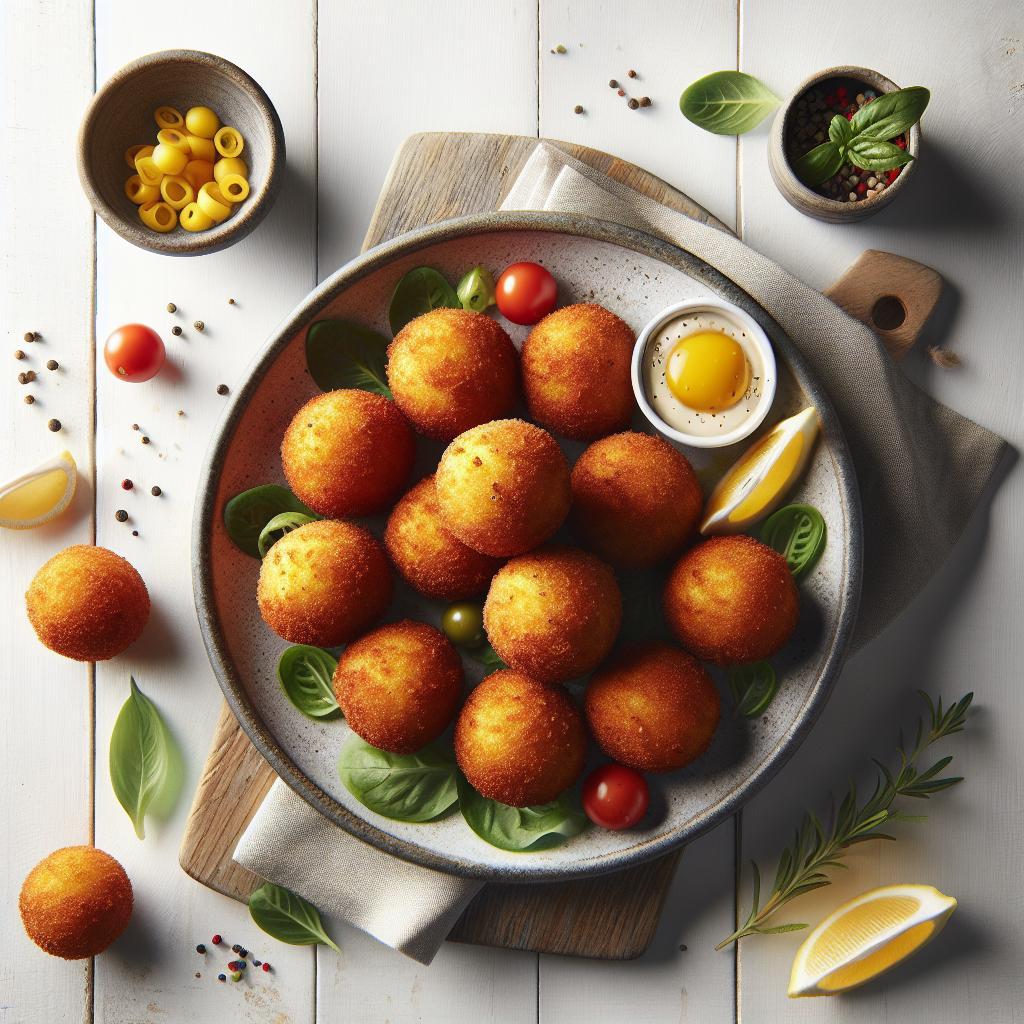

There’s something magical about biting into a warm, golden hush puppy—crispy outside and tender inside. This Southern fritter turns simple pantry staples into a snack that complements seafood, barbecue, and casual gatherings.
- Overview and Origins
- Prep and Cook Time
- Yield
- Difficulty Level
- Ingredients
- Instructions
- Tips and Tricks for Frying Like a Pro at Home
- Chef’s Notes and Substitutions
- Serving Suggestions
- Nutritional Snapshot
- Frying Safety and Technique
- FAQ
- What are hush puppies and why are they called that?
- How do I get a crisp exterior and tender interior?
- Can I make hush puppies ahead of time?
- Are there healthier cooking alternatives?
- What mix-ins work well in the batter?
- Wrapping Up
- Quick cook: Ready in about 25 minutes from start to finish.
- Versatile batter: Easily adapt for gluten-free or dairy swaps.
- Pro frying tips: Maintain oil temperature and fry in small batches.
- Serve hot: Crisp texture fades as they cool, so serve right away.
Overview and Origins
Hush puppies are small fried cornmeal balls rooted in Southern U.S. foodways. For historical context, see the hushpuppy (food) entry for regional background and variants.
They rely on simple chemistry: cornmeal, a leavening agent, and hot oil produce a crisp exterior and light interior. For ingredient specifics, the role of cornmeal is central to texture and flavor.
Prep and Cook Time
Preparation: 15 minutes. Cooking: 10 minutes. Total: 25 minutes.
Timing assumes active prep and frying in batches to protect oil temperature. If you make a larger batch, plan extra time to keep portions warm and crisp.
Yield
Yield is about 24 hush puppies, which serves four to six people as a side. Adjust portion sizes by scaling the batter in 50% increments for larger groups.
Keep in mind that frying multiple batches can slightly change yield due to oil absorption. Use a kitchen scale for high accuracy when planning servings.
Difficulty Level
Easy. The technique focuses on temperature control rather than advanced skills. Even beginners can achieve reliable results with a thermometer and a steady stove flame.
Experienced cooks will find room for refinement: batter chill, mix-ins, and oil type all influence the final crunch and crumb. Small changes yield measurable improvements.
Ingredients
Below is a tested ingredient list that produces consistent texture and flavor. All items are common pantry staples unless noted otherwise.
- 1 cup yellow cornmeal, stone-ground preferred
- 1 cup all-purpose flour, sifted
- 1 tablespoon baking powder
- 1 teaspoon granulated sugar
- 1 teaspoon salt
- 1/2 teaspoon black pepper, freshly ground
- 1/2 teaspoon smoked paprika (optional)
- 1/2 cup finely chopped onion (white or yellow)
- 1 cup buttermilk, at room temperature
- 2 large eggs, lightly beaten
- Vegetable or peanut oil, for frying
For dairy context, consult the buttermilk note: its acidity tenderizes the crumb and reacts with baking powder. Substitute with milk + acid if needed.
For gluten-free versions, swap a tested blend or rice flour and expect a slightly different mouthfeel. Always test a single hush puppy when changing flours.
Instructions
Follow these steps for consistent batter and controlled frying. Measure carefully and keep the batter slightly thick so spooned portions hold shape in hot oil.
Use a deep, heavy pot and a reliable thermometer to maintain 350°F (175°C). Consistent oil temperature is the single biggest factor for uniform color and non-greasy texture.
Step-by-step
Combine the dry ingredients—cornmeal, flour, baking powder, sugar, salt, pepper, and smoked paprika—in a large bowl. Whisk them until evenly distributed to avoid lumps and ensure uniform rise.
Mix the wet ingredients—buttermilk and beaten eggs—in a separate bowl. Whisk gently to combine and bring the liquids to room temperature for predictable batter behavior.
- Fold in the onion: Stir the chopped onion into the dry mix so it disperses evenly. This prevents pockets of moisture that can alter frying behavior.
- Combine wet and dry: Pour the buttermilk-egg mixture into the dry ingredients. Stir gently until just combined; a few small lumps are fine and keep the crumb tender.
- Heat the oil: Fill a Dutch oven or deep pan with 2–3 inches of oil and heat to 350°F (175°C). Use a thermometer and adjust heat to maintain temperature during frying.
- Scoop and fry: Use a small cookie scoop or tablespoon to drop rounded batter into oil. Fry in small batches to avoid temperature loss and sticking.
- Cook to color: Fry for about 3–4 minutes, turning occasionally, until evenly golden brown. Transfer to paper towels to drain and rest briefly.
- Serve immediately: Best eaten hot for maximum crispness. Keep cooked hush puppies warm on a baking sheet in a 200°F oven if you need to fry remaining batter.
Tips and Tricks for Frying Like a Pro at Home
Always check oil temperature with a probe thermometer; visual cues alone can mislead. A steady 350°F yields crisp shells and a moist interior.
Test-fry one hush puppy before completing the batch. This gives insight on texture and color and allows quick salt or temperature adjustments.
[NOTE]
To vary flavor, fold in minced jalapeño, sweet corn kernels, grated cheddar, or herbs. Small additions change moisture and frying time, so adjust accordingly.
Chef’s Notes and Substitutions
Buttermilk adds acidity and flavor, but you can substitute whole milk plus 1 tsp vinegar per cup in a pinch. For vegan options, use plant-based milk and an egg replacer; texture will change.
For gluten-free batter, use a blend with rice flour and a binder like xanthan gum for structure. Dry-to-wet ratios may need slight adjustments when switching flours.
Pro-Caution: Never leave hot oil unattended. Use a heavy pot, monitor temperature, and keep a lid nearby to smother flames in case of a fire. Hot oil causes serious burns.
Serving Suggestions
Serve hush puppies alongside barbecue, fried fish, or a fresh slaw for balanced textures and flavors. They also pair well with bright sauces to cut richness.
For curated pairings, see our Southern Classics Collection and a dedicated hush puppies recipe page for menu ideas. These internal pages provide complementary recipes and side dishes.
Garnish with chopped chives or parsley and offer dips like remoulade, spicy aioli, or honey butter. Small touches lift presentation and encourage guests to sample multiple flavors.
Nutritional Snapshot
The table below shows approximate nutrients per serving (4 hush puppies). Values vary with oil type and portion size.
| Nutrient | Per Serving (4 hush puppies) |
|---|---|
| Calories | 220 |
| Protein | 5g |
| Carbohydrates | 28g |
| Fat | 9g |
Frying Safety and Technique
Deep frying relies on heat transfer; consult the deep frying page for technical fundamentals. Temperature, oil type, and pan geometry matter.
Use a heavy-bottomed pot to reduce hot spots. Maintain a steady medium-high flame and avoid overcrowding to preserve oil temperature and prevent soggy results.
FAQ
What are hush puppies and why are they called that?
Hush puppies are fried cornmeal dumplings central to Southern cuisine. Tradition says they were tossed to dogs to quiet them, which likely inspired the name.
How do I get a crisp exterior and tender interior?
Maintain 350°F oil and fry in small batches. Proper hydration of the batter and a small amount of baking powder deliver the ideal interior.
Can I make hush puppies ahead of time?
Prepare the batter up to four hours in advance and refrigerate, covered. Fry just before serving for best texture and heat.
Are there healthier cooking alternatives?
You can bake hush puppies at 400°F for about 18–22 minutes, brushed lightly with oil. They won’t match deep-fried crispness but remain tasty and lighter.
What mix-ins work well in the batter?
Chopped onions, corn kernels, jalapeños, and shredded cheese all work. Adjust moisture and salt when adding wet or salty components to the batter.
Wrapping Up
Mastering hush puppies hinges on controlling oil temperature and maintaining a balanced batter. Small adjustments and a careful test fry set you up for consistent success.
These golden bites reward experimentation and pair beautifully with many Southern main dishes. Keep notes on mix-ins and timing so you can reproduce your best batch every time.
See also: hush puppies