

Savor the Richness: Creamy Mushroom Soup for Ultimate Comfort
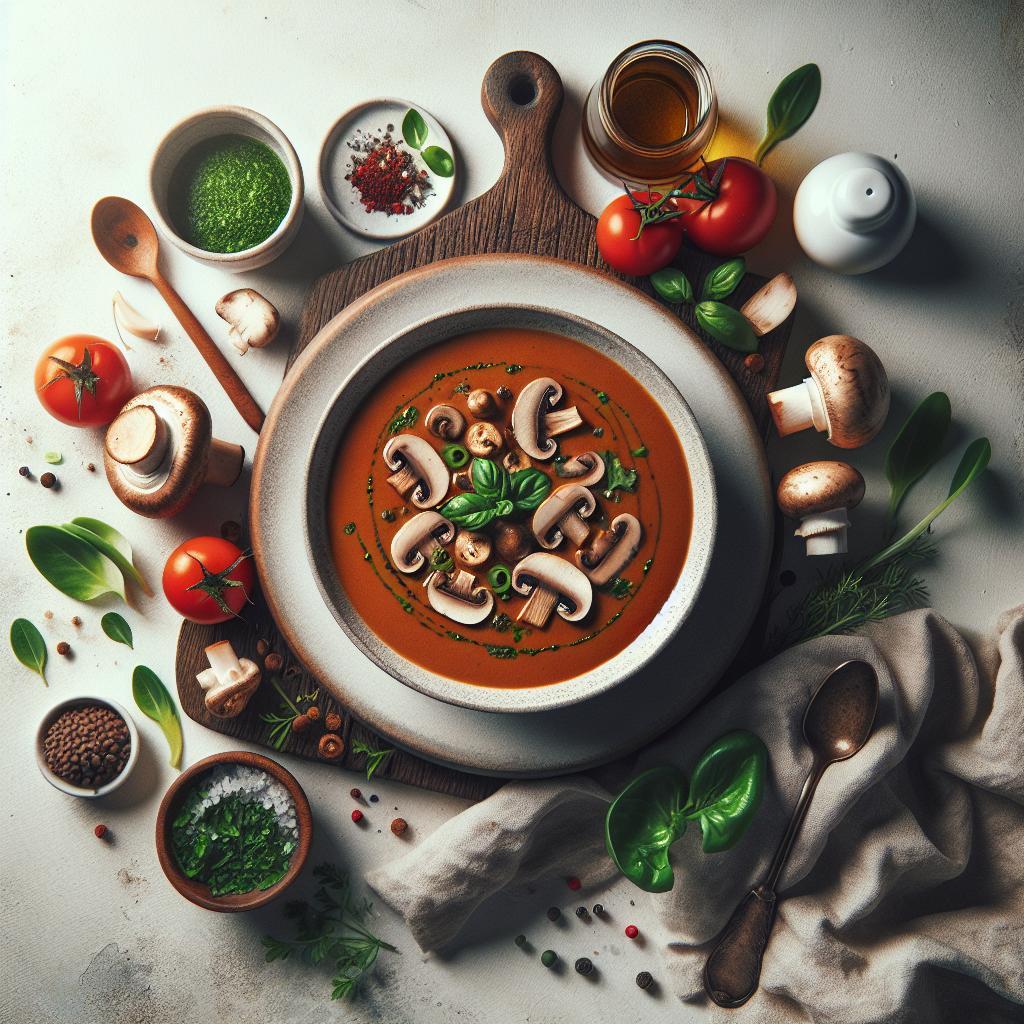
A bowl of creamy mushroom soup comforts and signals craftsmanship. Use reliable technique and quality produce to achieve a silky, savory finish every time.
- Savor the Richness: Creamy Mushroom Soup for Ultimate Comfort
- At a Glance: Why This Soup Works
- Prep and Cook Time
- Yield
- Difficulty Level
- Ingredients
- Instructions
- Tips for Success
- Advanced Flavor Options
- Serving Suggestions
- Nutrition and Portioning
- FAQ
- What makes a creamy mushroom soup truly irresistible?
- Which mushrooms create the richest flavor?
- Can I make this soup dairy-free and still keep the creaminess?
- How can I deepen the soup’s flavor profile?
- Can I prepare this soup ahead of time?
- Insights and Conclusions
- Layer umami with a blend of mushrooms and optional dried porcini.
- Control moisture by dry-sautéing to concentrate flavor before adding liquid.
- Blend selectively to preserve texture while creating a smooth body.
- Finish gently to protect the emulsion and avoid separation.
At a Glance: Why This Soup Works
This soup rests on three pillars: concentrated mushroom flavor, a stable emulsion for creaminess, and precise seasoning. Each step aims to extract, bind, and balance taste without masking the mushrooms.
Browning enhances flavor through the Maillard reaction, while slow evaporation concentrates savory compounds. Also, the right fat and starch combination preserves mouthfeel.
Prep and Cook Time
Prep Time: 20 minutes. Measure and chop ingredients first to keep stove timing consistent. Mise en place reduces mistakes and speeds the cook.
Cook Time: 35 minutes. Active pan time includes browning and simmering. Total time near 55 minutes yields depth without fuss.
Yield
Serves 6 hearty bowls. Use 1 to 1 1/2 cups per person depending on appetite and sides. Leftovers often taste better after flavors meld overnight.
For meal prep, cool quickly and refrigerate within two hours. Reheat gently and add a splash of stock if the soup tightens up.
Difficulty Level
Medium. The work uses basic techniques: browning, deglazing, and controlled simmering. Each step requires attention more than skill.
The usual errors are adding liquid too soon and boiling after cream addition. Keep heat moderate and taste frequently to avoid these issues.
Ingredients
The list stays compact, but every item plays a clear role: mushrooms for umami and texture, flour for body, and cream for richness. Choose firm, fresh mushrooms for the best results.
Key ingredients include mixed mushrooms, butter, onion, garlic, flour, vegetable stock, heavy cream, fresh thyme, smoked paprika, and olive oil. Truffle oil can be a finishing flourish when used sparingly.
- 600g mixed mushrooms (cremini, shiitake, oyster), cleaned and sliced
- 3 tbsp unsalted butter
- 1 large yellow onion, finely chopped
- 3 garlic cloves, minced
- 1/4 cup all-purpose flour, sifted
- 5 cups vegetable stock, low sodium
- 1 cup heavy cream
- 1 tsp fresh thyme leaves, chopped
- 1/2 tsp smoked paprika
- Salt and freshly cracked black pepper, to taste
- 2 tbsp extra virgin olive oil
- Fresh parsley, chopped, for garnish
- Optional: Dried porcini or a light drizzle of truffle oil
Instructions
Follow this sequence to build flavor: sweat aromatics, concentrate mushrooms, add a measured thickener, then finish with cream. Work deliberately and taste at key moments.
Use a heavy-bottomed pot to maintain even heat. Have an immersion blender or countertop blender ready for controlled puréeing.
- Prepare mushrooms: Choose varieties that balance firmness and earthiness. Wipe caps with a damp cloth to remove debris rather than running them under water to avoid dilution.
- Sweat onions: Heat 2 tbsp butter and 1 tbsp oil in a large pot over medium heat. Add chopped onion and cook until soft and translucent, about 5 minutes, stirring frequently to prevent premature browning.
- Add garlic: Stir in garlic and cook one minute until aromatic. Avoid high heat; burnt garlic tastes bitter and will harm the overall balance.
- Dry-sauté mushrooms: Add mushrooms and raise heat slightly to drive off moisture. Let them release liquid, then continue until edges brown, about 10 minutes. For improved depth, brown dense varieties a little longer.
- Cook in flour: Sprinkle flour over the mushrooms and stir to coat evenly. Cook 2–3 minutes to remove raw starch taste and form a reliable thickening base.
- Deglaze and simmer: Add stock gradually while stirring to avoid lumps. Bring to a gentle simmer and let the soup reduce slightly so the starch binds and flavors concentrate.
- Season and reduce: Add thyme and smoked paprika, then salt and pepper to taste. Simmer uncovered for 12–15 minutes to deepen flavor and meld components.
- Partial purée: Use an immersion blender to purée roughly half the soup for a creamy body while leaving some mushroom pieces intact for texture. Alternatively, blend in batches for a fully smooth finish.
- Finish with cream: Stir in heavy cream and remaining butter. Warm gently for 3–5 minutes without boiling to maintain emulsion and stop before it reaches a simmer point that would risk breaking.
- Adjust and serve: Taste and correct seasoning. Garnish with chopped parsley and, if using, a delicate drizzle of truffle oil. Serve hot with crusty bread or a simple green salad.
Tips for Success
Select fresh mushrooms with firm caps and closed gills where possible. Freshness affects aroma and the structural texture in the finished soup.
Dry-sauté first to evaporate excess moisture and intensify mushroom flavor. This avoids a thin, diluted soup and supports a richer mouthfeel.
Control texture with partial blending. Purée about half the pot to create body while leaving bite. This produces a satisfying contrast between silk and chew.
Substitute wisely for dairy-free versions. Coconut cream, cashew cream, or blended silken tofu mimic heavy cream. Balance sweeter plant creams with a squeeze of lemon or extra salt.
Advanced Flavor Options
For deeper umami, add a small amount of dried porcini or a splash of dry sherry during deglazing. These concentrated elements increase savory complexity with minimal volume.
Also consider a teaspoon of miso or a splash of soy sauce to lift background savoriness. Use sparingly so the mushroom remains the star.
When reducing, taste often and adjust with acid or salt rather than more cream. A touch of brightness balances the weight of fat and starch and keeps the soup lively.
For technical context on taste, see the umami entry. Also consult the mushroom page for varietal notes that affect texture and flavor.
Serving Suggestions
Serve the soup hot in warmed bowls to preserve mouthfeel. Garnish with crisp garlic croutons or a drizzle of herb oil for contrast and visual appeal.
Pair with crusty artisan bread, a light green salad, or a sharp cheddar grilled cheese for a satisfying meal. For a vegetarian main, serve the soup beside a mushroom risotto or roasted root vegetables.
Consider finishing additions like a spoonful of crème fraîche for silkiness or toasted pine nuts for crunch. Small garnishes can elevate both flavor and perceived value.
Nutrition and Portioning
Nutrition varies by dairy and oil choices. This version estimates moderate fat and calories; reduce fat by using lighter dairy or plant alternatives. Track exact values if you need precision.
Approximate per serving: Calories 260, Protein 6g, Carbohydrates 18g, Fat 18g. These values depend on brand and portion size and should be used as a guideline only.
| Nutrient | Per Serving |
|---|---|
| Calories | 260 |
| Protein | 6g |
| Carbohydrates | 18g |
| Fat | 18g |
FAQ
What makes a creamy mushroom soup truly irresistible?
Layered umami from mixed mushrooms and a stable emulsion create depth and silk. Browning and controlled reduction concentrate savory notes without adding excessive salt.
Also, finishing with a small amount of cream or butter at low heat preserves mouthfeel and prevents separation.
Which mushrooms create the richest flavor?
A medley of cremini, shiitake, and porcini gives a balanced profile: cremini for body, shiitake for savory notes, and porcini for earthiness. Use dried porcini sparingly to boost intensity.
Adjust ratios to availability and cost, and remember that texture varies by species, which affects the final mouthfeel.
Can I make this soup dairy-free and still keep the creaminess?
Yes. Coconut cream, cashew cream, or blended silken tofu mimic heavy cream effectively. Each option changes flavor slightly, so taste and adjust seasoning.
For neutral creaminess, blend soaked cashews and strain before stirring into the pot. This keeps the texture rich but subtle.
How can I deepen the soup’s flavor profile?
Slow-caramelize onions, deglaze with dry wine, or roast mushrooms to concentrate natural sugars. These steps intensify savory complexity without adding salt.
Also try a small spoon of miso or a splash of sherry when deglazing for layered, resonant flavor. These boost umami without masking the mushroom character.
Can I prepare this soup ahead of time?
Yes. The soup often tastes better the next day as flavors meld. Cool quickly, refrigerate, and reheat gently while stirring in a splash of stock or cream if the texture tightens.
Freeze in portioned containers for longer storage. Thaw overnight and reheat slowly to preserve emulsion and texture.
Insights and Conclusions
Crafting a standout creamy mushroom soup uses straightforward technique and thoughtful ingredient choices. Focus on browning, moisture control, and selective blending to build complexity and mouthfeel.
Use the recipe framework to adapt mushrooms and finishes to your taste. Test small changes, note results, and refine timing and seasoning for consistent success.
For background on cooking techniques, consult the sautéing entry. For clarification on dairy options, see the cream page.
See also: mushroom soup