

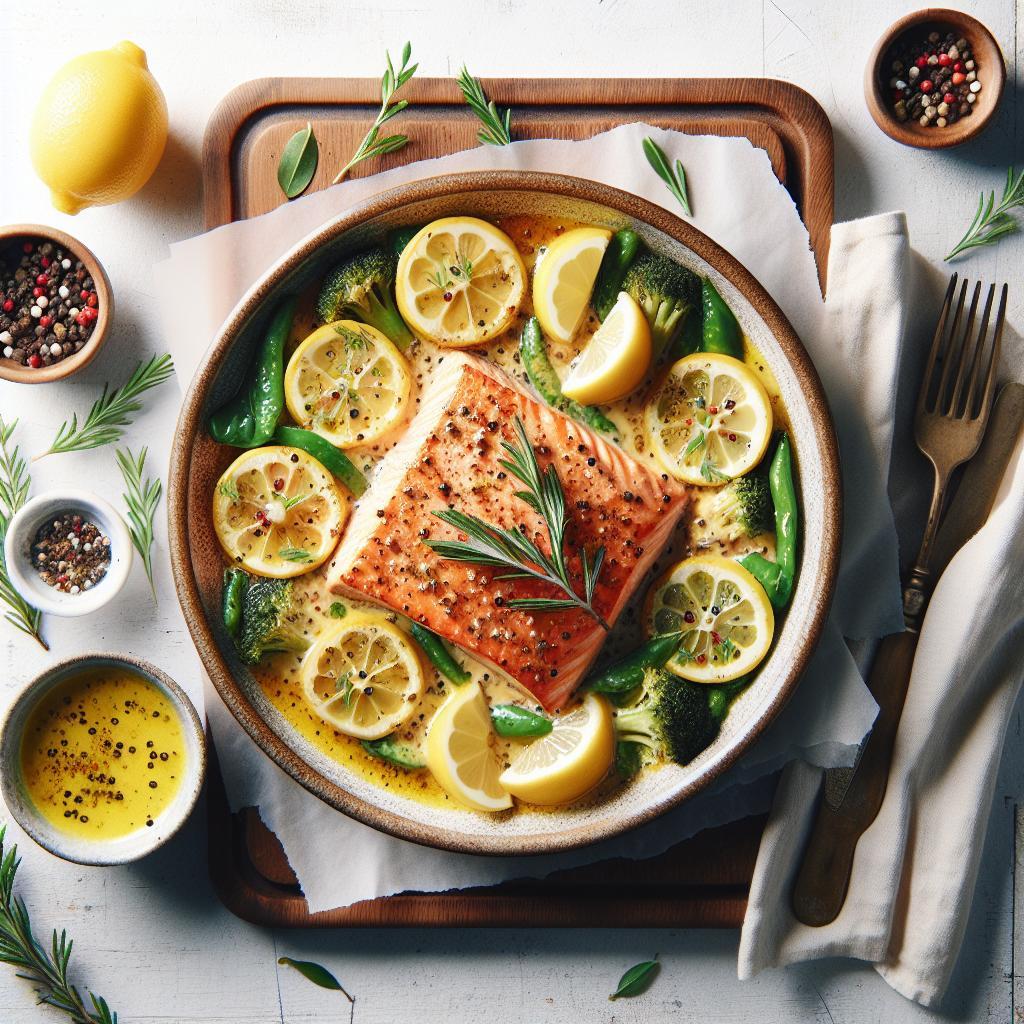

Baked salmon brightened with fresh lemon zest and warm butter transforms simple fillets into a reliable, restaurant-style dish for home cooks. The method focuses on balanced acidity, controlled heat, and timing to keep flesh moist and flaky.
- Quick finish: Ready in about one hour including optional marinating.
- Bright flavor: Fresh lemon zest, garlic, and a touch of smoked paprika lift the glaze.
- Consistent texture: Bake skin-on to protect the flesh and retain oil.
- Versatile cook: Adaptable for conventional ovens or air fryers with timing tweaks.
Zesty Marinade Magic: Unlocking the Perfect Citrus Balance
The lemon-butter glaze starts as a simple emulsion: melted butter whisked with fresh lemon juice and zest, plus aromatics. This emulsion clings to the fish, so the glaze flavors surface flesh without pooling on the tray.
Use fresh lemon for volatile oils in the zest, which deliver bright top notes. Also, adding the juice slowly while whisking helps form a stable coating that adheres to the fillet.
Ingredients
Select firm, even-thickness fillets for predictable results and a uniform cook. High-quality fish and fresh citrus reduce the need for heavy seasoning and allow the butter-lemon balance to shine.
Below is a tested list that serves four. Scale proportionally, keeping the lemon-to-butter ratio close to preserve balance and glaze viscosity.
- 4 skin-on salmon fillets, ~6 oz each
- 3 tbsp fresh lemon juice (1 large lemon)
- Zest of 1 lemon, finely grated
- 1/4 cup unsalted butter, melted and cooled slightly
- 2 cloves garlic, minced
- 1 tbsp honey or maple syrup
- 1 tsp Dijon mustard
- 1/2 tsp smoked paprika (optional)
- Salt & freshly ground black pepper, to taste
- Fresh thyme or dill, for garnish
Prep & Cook Time
Plan about 15 minutes active prep, an optional 30-minute marinate, and roughly 20 minutes baking, depending on thickness. Use an internal thermometer for accuracy rather than relying solely on time estimates.
Preparation: 15 minutes. Marinating: 30 minutes optional. Baking: ~20 minutes. Total: ~1 hour including marinating.
Instructions
Follow the sequence to build a stable glaze, marinate briefly, and bake for a moist finish. I recommend skin-on fillets to protect delicate flesh during high-heat cooking.
- Make the marinade: Whisk melted butter, lemon juice, lemon zest, garlic, honey, Dijon, smoked paprika, salt, and pepper until smooth.
- Marinate the salmon: Place fillets skin-side down in a shallow dish and pour over the marinade. Chill for 30 minutes or at least 10 minutes if pressed for time.
- Preheat oven: Heat to 400°F (200°C). Line a sheet with parchment or lightly oil to prevent sticking.
- Arrange fillets: Transfer salmon skin-side down to the tray. Reserve a tablespoon of marinade for mid-bake brushing.
- Bake: Bake about 15 minutes, then baste with reserved marinade and continue 3–5 minutes as needed. The fish is done when it flakes and reaches 145°F (63°C) internally.
- Rest and garnish: Remove from oven, rest 2 minutes, then garnish with fresh herbs before serving.
When basting, apply gently to avoid tearing the flesh. Also, tent with foil for the final minutes if fillets are thick to finish through without excessive browning.
Tips for Success
Small technique choices produce large improvements in texture and flavor. Leave the skin on, preheat the oven fully, and use fresh lemon for brightness that cuts through fat.
Use a probe thermometer to avoid guesswork; consistent temperature reduces the risk of overcooking across batches. Additionally, if you want a creamier finish, fold in a tablespoon of crème fraîche or Greek yogurt to the warm glaze before serving.
- Skin-on advantage: Skin shields delicate flesh and concentrates heat into the meat.
- Marinate briefly: Ten to thirty minutes infuses flavor without denaturing proteins excessively.
- Air-fryer option: Air-fry at 375°F for about 12 minutes, flipping once for comparable results with slightly crisper edges.
- Make-ahead: Marinate overnight and bake fresh to serve for efficient meal prep.
Serving Suggestions
Serve fillets over fluffy quinoa, herbed rice, or creamy mashed cauliflower for a gluten-free plate that soaks up lemon butter. Add a crisp green vegetable such as roasted asparagus or sautéed green beans to balance fat with fresh crunch.
Finish with lemon slices, chopped herbs, and a light scattering of toasted nuts for texture, if desired. For reliable background on dietary points, consult a general summary of nutrition.
Why This Works: Technique Notes
Baking at 400°F supplies even ambient heat that cooks the fillet through without collapsing structure. The skin functions as a barrier, concentrating heat into the flesh while the butter-lemon glaze preserves surface moisture.
Fresh lemon zest releases volatile oils that lift the palate, while a small amount of honey or maple syrup tempers acidity and rounds sharp edges. Also, review basic principles of baking for context on heat transfer and dry-heat cooking behavior.
Technical Background and Sourcing
Choose fillets with consistent thickness to ensure predictable results; uneven pieces will finish at different times. For reliable species-level considerations and fat-content context, consult the general entry on salmon.
Use unsalted butter so you can control seasoning precisely. Also, when melting butter, remove from heat and cool slightly before whisking in acid to limit curdling and separation.
FAQ
This FAQ answers common execution and storage questions to keep your meals safe and flavorful. Each answer focuses on actionable steps and measured guidance for home cooks.
Read each Q&A and apply the tips to avoid common mistakes, such as over-marinating or overheating. A short checklist can improve consistency in every batch.
What makes this zesty baked salmon special?
The recipe balances bright lemon with warm butter to amplify salmon’s natural flavor without masking it. Short marination and skin-on baking preserve texture and produce moist, flaky fillets.
Is baking the best method for this recipe?
Baking delivers steady, even heat that minimizes hot spots and the risk of overcooking. It also lets the lemon-butter warm and coat the fish uniformly for consistent surface flavor.
Can I substitute another fish?
You can try trout or cod, but adjust cook times for thinner or leaner flesh. Fatty fish like salmon tolerate butter-based glazes best because the additional fat helps prevent drying.
How do I store leftovers safely?
Cool cooked fillets to room temperature, then refrigerate in an airtight container within two hours. Consume within 2–3 days and reheat gently over low heat or in a short oven burst to avoid drying.
Where can I learn more about ingredient behavior?
Authoritative entries on butter and lemon explain how acid interacts with fat and how zest contributes oils. These references help you adjust technique with confidence.
See also: baked salmon