

Unlocking Sweet Science: What Exactly Is Invert Sugar? Invert sugar is a liquid sweetener created when sucrose breaks into glucose and fructose. Bakers and confectioners prize it for its ability to improve texture, reduce crystallization, and hold moisture in recipes.
- At a glance: invert sugar increases sweetness and slows crystallization in confections.
- It forms when sucrose hydrolyzes into glucose and fructose.
- Professionals use it to extend shelf life and improve mouthfeel in baked goods.
- Home cooks can make it with simple tools and careful temperature control.
What is invert sugar?
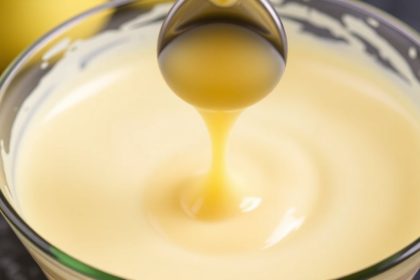
Invert sugar is a syrup produced when the disaccharide sucrose is hydrolyzed into its monosaccharide components. This chemical change yields a liquid that tastes sweeter and resists crystallization relative to table sugar.
The inversion process converts sucrose into a mixture of glucose and fructose, altering optical rotation and functional properties. The result behaves differently in doughs, icings, and confections, which is why professionals rely on it.
Prep and Cook Time
Preparation time is short, but the process needs patience and attention to temperature. Total active time typically runs about 40 to 45 minutes, including cooking and cooling stages.
Plan for: 10 minutes prep, 30 minutes for syrup inversion and monitoring, and about 20 minutes of cooling before use or storage. Accurate timing helps prevent unwanted caramelization.
- Preparation: 10 minutes
- Cooking (syrup inversion): 30 minutes
- Cooling time: 20 minutes
Yield
This recipe produces roughly 2 cups of invert sugar syrup, depending on evaporation and final concentration. You can scale the ingredients linearly for larger batches, but maintain temperature control and stirring technique.
Store the finished syrup in a sealed container at room temperature to preserve its texture. For long-term storage, refrigeration will slow microbial growth but can increase viscosity.
Difficulty Level
Medium. The technique requires steady heat, a candy thermometer, and an understanding of the soft-ball stage to avoid under- or overcooking. Precision matters more than speed.
If you have basic candy-making experience, you will find the method straightforward. New bakers should practice temperature control on a small batch before scaling up.
Ingredients
Use simple, pantry-stable ingredients to make invert sugar at home. The acid catalyst can be an organic acid like lemon juice or a food-grade acid salt such as cream of tartar.
- 2 cups granulated sugar
- 1 cup water, divided
- ¼ teaspoon cream of tartar (potassium bitartrate) or ¼ teaspoon lemon juice
- ½ teaspoon baking soda, dissolved in 1 teaspoon water (added at the end to neutralize acid)
Instructions
Combine 1 cup water, granulated sugar, and the cream of tartar or lemon juice in a heavy-bottomed saucepan. Stir gently to blend without splashing; this minimizes sugar loss and ensures even heating.
Heat the mixture over medium heat, stirring until the sugar fully dissolves. Once dissolved, bring the syrup to a gentle simmer and monitor with a candy thermometer until the mixture reaches 236°F (soft-ball stage).
- Once the desired temperature is reached, remove from heat and carefully pour in the baking soda solution. The syrup will foam briefly; stir gently to neutralize the acid and halt inversion.
- Allow the syrup to cool at room temperature until it thickens to a pourable consistency. Avoid rapid cooling to prevent crystallization spots forming.
- Transfer to a sterile glass jar and seal. Label with the date and store at room temperature for up to several months, assuming good sanitation and dry storage.
[p]
[/p]
Chef’s Notes & Tips for Success
Skim any foam during cooking for a clearer final syrup. Foam removal improves appearance and reduces trapped air that can promote crystallization during storage.
Invert sugar is highly hygroscopic, so store it in a sealed container to maintain texture. When substituting into recipes, reduce other liquids slightly to account for the syrup’s dissolved water.
For subtle flavor variation, swap cream of tartar for fresh lemon juice; the slight citrus note complements many fruit-based desserts. However, acids vary in strength, so maintain consistent measures.
Visit our science of sugar and baking tips pages for trial recipes and troubleshooting if you want to experiment further. Those internal guides provide batch-tested ratios and application ideas.
Serving Suggestions
Invert sugar shines in icings, glazes, caramel, and soft-centered candies where smooth mouthfeel matters. It also helps keep cookies tender and ice cream scoopable at lower temperatures.
Drizzle a small amount over fresh fruit to deepen perceived sweetness without overpowering natural flavors. You can also fold a tablespoon or two into jam to reduce crystallinity and improve spreadability.
| Nutrient | Per 1 Tbsp (20g) | Value |
|---|---|---|
| Calories | 60 | kcal |
| Carbohydrates | 16 | g |
| Protein | 0 | g |
| Fat | 0 | g |

Q&A
Below are concise answers to the most common technical and practical questions about invert sugar. These responses reflect food science principles used by professionals in pastry and ingredient formulation.
They cover the chemistry of inversion, application tips, and safety considerations for home production. Use these as a quick reference while you test your first batches.
Q1: What is invert sugar, really?
A1: Invert sugar is the syrup produced when sucrose hydrolyzes into glucose and fructose; the change alters sweetness and crystallization.
Q2: Why is it called “invert” sugar?
A2: The term describes the shift in optical rotation when sucrose splits into its component sugars; the direction of rotation in polarized light is effectively inverted.
Q3: How does invert sugar differ from regular sugar?
A3: Unlike crystalline granulated sugar, invert sugar remains liquid, tastes slightly sweeter per unit, attracts moisture, and slows crystal formation in finished goods.
In Summary
Invert sugar is a practical, science-backed ingredient that adjusts sweetness, texture, and shelf stability in many recipes. It requires simple chemistry, consistent temperature control, and correct neutralization to produce reliably at home.
Use it strategically—small substitutions can yield measurable improvements in tenderness and longevity without changing a recipe’s core structure. Keep records of ratios and outcomes so you can replicate success.
FAQ
Can I substitute invert sugar for honey or corn syrup?
Yes. Invert sugar behaves similar to light corn syrup and diluted honey in recipes because of its liquid form and composition of glucose and fructose. Adjust sweetness and liquid ratios when substituting to maintain balance.
How long does homemade invert sugar last?
Stored in a clean, sealed jar at room temperature, invert sugar usually lasts several months. Refrigeration extends shelf life further but may increase thickness.
Does invert sugar change baking times?
It can. Because invert sugar retains moisture and modifies sugar concentrations, items may brown faster and remain moister. Watch bake color and test doneness with a toothpick rather than relying on time alone.
Is invert sugar healthier than table sugar?
Nutritionally, it provides similar calories to other sugars. Its higher sweetness per gram can allow reduced usage, but caloric impact remains comparable per teaspoon.
Can I buy invert sugar instead of making it?
Yes. Commercial invert syrups and specialty confectioners’ syrups are available and formulated for consistency. Making it at home gives control over concentration and flavor but requires careful technique.
See also: Invert sugar