
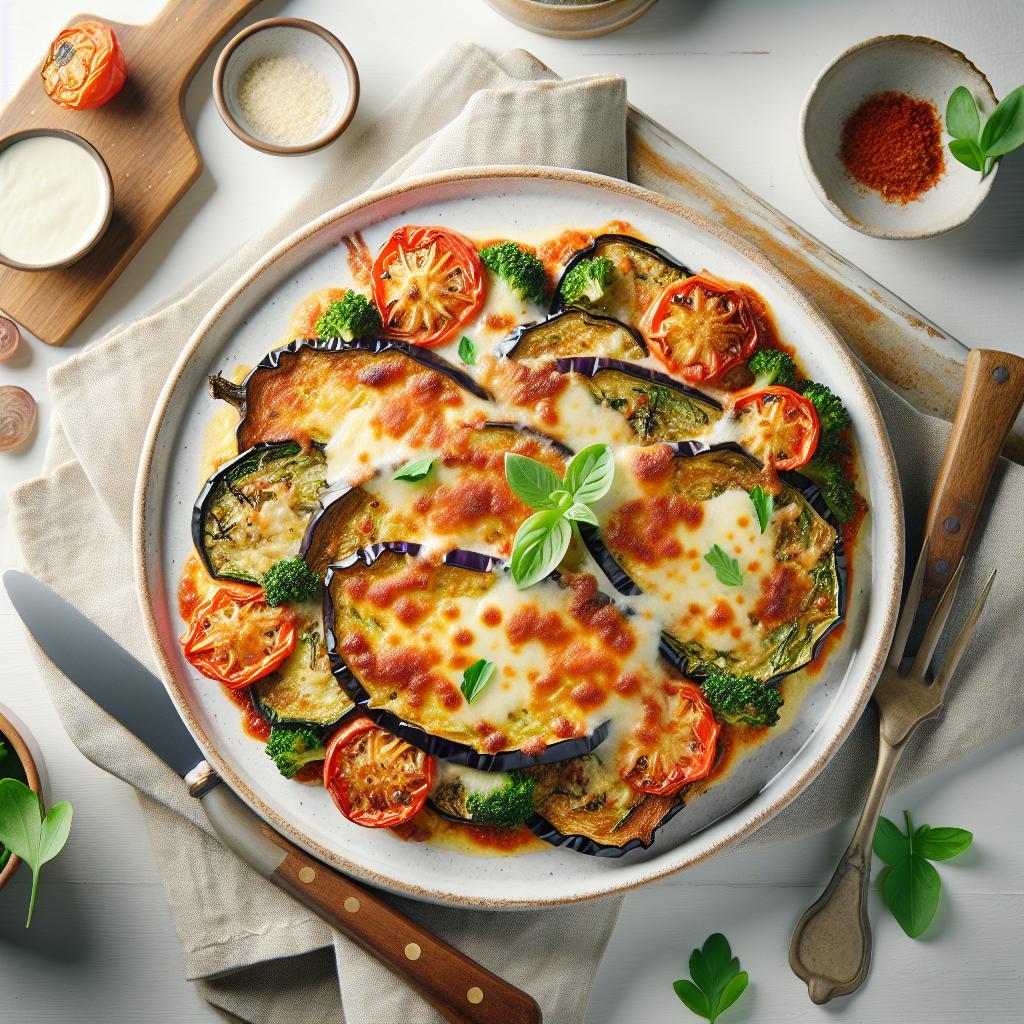

Crispy & Creamy: The Ultimate Baked Eggplant Parmesan Guide
There is a precise technique behind a perfectly baked Eggplant Parmesan: a crisped breadcrumb crust, balanced moisture control, and layered cheeses that melt into a silky interior. I wrote this guide from long practice in test kitchens and home ovens, focusing on reproducible steps that deliver consistent texture and flavor.
- Prep and Cook Time
- Yield and Difficulty
- Ingredients
- Why these ingredients work
- Instructions
- Tips for Success
- Make-Ahead and Storage
- Serving Suggestions and Pairings
- Practical Notes on Sauce and Variations
- Q&A
- FAQ
- How long should I salt eggplant before breading?
- Can I use regular breadcrumbs instead of panko?
- Do I need ricotta in every layer?
- Can I freeze assembled eggplant Parmesan?
- What temperature and time produce the best browning?
- In Summary
The method emphasizes salting, panko breading, and oven timing so you end up with golden edges and a creamy core every time. These strategies apply whether you make one 9×13 casserole or individual portions for a crowd.
- Key takeaway: Salt the eggplant to draw out moisture for a non-soggy result.
- Key takeaway: Panko plus Parmigiano-Reggiano gives lasting crunch and savory depth.
- Key takeaway: Bake, don’t over-sauce: modest marinara preserves the crust.
- Key takeaway: Rest the casserole 10 minutes before serving to set layers.
Prep and Cook Time
Preparation: 30 minutes for slicing, salting, and breading; allow 20–30 minutes for sweating the slices. Keeping prep efficient prevents the salted eggplant from over-salting.
Cooking: 40–45 minutes in the oven at 375°F (190°C) including a covered phase and a browning phase. Total time depends on whether you par-bake slices or oven-roast the assembled dish.
Yield and Difficulty
This recipe yields about six generous servings, enough for a family meal or to portion for leftovers. Portions scale linearly: two medium eggplants become one 9×13 casserole; multiply for larger gatherings.
Difficulty is medium. The technical tasks include consistent slicing, proper salting to control moisture, and an even breadcrumb coat. With clear steps, a home cook will master this in one or two tries.
Ingredients
Quality and technique matter more than a long ingredient list. Use fresh whole-milk cheeses and firm, uniform eggplants for even cook time.
Core ingredients include: eggplant (aubergine) rounds, all-purpose flour, eggs, panko breadcrumbs, grated Parmigiano-Reggiano, shredded mozzarella, ricotta, and a good marinara sauce. For more on eggplant selection, see eggplant (aubergine).
- 2 medium eggplants (about 1½ pounds), sliced into ½-inch rounds
- 1 cup all-purpose flour
- 3 large eggs, lightly beaten
- 1½ cups panko breadcrumbs mixed with ¼ cup grated Parmigiano-Reggiano
- ½ cup finely grated Parmigiano-Reggiano
- 2 cups shredded mozzarella
- 1 cup ricotta
- 4 cups marinara sauce (use a moderate-acidity sauce)
- Salt, black pepper, olive oil, garlic powder, dried oregano, fresh basil
Why these ingredients work
Panko provides the loft and crispness that standard breadcrumbs often lack; combine it with Parmigiano-Reggiano for savory browning and structure. Read more about Parmigiano-Reggiano on Parmigiano-Reggiano.
Ricotta acts as a moisture buffer and creates a smooth mouthfeel when layered with mozzarella. A restrained amount of sauce prevents the crust from softening too quickly.
Instructions
Follow these steps in order. Prepare a dredging station and work in batches to keep the breading crisp and the oven workflow steady.
Step 1: Preheat the oven to 375°F (190°C). Line a rimmed baking sheet with parchment and arrange a cooling rack over a tray for the salted eggplant.
- Salt the eggplant slices on both sides and rest them for 20–30 minutes to draw out excess moisture. Pat dry thoroughly with paper towels.
- Set up three shallow bowls: flour; beaten eggs; panko mixed with ¼ cup Parmigiano-Reggiano, garlic powder, oregano, salt and pepper.
- Coat each slice in flour, shake off excess, dip in egg, then press into the breadcrumb mix to build a generous, even coat.
- Arrange the coated slices on the baking sheet and brush lightly with olive oil. Bake for 18–22 minutes, flipping once so both sides crisp evenly.
- Layering: Spread a thin base of sauce in a 9×13 dish. Place a single layer of baked eggplant, dollop ricotta, sprinkle mozzarella and Parmigiano-Reggiano, then add a modest spoonful of marinara.
- Repeat to build two or three layers depending on pan depth. Cover loosely with foil, bake 20 minutes, then remove foil and bake an additional 10–15 minutes until golden and bubbling.
- Rest 10 minutes before cutting so the layers set. Garnish with torn fresh basil and a drizzle of extra virgin olive oil if desired.
Tips for Success
Salting is non-negotiable for optimal texture. Draw out moisture to prevent soggy interiors and to concentrate flavor; pat dry before breading to ensure the coating adheres.
Use panko for texture and a light hand with sauce to protect crisp edges. If you prefer a faster route, par-bake slices and assemble while warm for a shorter final bake time.
Layer cheeses strategically: ricotta for cream, mozzarella for melt, and Parmigiano-Reggiano for sharp, savory finish. Avoid over-saucing between layers; a thin ribbon of sauce preserves texture.
Want more technique notes? See our short guide on salting and prepping eggplant at how to salt eggplant for step-by-step visuals and timing tips.
Make-Ahead and Storage
You can assemble the casserole up to 24 hours ahead and refrigerate covered; add 8–12 minutes to bake time when baking cold. This makes the dish ideal for entertaining with minimal last-minute work.
Leftovers keep well in the refrigerator for 3–4 days and reheat covered at 350°F (175°C) until warm and bubbling. For meal-prep, cut into portions and freeze wrapped for up to 3 months, then thaw overnight before baking.
When reheating, avoid microwaving from frozen—use the oven to preserve crispness. A quick 5-minute broil at the end restores surface crunch if needed.
Serving Suggestions and Pairings
Serve hot with a crisp green salad dressed with lemon vinaigrette to cut the richness. Contrast and acidity lift the cheese and balance the savory layers.
Accompaniments that work well include garlic bread, rosemary focaccia, or a simple sautéed green vegetable. For tomato sauce variety, explore our internal roundup at best Italian tomato sauces.
To finish, garnish with fresh basil and a fine grate of Parmigiano-Reggiano. A light drizzle of high-quality extra virgin olive oil just before serving amplifies aroma and mouthfeel.
Practical Notes on Sauce and Variations
Use a moderately seasoned marinara to keep the dish balanced; heavy, oily sauces can separate and weigh down the crust. For background on marinara styles, refer to the marinara sauce entry.
Variations include adding grilled zucchini or mushrooms between layers, swapping provolone or fontina for mozzarella, or creating a vegan version with plant-based cheeses. Keep layer ratios similar to maintain texture contrast.
Q&A
Q1: What makes eggplant Parmesan both crispy and creamy?
A: Crisp comes from the panko-Parmesan crust baked to color; cream comes from ricotta and melted mozzarella layered with sauce. The contrast relies on moisture control and restrained sauce portions.
A: Use the right sequence: salt, dry, bread, par-bake, then layer. Each step preserves structure and mouthfeel.
Q2: Why bake eggplant Parmesan instead of frying it?
A: Baking reduces absorbed oil while still producing a crisp exterior when you use panko and high-heat oven techniques. It also simplifies cleanup and scales better for baking in larger pans.
A: If you prefer a richer finish, lightly pan-fry the breaded slices in minimal oil before layering; then finish in the oven to meld flavors.
Q3: How do I avoid soggy eggplant slices?
A: Salt slices for 20–30 minutes, then blot dry to remove drawn-out moisture. Work in single layers in the oven and avoid over-saucing between layers to keep the crust intact.
A: Use panko for a dryer, loftier crust. Give baked slices space on the sheet pan so steam can escape and crisping completes.
FAQ
How long should I salt eggplant before breading?
Salt for 20–30 minutes, then pat dry thoroughly. This timeframe reliably removes excess moisture without changing texture dramatically.
Can I use regular breadcrumbs instead of panko?
Regular breadcrumbs work but yield a denser crust. Panko creates more surface area and a lighter, longer-lasting crunch.
Do I need ricotta in every layer?
Ricotta adds cream and keeps layers from becoming dry; you can use less or swap for béchamel for a different texture. Keep overall moisture balance in mind.
Can I freeze assembled eggplant Parmesan?
Yes. Assemble in a freezer-safe pan, wrap tightly, and freeze up to 3 months. Thaw overnight in the fridge and bake until hot and bubbling.
What temperature and time produce the best browning?
Bake at 375°F (190°C) covered for the initial phase, then uncover and roast at the same temperature for 10–15 minutes to brown the top. A short broil (1–2 minutes) can finish the top if needed.
In Summary
Eggplant Parmesan becomes reliably crispy and creamy when you control moisture, use panko with Parmigiano-Reggiano, and layer cheeses judiciously. These technical steps prevent sogginess and maximize flavor.
Practice the sequence once or twice to dial in your oven and pan. The result rewards effort with a richly textured, vegetarian main that stands up to slices, sides, and shared meals.

See also: Eggplant Parmesan