

Savoring Comfort: The Heartwarming Taste of turkey soup
- Why turkey soup Works
- Prep and Cook Time for turkey soup
- Yield and Portioning
- Difficulty Level and Technique
- Ingredients
- Instructions
- Tips for Success with turkey soup
- Serving Suggestions
- Nutritional Note
- Common Questions
- Can I use leftover turkey for this soup?
- How do I prevent the corn from becoming mushy?
- What’s a good dairy-free finish?
- Is this soup freezer-friendly?
- How can I boost flavor without adding salt?
- Closing Remarks
- FAQ
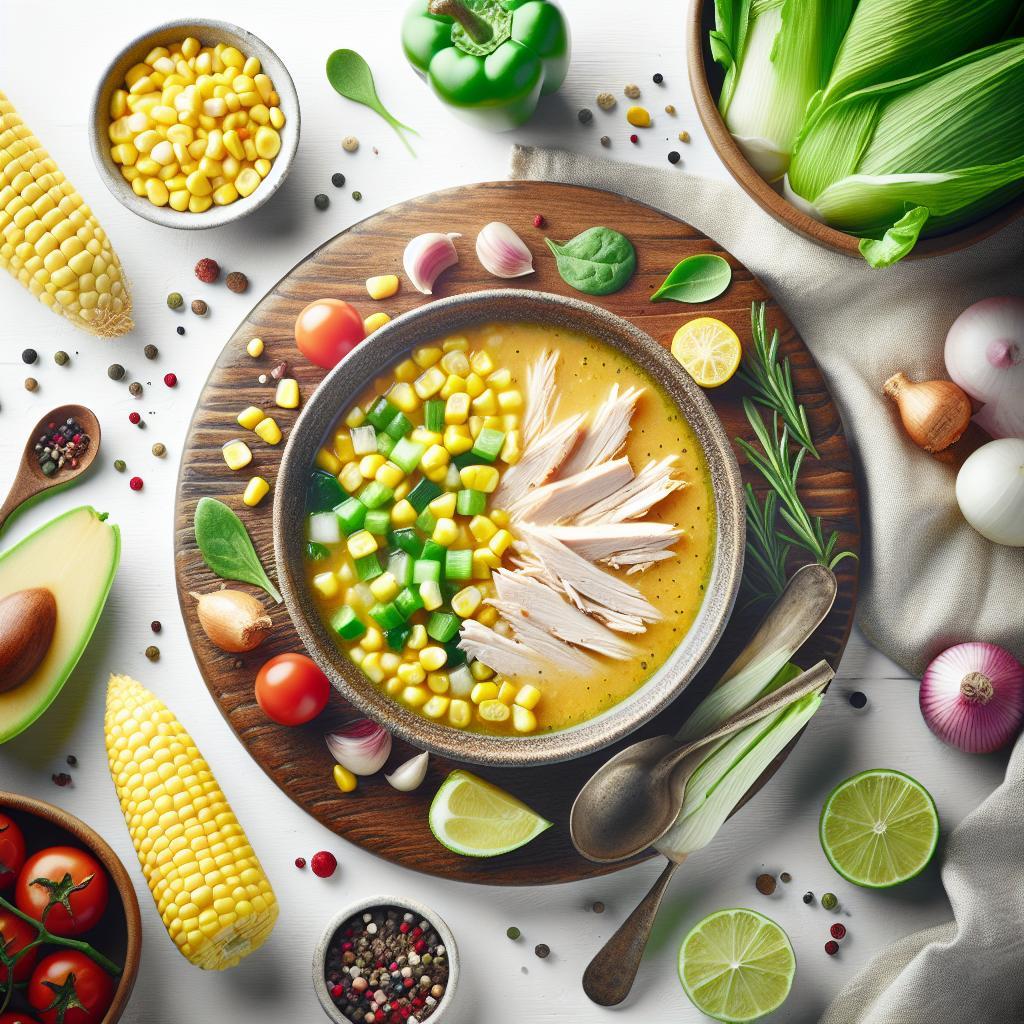
There is an elemental comfort in a steaming bowl of turkey soup that pairs shredded turkey with sweet corn for a balanced, hearty meal. This recipe converts leftovers into a nourishing, texture-driven bowl while remaining efficient in technique and pantry needs.
- Quick comfort: Ready in under an hour with simple pantry ingredients.
- Waste-not cooking: Turns leftover meat into a fresh, satisfying main.
- Balanced nutrition: Lean protein and fiber-rich corn deliver filling macros.
- Make-ahead friendly: Freezes well and flavors deepen after resting.
Why turkey soup Works
The core mechanics of turkey soup rest on three elements: a flavorful stock, starch for body, and corn for sweetness and texture. Each component supports the others so the final bowl tastes cohesive and layered.
Start with a clear stock and finish gently with dairy or a dairy alternative to preserve silk without breaking emulsions. For background on the primary protein, consult turkey and its role as a lean meat in soups and braises.
Prep and Cook Time for turkey soup
Preparation: Fifteen minutes of mise en place keeps active time low and prevents last-minute rushing. Chop aromatics uniformly to ensure even cooking and quick sweats.
Cooking: Thirty-five minutes of simmering lets flavors marry while preserving corn texture. Use gentle heat to avoid overcooking the kernels.
Yield and Portioning
This recipe yields about six hearty bowls and scales linearly by adjusting liquid and protein ratios. Use proper container sizes if you plan to portion for meal prep to preserve texture and chill quickly.
For small households, freeze single portions in airtight containers. Rapid cooling and sealed storage preserve aroma and mouthfeel during long-term freezes.
Difficulty Level and Technique
Rated easy: the recipe relies on basic techniques such as making a roux, sweating aromatics, and a measured simmer. These skills transfer to many clear and creamy soups.
Beginners can expect reliable results by following timing cues and focusing on temperature control. Advanced cooks can deepen flavor by making a roasted-bone stock or by browning vegetables more intensely.
Ingredients
Use quality components: cooked turkey, fresh or thawed corn, and a low-sodium broth base form the backbone of the soup. Measure roux ingredients to control finished thickness precisely.
Below are the ingredients adapted for clarity and consistency with professional practice.
- 2 cups cooked turkey meat, shredded or diced (dark meat adds richness)
- 1 cup fresh corn kernels (about 2 ears) or frozen, thawed
- 1 medium onion, finely chopped
- 2 cloves garlic, minced
- 2 medium carrots, diced
- 2 celery stalks, diced
- 4 cups low-sodium turkey or chicken broth
- 1 cup whole milk or cream for a richer finish
- 3 tbsp unsalted butter
- 3 tbsp all-purpose flour
- 1 tsp fresh thyme leaves or ½ tsp dried thyme
- Salt and freshly ground black pepper, to taste
- Fresh parsley, chopped (for garnish)
Instructions
Follow the sequence below to build depth with controlled technique: sweat aromatics, form a roux, then integrate broth and proteins. Maintain moderate heat and active stirring when you make the roux to avoid lumps.
Keep the finish gentle so dairy or alternatives do not break. Warm slowly and taste as you season to keep the balance precise.
- Prepare the aromatics: Melt the butter in a large pot over medium heat. Add the chopped onion, diced carrots, and celery and sauté until softened, about seven minutes.
- Incorporate garlic and flour: Stir in the garlic and cook one minute. Sprinkle the flour over the vegetables, stirring constantly to form a light roux and cook two to three minutes to remove raw flour taste.
- Add broth gradually: Whisk in the broth slowly to prevent lumps. Bring to a gentle boil, then reduce to a simmer until the mixture thickens slightly, about six to eight minutes.
- Combine corn and turkey: Stir in the corn kernels and shredded turkey, followed by thyme. Simmer gently for ten minutes to marry flavors while keeping kernel texture.
- Finish with milk and seasoning: Pour in the milk or cream, blend thoroughly, and warm over low heat without boiling. Season with salt and pepper to taste.
- Serve and garnish: Ladle hot soup into bowls and garnish with chopped parsley. Serve with crusty bread for contrast.
Make-ahead and storage
Soup flavors often intensify after an overnight rest; cool rapidly and refrigerate in sealed containers for up to three days. For longer storage, freeze up to three months and thaw in the refrigerator before reheating.
When reheating, warm slowly over low heat and add a splash of broth or milk to restore silkiness. Avoid high heat to prevent dairy separation and grainy texture.
Tips for Success with turkey soup
Small technique choices make a large difference: roast bones for stock, use unsalted butter to control seasoning, and add corn near the end. Each adjustment refines the final texture and flavor.
Choose whole-fat dairy for a silkier mouthfeel, or use full-fat coconut milk if you need a dairy-free finish. Both approaches support the soup’s comforting character without overpowering the turkey.
For notes on ingredient behavior, refer to the general pages on corn and on soup science to understand starch interaction and kernel structure.
Serving Suggestions
Serve this turkey soup in rustic bowls with crusty bread to contrast the soup’s silk. A bright green salad pairs well to provide palate lift and freshness.
Top variations include crisped turkey bacon, chopped green onions, or a small dollop of crème fraîche. Pair with a simple beverage like sparkling water and lemon to cut richness.
Nutritional Note
When prepared with low-sodium broth and moderate dairy, turkey soup offers a balanced macronutrient profile: lean protein, moderate fat, and carbohydrates from corn and vegetables. Portion control keeps calories predictable.
Approximate per-serving values based on the ingredient list: about 280 kcal, 28 g protein, 15 g carbohydrates, and 10 g fat. Adjust portions and dairy choices to meet dietary goals.
For foundational technique on stocks and broths, see stock (cookery) to learn recommended simmer times and clarity methods.
Common Questions
This section answers practical questions about technique, substitutions, and adaptation for different needs. Each answer remains concise and actionable.
Can I use leftover turkey for this soup?
Yes. Leftover roasted turkey works well because it has developed savory Maillard notes. Remove the skin to reduce fat and add the meat near the end so it warms without overcooking.
How do I prevent the corn from becoming mushy?
Stir corn in during the last ten minutes of simmering. Fresh corn benefits from a brief cook; long heat breaks down kernels and reduces perceived sweetness.
What’s a good dairy-free finish?
Full-fat coconut milk gives silk and a subtle sweetness that complements corn. Add it at the end and warm gently, as you would with dairy, to preserve texture.
Is this soup freezer-friendly?
Yes. Cool rapidly, fill sealed containers, and freeze. Thaw in the refrigerator and reheat slowly. Add a splash of broth when reheating if the texture tightens.
How can I boost flavor without adding salt?
Use roasted bones for a concentrated stock, add aromatic vegetables, and finish with an acid like a squeeze of lemon. Herbs such as thyme sharpen perceived seasoning without extra sodium.
Closing Remarks
Turkey soup combines practical cooking—turning leftovers into a fresh, nourishing meal—with techniques that mirror classical stock and roux methods. The result rewards modest effort with a comforting, high-value bowl.
Keep the recipe adaptable: swap dairy, vary herbs, or add starch for heartier bowls. Focus on balancing texture and seasoning to achieve a soup that reads as both familiar and refined.
FAQ
What cut of turkey is best for turkey soup?
Dark meat gives richness; white meat keeps the bowl lean. Use what you have and adjust finishing fat accordingly.
Can I thicken turkey soup without flour?
Yes. Purée a cup of the soup or use blended cooked potatoes or cooked rice to thicken while keeping a clean flavor profile.
How long does turkey soup keep in the refrigerator?
Store in sealed containers for up to three days. For longer storage, freeze for up to three months and thaw in the refrigerator before reheating.
Can I make turkey soup in a slow cooker?
Yes. Brown aromatics first for deeper flavor, then combine ingredients and cook on low for four to six hours. Add dairy at the end and warm gently.
Should I use fresh or frozen corn?
Fresh corn offers peak sweetness and texture, but quality frozen corn works well when out of season. Thaw frozen corn before adding to reduce cooking time.
See also: turkey soup