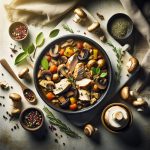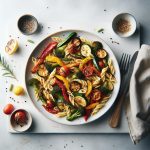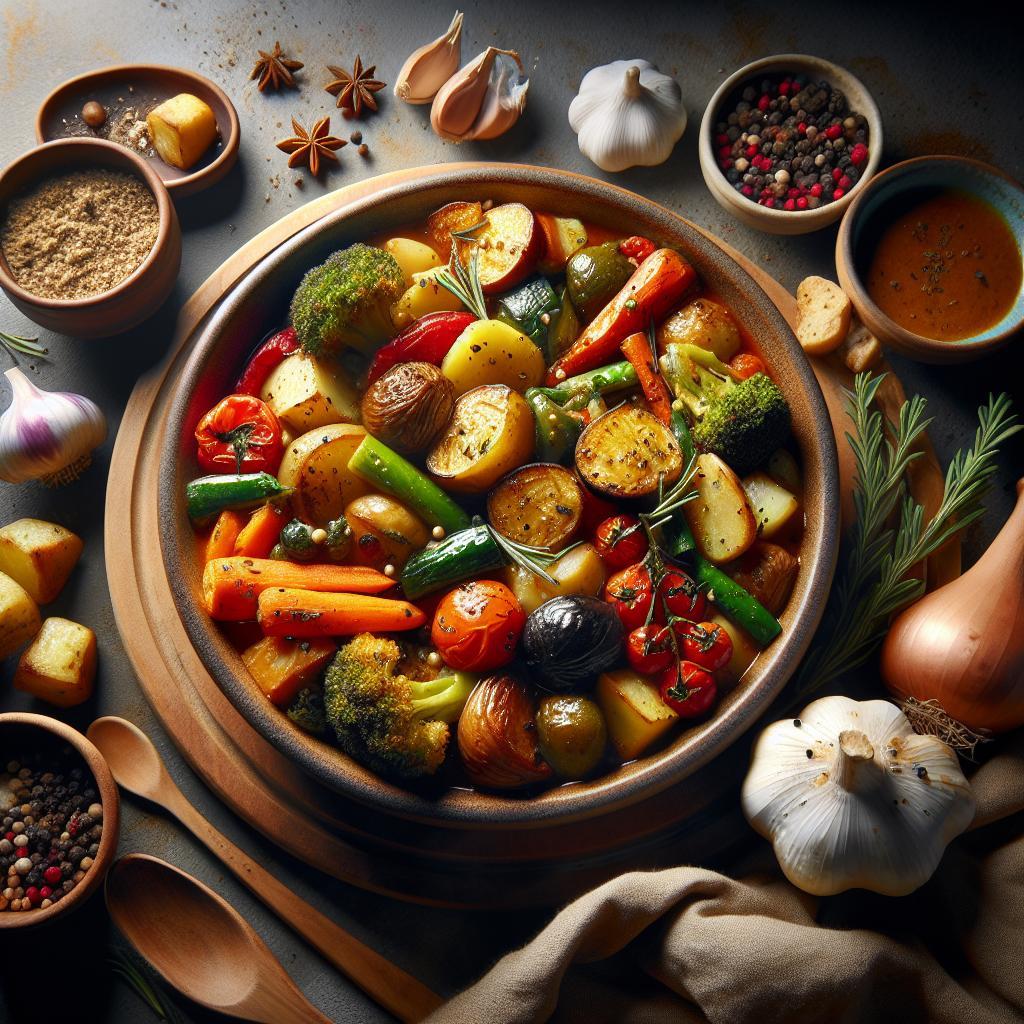

Hearty Roasted Vegetable Stew offers concentrated, savory flavor by caramelizing vegetables before they meet the broth. This method builds layered taste and a satisfying texture that plain simmering cannot match.
- Hearty Roasted Vegetable Stew: Selecting the Best Vegetables for Deep Flavor and Texture
- Prep, Timing, Yield, and Difficulty
- Ingredients and Equipment
- Instructions
- Tips for Success: Elevate Your Hearty Roasted Vegetable Stew
- Serving Suggestions
- Nutritional Snapshot
- FAQ
- What makes this roasted vegetable stew different from other vegetable soups?
- Which vegetables are best for this stew?
- Can I make this stew ahead or freeze it?
- Is this recipe vegan and gluten-free?
- How do I adjust the stew for more protein?
- In Summary
- At a glance: Roast first to concentrate sugars and add depth.
- Make ahead: Roast the veggies a day early to save time and boost flavor.
- Customization: Use seasonal root vegetables and roastable medleys for balance.
- Serving: Pair with crusty bread or grains for a full meal.
Hearty Roasted Vegetable Stew: Selecting the Best Vegetables for Deep Flavor and Texture
Choose vegetables that tolerate high heat and develop caramelized edges. Root vegetables such as carrots, parsnips and sweet potatoes provide body and natural sweetness when roasted.
Use firmer pieces like butternut squash, red bell pepper and eggplant to provide creaminess and contrasting texture. For background on root vegetables and their culinary roles, see root vegetables.
Why roasting matters
Roasting triggers the Maillard reaction and caramelization, which create complex savory-sweet and roasted notes. These chemical processes concentrate flavor and enhance mouthfeel.
For technical details on the caramelization process, consult the caramelization overview. That chemistry is why roasted stew tastes richer than a boiled one.
Prep, Timing, Yield, and Difficulty
Plan for about 1 hour 30 minutes from start to finish, including roasting and simmering. This schedule balances quick sear-roast with a slow finish to meld flavors.
Yield: serves 6 generous portions. Difficulty: Medium; the skills required are basic roasting, sautéing aromatics, and controlled simmering.
Prep and Cook Time
- Preparation: 20 minutes
- Roasting: 25–30 minutes
- Simmering: 35–40 minutes
- Total Time: Approximately 1 hour 30 minutes
Yield
Serves 6. This quantity works well for family meals or portioned lunches for the week.
To scale, maintain vegetable-to-broth ratios so the final stew stays thick and concentrated rather than dilute.
Difficulty Level
Medium. The key technique is even roasting: cut uniform pieces and use high heat. Sautéing aromatics and managing a gentle simmer are straightforward with a heavy-bottomed pot.
If you want visual guidance on roasting methods and timing, review the cooking techniques in roasting (cooking).
Ingredients and Equipment
Use fresh, evenly sized vegetables to ensure uniform roasting. A heavy baking sheet and a heavy-bottomed pot help achieve caramelization and steady simmering.
Essential tools include a sharp chef’s knife, rimmed sheet pan, mixing bowl, and a large Dutch oven or stock pot. For best stock practices, see stock (food).
Ingredients
- 3 cups carrots, peeled and cut into 1-inch chunks
- 2 cups butternut squash, peeled and cubed
- 2 cups sweet potatoes, peeled and cubed
- 1 large eggplant, cut into 1-inch pieces
- 1 large red bell pepper, seeded and chopped
- 1 medium zucchini, sliced thick
- 1 large yellow onion, diced
- 4 cloves garlic, minced
- 3 tablespoons extra virgin olive oil
- 1 teaspoon smoked paprika
- 1 teaspoon dried thyme
- 1 teaspoon dried rosemary, crushed
- 1/2 teaspoon ground cumin
- 1/2 teaspoon ground black pepper
- 1 teaspoon sea salt, to taste
- 4 cups vegetable broth (low sodium preferred)
- 1 can (14 oz) diced fire-roasted tomatoes
- 2 tablespoons tomato paste
- 1 tablespoon fresh parsley, chopped (for garnish)
- 1 tablespoon fresh basil, thinly sliced (for garnish)
- Optional: red chili flakes for subtle heat
Instructions
Step 1: Preheat oven to 425°F (220°C). Toss carrots, squash, sweet potatoes, eggplant, bell pepper and zucchini with 2 tablespoons olive oil and spices. Spread on a rimmed sheet pan in a single layer to brown evenly.
Step 2: Roast 25–30 minutes until pieces present golden edges and tender centers. Stir once halfway through to encourage uniform caramelization.
Sauté and Simmer
Heat remaining tablespoon olive oil in a large heavy-bottomed pot over medium heat. Add onion and sweat until translucent, about 6 minutes; add garlic and cook 30–60 seconds until fragrant.
Stir in tomato paste and toast for 1–2 minutes to remove raw tininess. Add diced tomatoes and vegetable broth, bring to a gentle simmer.
Finish the Stew
Add roasted vegetables to the pot and simmer uncovered for 35–40 minutes. Stir occasionally to integrate flavors and reduce liquid to a stew consistency.
Taste and adjust seasoning with salt, pepper or chili flakes. Serve hot garnished with parsley and basil alongside crusty bread or warm grains.
Tips for Success: Elevate Your Hearty Roasted Vegetable Stew
Layering techniques create depth: roast, then simmer to unlock concentrated sweetness and meld aromatics into the broth. This two-stage approach yields a stew with both texture and body.
Use low-sodium broth to control overall salt. If you need an umami lift, a small spoon of miso or a splash of soy sauce works; add after simmering to taste.
To thicken the stew naturally, press some roasted vegetables against the pot to break them down. This technique adds body without starch thickeners.
Advanced Prep and Storage
Roast vegetables a day in advance and refrigerate in an airtight container. Reheat and finish in the pot; the resting time improves flavor integration and saves time on the day you serve.
The stew freezes well. Cool fully, portion into airtight containers, and freeze up to 3 months. Thaw overnight in the fridge then rewarm gently on the stovetop.
Serving Suggestions
Serve the stew with crusty sourdough, a dollop of cashew cream, or a swirl of coconut yogurt for contrast. Garnish with fresh herbs and toasted seeds for texture.
For a heartier plate, ladle the stew over mashed potatoes, quinoa or bulgur. These pairings soak up the stew and make a satisfying main course.
Explore related recipes in our Vegetarian Winter Recipes and learn efficient batch-cooking in Meal Prep Tips. These internal guides complement the stew and boost weeknight efficiency.
Nutritional Snapshot
Per serving estimate: Approximately 210 kcal with balanced carbohydrate and fiber content from root vegetables. Fat primarily comes from olive oil; protein is modest from vegetables and broth.
For menu planning, consider pairing with a protein-rich side or topping with toasted legumes to raise protein density if needed.

FAQ
What makes this roasted vegetable stew different from other vegetable soups?
This recipe begins with roasting, which caramelizes sugars and creates concentrated flavors that plain simmering does not. The roasted components then simmer, transferring depth into the broth and producing a stew with both texture and richness.
Which vegetables are best for this stew?
Root vegetables like carrots, sweet potatoes and parsnips give body and natural sweetness. Add bell peppers, eggplant and zucchini for creaminess and balance; choose firmer pieces to avoid mush.
Can I make this stew ahead or freeze it?
Yes. The flavor improves after resting overnight. Freeze in portion-sized containers for up to three months. Reheat gently to preserve texture.
Is this recipe vegan and gluten-free?
Yes. It relies on vegetables, herbs and vegetable broth. Use certified gluten-free broth if you must avoid gluten strictly.
How do I adjust the stew for more protein?
Add cooked legumes such as lentils or chickpeas when finishing the stew, or serve over protein-rich grains. These additions keep the dish plant-based while increasing satiety and nutritional balance.
In Summary
Roasting then simmering transforms humble vegetables into a stew with real depth and satisfying texture. Controlled heat, even cuts and layered seasoning yield consistent results every time.
Gather seasonal vegetables, follow the roast-and-simmer sequence, and adjust final seasoning to your taste. This method produces a reliable, nourishing meal that performs well for family dinners and meal prep alike.
See also: vegetable stew