
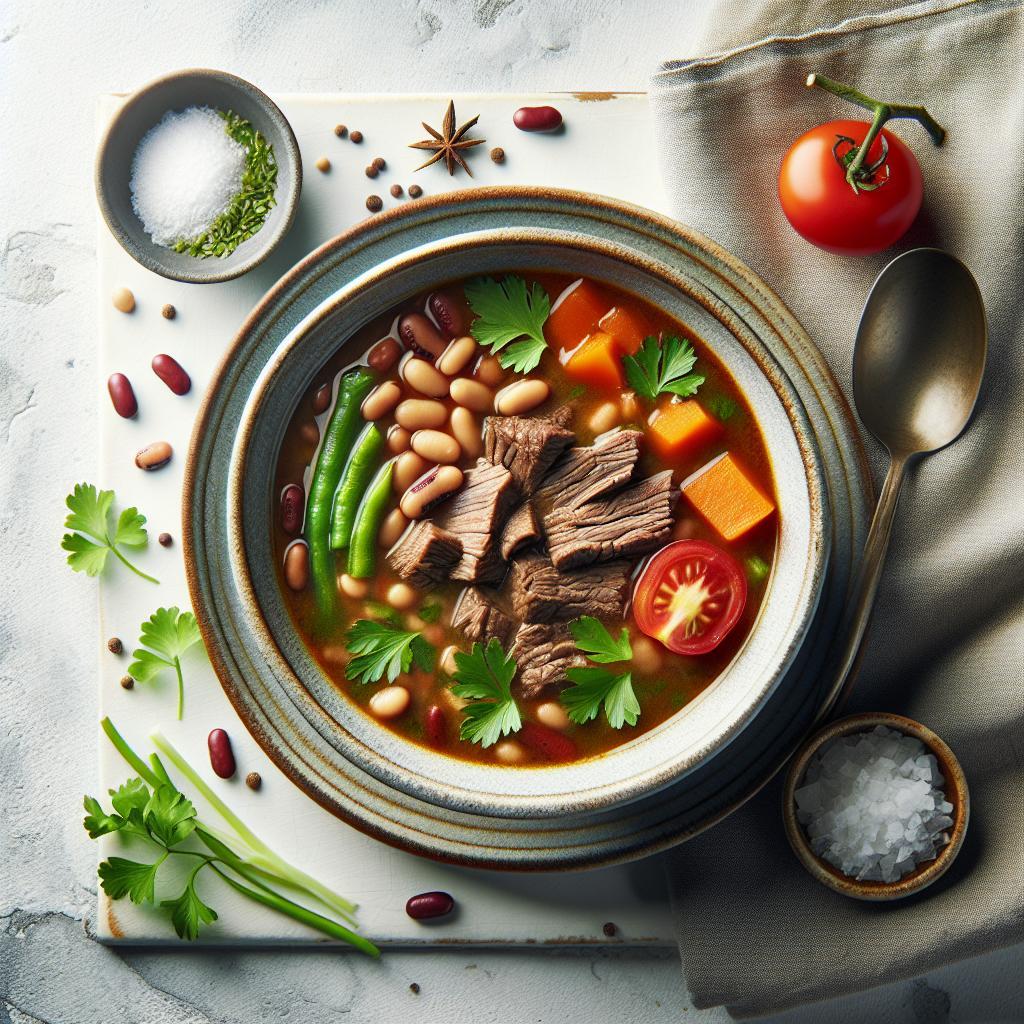

There is a timeless comfort in a bowl of hearty beef soup. This recipe focuses on slow technique, predictable seasoning, and reliable textures so you get consistent, restaurant-quality results at home.
- Prep and Cook Time for Beef Soup
- Yield for This Beef Soup
- Difficulty Level: Beef Soup Basics
- Hearty Beef Soup Ingredients
- Instructions for Beef Soup
- Tips for Success With Beef Soup
- Serving Suggestions and Seasonal Pairings for Beef Soup
- Nutrition per Serving of Beef Soup
- Origins and Technical Notes for Beef Soup
- Make-Ahead and Storage for Beef Soup
- At-Table Notes for Serving Beef Soup
- FAQ
- What makes this beef soup a good choice for meal prep?
- Can I substitute different beans or proteins in the beef soup?
- How do I control sodium without losing flavor in the beef soup?
- Is there a vegetarian version that keeps the same depth as beef soup?
- How long do dried beans need to soak for the beef soup?
- Key takeaways: Slow searing builds flavor; soak dried beans for best texture.
- Make-ahead: Soup improves after resting and freezes well for future meals.
- Versatility: Swap bean types or use vegetable stock for a lighter profile.
- Texture tip: Mash a cup of cooked beans to thicken naturally.
Prep and Cook Time for Beef Soup
Preparation: 20 minutes. Prepare mise en place: cube beef, drain soaked beans, and chop vegetables before you heat the pan.
Cooking: 3 to 4 hours on low in a slow cooker or 1.5 to 2 hours simmering on the stovetop for fall-apart beef and creamy beans.
Yield for This Beef Soup
This beef soup recipe yields about 6 generous bowls, suitable for a family dinner or meal prep. Portion into airtight containers for easy reheating.
Leftovers in this beef soup concentrate flavor overnight. When reheating, add a splash of broth to restore silkiness if the soup has thickened.
Difficulty Level: Beef Soup Basics
Rated Medium. The techniques are straightforward but require attentive searing and low, steady simmering to extract maximum flavor.
Beginners will succeed with this beef soup by following the timing and salt adjustments provided in the instructions. Use a thermometer for protein safety if unsure.
Hearty Beef Soup Ingredients
Organize ingredients into protein, legumes, aromatics, and seasoning. This modular list helps you customize without risking balance in your beef soup.
Ingredients:
- 1.5 lbs beef chuck roast, cut into 1-inch cubes
- 2 cups dried cannellini beans, soaked overnight and drained
- 1 large yellow onion, finely chopped
- 3 cloves garlic, minced
- 3 large carrots, peeled and diced
- 2 stalks celery, diced
- 1 (14.5 oz) can diced tomatoes, no salt added
- 6 cups low-sodium beef broth
- 2 tablespoons tomato paste
- 1 teaspoon smoked paprika
- 1 teaspoon dried thyme
- 1 bay leaf
- Salt and freshly ground black pepper, to taste
- 2 tablespoons olive oil
- Fresh parsley, chopped, for garnish
Instructions for Beef Soup
Follow the steps in order to build layers of flavor in this beef soup. Work in batches when searing to avoid steaming the meat.
Searing and Sautéing for Beef Soup
Pat the beef dry to promote a good Maillard crust. Heat olive oil in a heavy skillet over medium-high heat and brown beef in batches for 3 to 4 minutes per batch.
Keep the fond in the pan; it contains concentrated flavor for the beef soup. Sauté onion, carrot, and celery in the same pan until softened, add garlic in the last minute, then transfer everything to the slow cooker or a heavy pot.
Slow Cooking and Finishing the Beef Soup
Add soaked beans, diced tomatoes, tomato paste, and beef broth to the pot. Stir in smoked paprika, thyme, and bay leaf, and season lightly with salt and pepper.
Cover and cook on low for 3 to 4 hours in a slow cooker, or simmer on the stovetop for 1.5 to 2 hours until beef is tender and beans are creamy but intact. Remove the bay leaf and adjust seasoning before serving the beef soup.
Tips for Success With Beef Soup
Bean selection: Cannellini creates a creamy mouthfeel. Great northern or navy beans are excellent alternatives when you need a milder profile in your beef soup.
Browning technique: Brown meat in a hot pan without crowding; this step builds depth through caramelization. Use medium-high heat and work in batches to maintain temperature and color for your beef soup.
For slow-cooker users, avoid lifting the lid frequently. Each lid lift drops the internal temperature and extends cooking time, which can affect tenderness in the beef soup.
Serving Suggestions and Seasonal Pairings for Beef Soup
Serve the beef soup with rustic crusty bread or warm cornbread to soak up the broth. A sprinkle of fresh parsley brightens the bowl visually and flavor-wise.
Pair the beef soup with roasted root vegetables or a crisp green salad for contrast. For a richer finish, add a swirl of sour cream or a light drizzle of extra-virgin olive oil.
Nutrition per Serving of Beef Soup
The following estimate reflects a balanced portion with lean beef and beans as protein sources. Adjust portions to fit dietary goals for the beef soup.
| Nutrient | Per Serving |
|---|---|
| Calories | 350 kcal |
| Protein | 30 g |
| Carbohydrates | 28 g |
| Fat | 12 g |
Origins and Technical Notes for Beef Soup
Beef and bean soups draw on classic peasant cooking that pairs inexpensive protein with legumes for complete nutrition. Beans provide complex carbohydrates and fiber while beef contributes heme iron and concentrated flavor to the beef soup.
For technical background, review Maillard reaction for searing science, slow cooker technology for low-and-slow braising, and broad context on soup as a culinary category. See these resources for detail: Maillard reaction, slow cooker, and soup.
Make-Ahead and Storage for Beef Soup
Cool beef soup completely before refrigeration to prevent condensation and bacterial growth. Store in airtight containers for up to 4 days, or freeze portions for up to 3 months.
When reheating from frozen, thaw in the refrigerator overnight or reheat gently from frozen with a splash of broth to restore consistency. Stir frequently to heat evenly and avoid hot spots that overcook the beans in the beef soup.
At-Table Notes for Serving Beef Soup
Serve hot with garnishes on the side so diners can adjust texture and richness. Offer grated cheese or a lemon wedge to cut through the broth when desired for the beef soup.
Always taste before serving and correct seasoning at the end. Final adjustments have the greatest impact on perceived quality in this beef soup.

The practical approach here keeps technique simple and repeatable. Use this beef soup framework to vary seasonings, bean types, and accompaniments while preserving the core comfort of beef and beans.

See also: beef soup and related recipes for variations and batch-cooking ideas.
FAQ
What makes this beef soup a good choice for meal prep?
The soup scales easily and reheats cleanly. Beans and beef both benefit from resting, which melds flavors and improves texture after refrigeration for this beef soup.
Can I substitute different beans or proteins in the beef soup?
Yes. Use great northern, pinto, or kidney beans as a 1:1 swap. For protein swaps, use brisket or stew meat; ground beef works but changes texture and cooking time in the beef soup.
How do I control sodium without losing flavor in the beef soup?
Use low-sodium broth and season progressively. Add a dash of acid, like a small splash of vinegar or lemon at the end, to brighten flavors without adding salt to the beef soup.
Is there a vegetarian version that keeps the same depth as beef soup?
Replace beef with a mix of mushrooms and smoked tempeh, and use vegetable stock. Add umami boosters such as soy sauce or mushroom powder to emulate the savory backbone of the beef soup.
How long do dried beans need to soak for the beef soup?
Soak for 8–12 hours in cool water. This shortens cooking time and helps achieve uniform tenderness; rinse and drain before adding to the recipe for the beef soup.
Further reading on primary ingredients: beef and beans provide nutritional and botanical context relevant to this beef soup.
See also: beef soup