
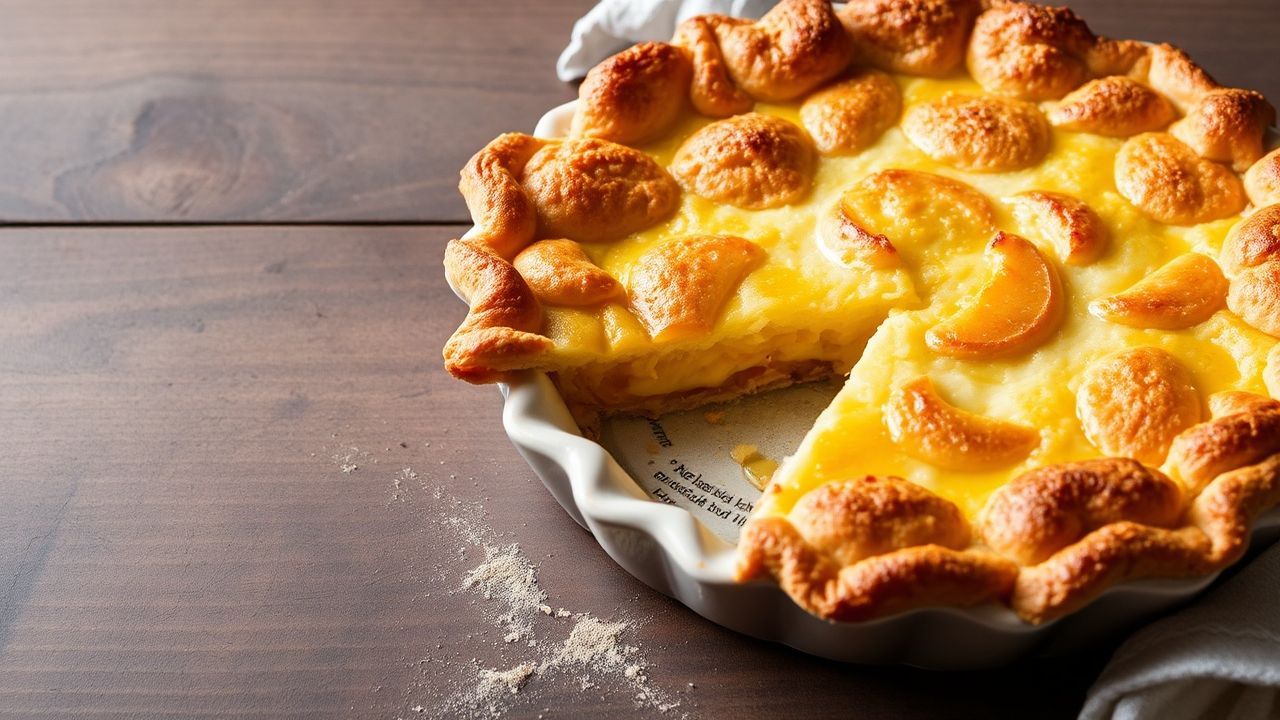

crisp crust is the single most visible sign of baking discipline: a golden, dry base that supports a rich filling without yielding to moisture. This guide lists nine professional techniques that reliably prevent a soggy bottom and restore confidence to home and commercial bakers.
- Crisp crust: Understanding the soggy bottom
- Crisp crust ingredients and dough strategy
- Oven, tools, and heat techniques for crisp crust
- Practical steps: a crisp crust checklist
- Blind baking and moisture management for crisp crust
- Serving, storage, and re-crisping crisp crust
- Tool habits and calibration for consistent crisp crust results
- FAQ
- Fast heat transfer sets the base quickly and reduces soak-in.
- Hydration control limits free water available to penetrate the lower layers.
- Shielding techniques such as blind baking and absorbent layers block juices.
- Right bakeware concentrates conduction for a firm, crunchy finish.
Crisp crust: Understanding the soggy bottom
The soggy bottom forms when moisture migrates into the base faster than the dough can set and brown. Poor conduction, excess water in dough, or a wet filling all accelerate saturation and collapse the crisp crust structure.
Protein networks and starch gelatinization dictate how a pastry sets. For a technical reference on protein behavior in dough see gluten. For pastry-specific context consult the pie crust entry.
Crisp crust ingredients and dough strategy
Choose fats and flour deliberately to reduce water uptake and improve flake formation. Cold, solid fats create discrete steam pockets on baking; those pockets both lift layers and reduce continuous paths for liquid to follow.
Keep hydration tight. Aim for a slightly dry dough that holds together without sticky excess. Lower hydration reduces free water that would migrate downward and compromise the crisp crust.
Fat selection and lamination for a crisp crust
Use cold butter or a butter-neutral fat blend for flavor control and predictable melting. Cold fat delays full incorporation and gives discrete pockets that crisp quickly when placed on a hot surface.
Controlled lamination—gentle folds rather than heavy rolling—creates independent layers that interrupt liquid paths. That mechanical flake supports the crisp crust by reducing continuous channels for juices to travel.
Hydration, binders, and absorptive add-ins
Add ice water sparingly and consider a small acid splash like vinegar to shorten gluten without weakening cohesion. This preserves bite while promoting a firm base that resists saturation.
Sprinkle coarse particles sparingly to form an absorptive interface. Use cornmeal or semolina as a thin bed; it traps stray juices and contributes texture while protecting the crisp crust.
Oven, tools, and heat techniques for crisp crust
Rapid conduction to the underside sets starches and browns the base before juices can migrate. Preheat a heavy baking surface and use the lowest practical rack to shorten the distance between crust and heat source.
Know your appliance. Accurate thermostat behavior and consistent heat distribution help you replicate results. For a basic reference on appliance function, consult the oven page.
Bakeware choices and setup to protect the crisp crust
Prefer cast iron, heavy steel, or a preheated stone to thin, flimsy pans. High-mass bakeware stores heat and delivers immediate conduction that firms the bottom fast.
Preheat the stone or pan for at least 30 minutes at full temperature. In practice, this step reduces blind-bake time and increases the odds of a uniformly crisp crust across the bake.
Practical steps: a crisp crust checklist
Follow a concise sequence that eliminates common failure modes: chill dough, dock or weigh when blind baking, and place the crust on a preheated surface. Each step targets a specific cause of sogginess.
Document what works in your oven. Keep a short log of pan types, temperatures, and minutes; adjust timing rather than ingredients to tune results to your appliance and altitude.
Actionable checklist
Chill dough at least 1 hour to firm fats and relax gluten; cold fats crisp more predictably. Cold dough also shrinks less and maintains structure during the initial heat surge.
Preheat the baking stone or heavy sheet at full temperature for 30–45 minutes; this creates immediate conduction to set and brown the base. Thin pans never replace stored heat.
More quick actions
Dock or weigh during blind baking to vent steam and set the structure. If the filling browns better with direct contact, remove weights early once the surface firms.
Use an absorbent barrier such as a thin dusting of cornmeal, fine breadcrumbs, or grated hard cheese when facing highly juicy fillings. That layer acts like an internal drip tray and supports a crisp crust.
Blind baking and moisture management for crisp crust
Blind baking remains the most consistent defense against a soggy bottom for wet fillings. Partial blind baking firms the base and seals surface starches before the filling is added.
When using weights, remove them early if the filling benefits from direct contact for browning; leave them longer for very wet fillings. Combine blind baking with an absorptive interface for the best protection.
Absorbent layers and pre-cooking fillings
Precook high-moisture fillings and drain thoroughly, or macerate fruit with a little sugar and discard the released juice. Removing free liquid before assembly reduces the chance that juices will reach the lower layers.
An alternative is a light bed of fine breadcrumbs, grated hard cheese, or a dusting of cornmeal on the blind-baked surface. These materials trap moisture and keep the crisp crust intact.
Serving, storage, and re-crisping crisp crust
Serve baked goods soon after brief cooling; the crisp crust shines when fresh. If you must store, cool fully on a rack and wrap loosely to avoid trapping steam.
To re-crisp leftovers, use a preheated oven at 350°F (175°C) for several minutes on a hot sheet. This approach restores crunch far better than a microwave, which collapses crispness.
Tool habits and calibration for consistent crisp crust results
Keep a small test tart or scrap crust to evaluate temperature and timing in your oven. Empirical checks trump guessing and prevent ruined batches.
Track pan performance and note how heat profiles change with different rack positions or when you bake multiple items. Small adjustments to time and placement yield large improvements in crisp crust outcomes.
FAQ
Why does my crust become soggy even when I blind bake?
If blind baking time or temperature is too low, the bottom will not set fully and will accept juices. Also, thin or low-mass bakeware reduces conduction and often requires a hotter surface or longer blind-bake time.
Can I fix a soggy bottom after baking?
Often you can recover a partial crisp by returning the product to a hot oven on a preheated sheet for a few minutes. Deep saturation from an overly wet filling will limit how much crunch you can restore.
Does adding cornmeal change flavor or texture much?
Cornmeal gives a subtle gritty crunch and serves as a moisture buffer. Use it sparingly; too much creates a coarse mouthfeel instead of a clean crisp crust.
Is docking necessary for all crusts?
Docking vents underlying steam and prevents large bubbles, but it is not required for all filled pies. Apply docking when making flat tarts or pizza-style bases where even contact matters.
What oven temperature profile works best?
Start with high heat to set the bottom quickly, then reduce if the top needs slower finishing. Monitor your oven’s actual temperatures and adjust minutes rather than guessing.
Apply these focused methods and test them in your oven to eliminate soggy bottoms and produce reliable, crunchy crusts.
See also: gluten, pie crust, and cast iron references for technical background.
See also: crisp crust