

There is a clear difference between a scoop that glides and one that crunches. Churning controls air, crystal size, and texture; skip it and the frozen dessert you expect changes form and behavior.
- Churning adds air and prevents large ice crystals.
- No-churn methods rely on whipped fat and stabilizers.
- Texture rescue is possible with timed stirring during freezing.
- Flavor can intensify but mouthfeel often suffers.
Prep and Cook Time
Total Time: 15 minutes active prep, then 6+ hours freezing. Plan for overnight if you want a firmer set.
Timing affects crystal size and scoopability. Faster initial freezing in a shallow container helps reduce coarse crystals and shortens time to service.
Yield
Makes approximately 1 quart (4 servings) per batch. Adjust ingredient ratios proportionally for more volume.
Portion control matters because higher fat and sugar concentrations alter scoop temperature and serving texture.
Difficulty Level
Easy — suitable for beginners and busy home cooks. The method trades mechanical churning for manual whipping and timed freezes.
Technique matters more than equipment. Small shifts in whipping or mixing change the final mouthfeel noticeably.
Ingredients
Use straightforward, quality ingredients to improve the end result. Heavy cream and sweetened condensed milk form the base for most simple no-churn recipes.
- 2 cups heavy cream, chilled
- 1 (14 oz) sweetened condensed milk
- 1 tsp pure vanilla extract
- Pinch fine sea salt
- Optional mix-ins: crushed cookies, chocolate chips, or diced fruit
Small additions such as alcohol or invert sugars lower freezing point and improve scoopability. Use them sparingly and test small batches first.
Instructions
These steps recreate some benefits of mechanical churning by trapping air and limiting crystal growth. Follow them closely for the best no-churn texture.
- Whip the cream: Chill the bowl and whip the heavy cream to stiff peaks. Whipping incorporates trapped air that mimics machine overrun.
- Prepare the base: Whisk condensed milk, vanilla, and salt until smooth. This dense, sweet base resists large crystal formation when frozen.
- Fold gently: Fold whipped cream into the base with broad strokes. Preserve aeration; small, vigorous motions deflate the foam.
- Add mix-ins: Fold in cookies or fruit near the end to avoid collapsing the whipped structure.
- Freeze smartly: Transfer to a shallow airtight container. Freeze for at least 6 hours and stir once after 2–3 hours to break forming large crystals.
Stirring during the early freeze interrupts ice crystal lattices and improves spreadability. Do it gently to keep incorporated air intact.
Tips for Success
Small technique changes yield big improvements. Monitor whipping and freezing carefully; both steps determine the mouthfeel.
- Choose high-fat cream: Higher milkfat improves richness and reduces icy perception.
- Control whipping stage: Stiff peaks trap air best; underwhipping yields dense texture, overwhipping can cause graininess.
- Use a shallow container: Increasing surface area speeds freezing and reduces coarse crystals.
- Add a pinch of salt: Salt sharpens flavor and balances sweetness, improving perceived creaminess.
For recipe variants, explore internal resources that test stabilizers and flavoring approaches. Try a lighter base with pasteurized egg yolk if you want custard-like body.
Read more on the chemistry and practical tests in our reference guide and recipes pages for iterative improvements.
Comprehensive Guide to Cream Chilling offers lab-style notes on freezing dynamics. For tested mix-in ratios and batch scaling, see No-Churn Variations & Scaling.
Serving Suggestions
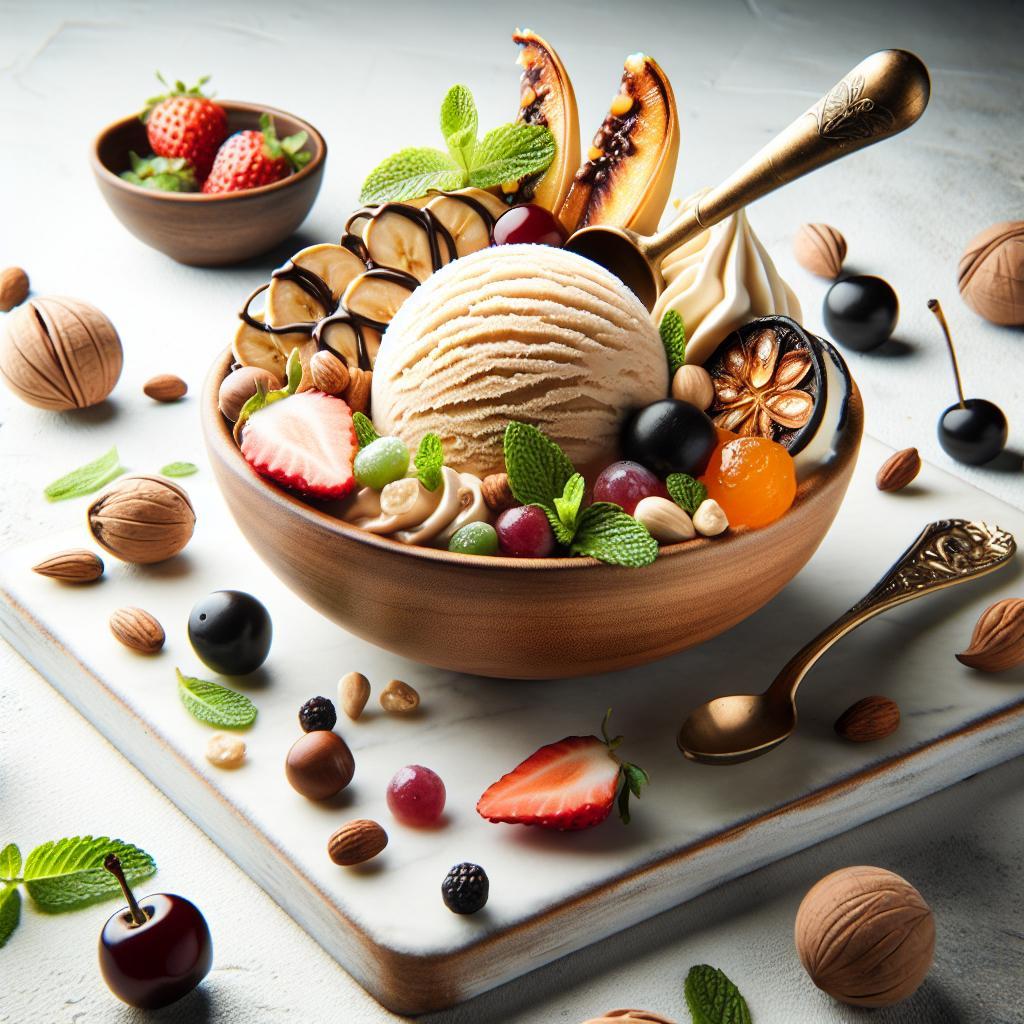
Serve chilled in pre-cooled bowls or crisp cones so the contrast highlights texture. Warm sauces and compotes build contrast versus a denser no-churn base.
Top with crunchy elements like toasted nuts or brittle. These juxtapose any residual iciness and create a satisfying bite-to-cream ratio.
Science of Skipping Churning
Churning affects three measurable properties: overrun (air content), ice crystal size, and distribution of fat and stabilizers. When you skip mechanical churning, each property shifts and the product behaves differently.
For technical context, review foundational topics such as ice cream composition and the concept of overrun in ice cream.
Ice Crystal Formation
Large crystals develop when freezing is slow or when water molecules gather unchecked. Mechanical churning breaks crystals as they form; no-churn methods must rely on rapid freezing and periodic manual agitation.
Scientific principles like freezing point depression explain why sugar, salt, and alcohol control ice formation. Use them carefully to tune scoopability.
Air and Emulsion Stability
No-churn depends on whipped cream foam to supply air and stabilize structure. That foam is an emulsion and foam system where protein and fat trap bubbles.
Maintain stability by gentle folding and avoiding prolonged agitation after foam formation. Stabilizers, including small amounts of gelatin or commercial stabilizer blends, can help in low-fat or highly flavored batches.
Nutritional Snapshot
| Nutrient | Per Serving (1/4 qt) |
|---|---|
| Calories | 350 kcal |
| Protein | 4 g |
| Carbohydrates | 30 g |
| Fat | 23 g |
To Conclude
Churning remains the most reliable route to a classic scoop because it controls overrun and crystal growth. No-churn techniques offer a practical alternative, but they require considered technique to get close to the churned result.
Use rapid initial freezing, correct whipping, and occasional early stirring to rescue texture. With practice, a no-churn batch can deliver pleasing results and creative variations.

FAQ
What exactly is churning in the ice cream-making process?
Churning continuously stirs the mix while it freezes. It distributes air, breaks ice crystals, and aligns fat into a smooth matrix for a soft, scoopable texture.
Why does skipping churning affect texture so much?
Without mechanical agitation, crystals grow larger and fewer air cells form. The result becomes denser and icier because the structure lacks enough small, evenly distributed bubbles.
Can no-churn ice cream ever match churned ice cream?
It can approach the mouthfeel if you whip cream properly and freeze fast. However, most home no-churn recipes fall short of the exact lightness created by controlled overrun from a machine.
Are there creative uses for unchurned ice cream?
Yes. Use unchurned ice cream for granitas, blended cocktails, or layered parfaits where texture blends with other elements. It also works as a dense frozen base in milkshakes.
Where can I read more technical background on these processes?
For concise scientific overviews, consult entries on ice cream, overrun, and freezing point depression to understand the underlying physics and chemistry.
See also: No-Churn