
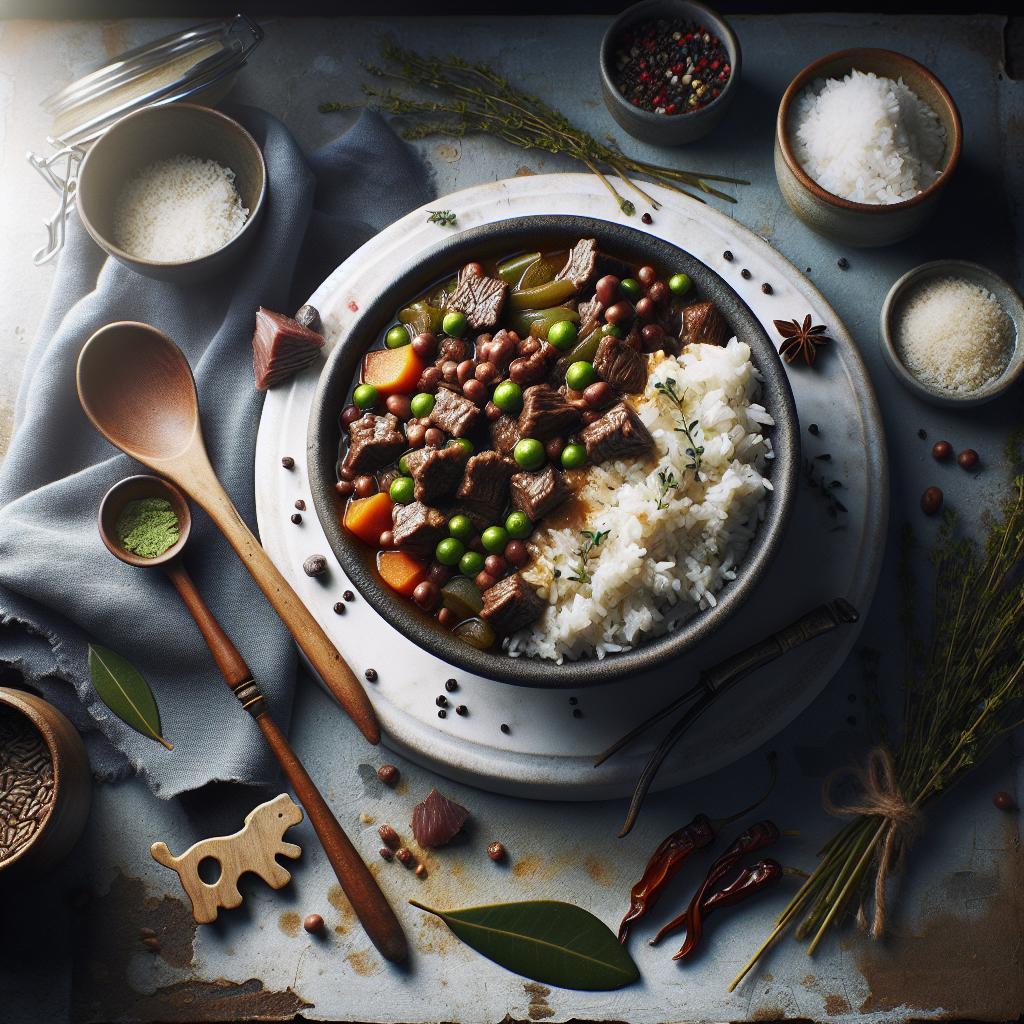

Beef stew with rice delivers filling comfort and reliable weeknight satisfaction when you apply proper technique. This recipe emphasizes browning, controlled simmering, and timing rice to avoid mush while building deep savory flavor.
- Choosing the Perfect Cuts of Beef for Maximum Tenderness
- Balancing Texture and Nutrition with Ideal Rice Varieties
- Expert Techniques and Flavor Layering
- Simmering, Pressure, and Slow-Cook Options
- Food Safety and Practical Notes
- Prep, Cook Time, Yield, and Difficulty
- Ingredients
- Instructions
- Tips for Success and Variations
- Serving Suggestions
- FAQ
- Quick take: choose well-marbled beef, rinse rice, and add grains late to keep texture.
- Timing matters: low-and-slow for meat; short finish for rice to avoid gluey results.
- Balance flavors: build layers with browning, aromatics, and a final brightener.
- Storage tip: cool rapidly and reheat thoroughly; freeze without rice for best results.
Choosing the Perfect Cuts of Beef for Maximum Tenderness
Beef stew depends on connective tissue converting to gelatin during long, gentle cooking. Choose collagen-rich cuts such as chuck or brisket for a silky mouthfeel and richer sauce.
Cut the meat into uniform 1-inch cubes so each piece reaches tenderness at the same time. If you want background reading on the anatomy of meat and common beef cuts, consult the beef summary.
Preparation and Browning
Pat meat dry and brown in batches to develop Maillard flavor; avoid crowding the pot. Browned fond gives the stew a savory backbone when you deglaze with a splash of stock.
Keep a small amount of rendered fat if the pot is lean; that fat helps coat aromatics and carry flavor. Deglaze with broth, scraping the fond to fold those concentrated flavors back into the base.
Balancing Texture and Nutrition with Ideal Rice Varieties
Your rice choice changes texture and cook time. Long-grain rice such as jasmine or basmati produces distinct, fluffy grains, while brown rice adds fiber but takes longer to soften.
For separate-cooked rice, finish portions by stirring rice into bowls to preserve grain integrity. For context on rice varieties and processing, see the rice overview.
Grain Handling and Timing
Rinse rice under cold water until the runoff runs clear to remove surface starch and reduce stickiness. Then, add rice near the end of simmering so it absorbs a controlled amount of broth without breaking down.
Alternatively, par-cook brown rice or mix short-cooked grains separately to match beef timing. This approach improves reheating performance and helps portion control for leftovers.
Expert Techniques and Flavor Layering
Layer flavors in deliberate steps: sear meat, sweat aromatics, toast spices, and use a concentrated stock for depth. Each step adds a distinct flavor layer that combines in the final pot.
Use bay leaves and thyme for structural herbs, and add a splash of acid—lemon or vinegar—just before serving to lift the whole dish. Controlled seasoning throughout ensures balance, not over-salting at the end.
Stepwise Approach to Building Flavor
Sear meat first, then sweat onions, carrots, and celery to extract natural sugars. Add garlic and tomato paste late in the browning stage to avoid bitterness and to build umami steadily.
Deglaze the pot and simmer gently to convert collagen slowly into gelatin. Keep the pot at a gentle simmer rather than a rolling boil to prevent meat from tightening and shredding the sauce.
Simmering, Pressure, and Slow-Cook Options
Stovetop simmering gives predictable results and improves your control over heat and evaporation. Maintain a low, steady bubble to let collagen break down over time.
If you use a pressure cooker, reduce overall time and expect a slightly different mouthfeel because gelatin converts faster under pressure. For slow cookers, always sear meat and brown aromatics first to avoid flat flavor.
Food Safety and Practical Notes
Handle cooked rice and meat carefully to avoid bacterial growth. Cool leftovers promptly and refrigerate within two hours to maintain safety and quality.
When reheating, bring the stew to at least 74°C (165°F) throughout. Because rice can harbor Bacillus cereus spores, never leave cooked rice at room temperature for extended periods.
Prep, Cook Time, Yield, and Difficulty
Prep Time: 20 minutes is sufficient to trim beef and chop vegetables when you work with mise en place. Organize ingredients by step to keep the cook process smooth.
Cook Time: About 2–2½ hours on low heat yields tender beef and integrated flavors; times vary with equipment. Expect 6 hearty portions from this recipe, depending on portion size.
Ingredients
This ingredient list uses pantry-friendly items and fresh aromatics for balance. Use low-sodium broth so you can control the final salt level.
- 2 lb beef chuck, cut into 1-inch cubes
- 1 large onion, finely chopped
- 3 cloves garlic, minced
- 2 medium carrots, peeled and diced
- 2 stalks celery, diced
- 1½ cups long-grain rice (jasmine or basmati) or 1½ cups cooked brown rice for more fiber
- 4 cups beef broth, low-sodium or homemade
- 1 cup crushed tomatoes
- 2 tbsp olive oil
- 2 bay leaves
- 1 tsp dried thyme or 2 tsp fresh
- Salt & freshly ground black pepper to taste
- 2 tbsp fresh parsley, chopped (garnish)
- 1 tbsp lemon juice or apple cider vinegar (optional brightener)
Instructions
Read the steps fully before you start so you can coordinate rice timing with simmering. Proper sequencing prevents overcooked grains and underdeveloped flavors.
- Heat oil in a heavy pot over medium-high. Brown beef in batches 5–6 minutes per batch, then set aside to keep fond intact.
- Reduce heat to medium and add onions, carrots, and celery. Sauté about 8 minutes until softened and translucent.
- Add garlic and cook 1 minute more. Return beef, add crushed tomatoes, broth, bay leaves, and thyme, and bring to a gentle simmer.
- Cover partially and simmer low for 1½–2 hours until beef is fork-tender. Stir occasionally and adjust liquid to keep a stew consistency you prefer.
- Rinse rice under cold water until clear to remove starch. Stir rinsed rice into the stew during the final 20–25 minutes and simmer until grains are tender.
- Finish with salt, pepper, and a splash of lemon or vinegar. Remove bay leaves, garnish with parsley, and serve warm.
If you prefer, cook rice separately and combine at plating to keep grains distinct. This works well for reheating and for adjustible portions.
Tips for Success and Variations
Sear meat in batches to avoid steaming and to build caramelized flavor. Use low-sodium broth and adjust seasoning near the end to prevent over-salting early in the cook.
Swap vegetables freely: diced potatoes or mushrooms added halfway through provide additional texture. For a vegetarian version, substitute hearty mushrooms or lentils and use vegetable stock.
Serving Suggestions
Serve the stew in deep bowls with a garnish of fresh parsley to add brightness and color. Offer crusty bread or a lightly dressed green to cut richness.
Finish with a drizzle of extra-virgin olive oil or a spoonful of plain yogurt or sour cream for contrast. Provide lemon wedges at the table for individual brightness adjustment.
For related techniques and background on the dish type, review the stew entry and the general cooking article.
Explore internal references for more recipes and tips: beef stew tag and beef and rice stew recipes for variations and community-tested notes.
FAQ
What cut of beef gives the best results?
Choose well-marbled, collagen-rich cuts like chuck or brisket for slow stewing. These cuts break down into tender pieces and enrich the sauce with gelatin for body.
When should I add rice to avoid mushiness?
Add rinsed long-grain rice during the final 20–25 minutes of simmering so it cooks through without turning gluey. Alternatively, cook rice separately and combine at serving.
Can I use leftover cooked rice?
Yes. Stir leftover rice into individual bowls just before serving to preserve grain integrity. Avoid simmering leftover rice in the pot for long periods to prevent over-softening.
How can I make the stew ahead?
Make the stew a day in advance; flavors meld and improve after resting overnight. Cool quickly, refrigerate within two hours, and reheat to 74°C (165°F) before serving.
Is this recipe freezer-friendly?
Freeze the stew without rice for best texture. Thaw and reheat, then cook fresh rice when you serve to avoid mush and reduce reheating risk.
Further reading on grains and their nutritional context: see the brown rice entry. These references support decisions about rice type and cook timing.