

Salt fermentation links simple measurements to consistent, crisp results. When you control salt precisely you shape flavor, texture, and microbial succession in every jar.
- Unlocking the Science Behind Salt Fermentation
- Choosing the Right Salt for Salt Fermentation
- Mastering Salt Ratios for Different Vegetables and Salt Fermentation Timing
- Troubleshooting Common Salt-Related Issues in Salt Fermentation
- Recipe Framework and Practical Steps for Reliable Salt Fermentation
- Packing, Submersion, and Fermentation Management
- Serving, Storage, and Shelf Life for Salt Fermentation
- FAQ
- Weigh not guess: aim for 1.5–3% salt by weight of prepared vegetables.
- Use additive-free salt: coarse sea salt or kosher salt avoids off-flavors and cloudiness.
- Submerge fully: keep veg under brine to prevent aerobic spoilage organisms.
- Adjust by veg: leafy greens need less salt than dense roots for optimal crunch.
Unlocking the Science Behind Salt Fermentation
Salt fermentation works by selecting for salt-tolerant lactic acid bacteria that produce acid and preserve food. This selective ecology reduces spoilage organisms and yields stable, tangy ferments.
Osmosis and salt-driven water movement concentrate sugars and cells inside plant tissues and help form brine quickly. For core science, see fermentation and osmosis for concise background.
Choosing the Right Salt for Salt Fermentation
Pick plain, additive-free salts for reliable salt fermentation. Coarse sea salt and kosher salt provide consistent crystal size and dissolve predictably into brine.
A salt’s mineral profile gives subtle taste and mouthfeel differences, but anti-caking agents and iodine can cause cloudiness or off-odors. For reference on the compound itself, review salt.
Mastering Salt Ratios for Different Vegetables and Salt Fermentation Timing
Use a scale for reproducible salt fermentation: 1.5% to 3% salt by weight of prepared vegetables is a practical range. For most cabbage ferments, 2% is reliable; raise toward 2.5–3% for roots to slow fermentation and keep crunch.
Calculate by weight: 1,000 g vegetables = 20 g salt for 2%. Adjust within the 1.5–3% window based on texture goals and temperature. Track temperature because salt and heat combine to set fermentation speed.
Troubleshooting Common Salt-Related Issues in Salt Fermentation
Mushy texture, off-odors, or pale brine commonly trace back to incorrect salt percentage or poor submersion. Low salt lets spoilage organisms grow; excessive salt stalls acid producers and delays souring.
When fermentation stalls, verify the salt percentage and storage temperature first. Check for aerobic exposure and make small corrections—adjust salt on new additions or repack under fresh brine if needed.
Identifying Too-Little Salt
Low-salt ferments can produce strong, putrid odors and rapid softening of vegetables. If you detect rotten smells or widespread surface mold, discard the batch safely and review measurements.
Use a calibrated kitchen scale to avoid guesswork. Rework procedures and sanitation to prevent repeat failures and maintain predictable salt fermentation outcomes.
Dealing with Over-Salty Jars
Excess salt slows microbial activity and yields a bland, under-soured product. Rescue strategies include diluting with unsalted vegetables or rinsing and repacking at a lower percent, then ensuring full submersion under brine.
Adjust timing and temperature on subsequent batches to prevent repeats. Record exact weights and environmental conditions to build consistent behavior from jar to jar.
Clean, but avoid harsh sterilization that strips native microbes from vegetables. The right balance relies on measurement and technique rather than sterile conditions.
Recipe Framework and Practical Steps for Reliable Salt Fermentation
This framework yields about 1 quart and scales linearly by weight. The method emphasizes measurement: weigh, salt, pack, and fully submerge to control the microbial environment.
Tools matter. Use a digital kitchen scale and a fermentation weight or suitable substitute to maintain consistent submersion. For a primer on lactic acid organisms active in this process, consult lactic acid bacteria.
Prep and Timings
Preparation typically takes about 20 minutes; fermentation ranges from 5 to 14 days at 65–72°F (18–22°C) depending on desired acidity. Cooler temps slow activity and preserve crunch.
Check jars every 2–3 days and move to refrigeration once you reach the target flavor and texture. Cold storage slows bacterial action and extends shelf life.
Ingredients and Ratios
Example for 1 lb (approx 450 g) trimmed vegetables: use 2% salt by weight (about 9 g salt for 450 g veg). Scale up or down with the same percentage rule.
Typical ingredients: fresh vegetables, 1.5–3% non-iodized coarse salt by weight, filtered water if needed, and optional aromatics like garlic or caraway. Measure salt precisely to maintain consistent salt fermentation results.
Packing, Submersion, and Fermentation Management
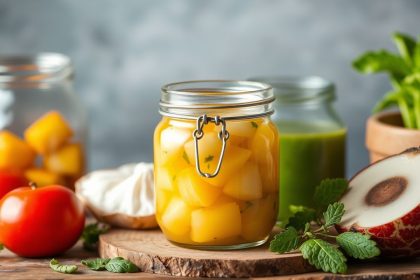
Pack vegetables evenly and press to remove air pockets so brine covers the produce by at least 1 inch. Consistent pressure and a good weight reduce aerobic pockets and limit spoilage.
Use a lid that allows CO2 escape or an airlock. Record the date, salt percentage, and ambient temperature on each jar to learn what works for your space.
Temperature Control
Temperature governs speed: higher heat accelerates acid production but can soften texture. Aim for 65–72°F for balanced progress; move jars to the fridge once the desired acidity forms.
Log observations. Small adjustments in salt percentage and temperature produce predictable changes in timing and texture over successive batches.
Serving, Storage, and Shelf Life for Salt Fermentation
Serve ferments as a crisp condiment or ingredient. A small spoonful brightens rich dishes and adds savory complexity to salads and bowls.
After reaching your target profile, refrigerate to slow fermentation and preserve texture. Properly salted ferments stored cold can remain quality for months with periodic visual and smell checks.
| Nutrient | Per Serving (1/2 cup) |
|---|---|
| Calories | 35 |
| Protein | 1g |
| Carbohydrates | 7g |
| Fat | 0g |
| Salt (Sodium) | 400mg |
FAQ
Why is salt important in salt fermentation?
Salt restricts non-desirable microbes and selects for lactic acid bacteria that produce acid and preserve the food. Proper salinity yields stable ferment, improved texture, and predictable flavor.
How much salt should I use for reliable results?
Common guidance is 2% salt by weight of prepared vegetables. Adjust within a 1.5–3% range based on vegetable density and the desired fermentation speed and texture.
Can I use any salt for salt fermentation?
Use plain, additive-free salt. Iodized and anti-caking salts may cloud brine or alter fermentation behavior. Coarse sea salt and kosher salt are dependable choices.
My ferment smells off. What now?
Pungent rotten or putrid odors or pervasive mold indicate spoilage. Discard unsafe batches and review salt percentage, submersion, and sanitation before retrying.
How long should I ferment before refrigerating?
Taste every 2–3 days. Most jars reach a pleasant balance between 5 and 14 days at 65–72°F. Refrigerate once you like the acidity and texture to slow further change.
Mastering salt fermentation depends on consistent measurement, the right salt, and controlled temperatures. Use the percentage rules above, keep records, and refine technique to suit your vegetables and personal taste.
See also: salt fermentation