

There is something profoundly satisfying about turning ripe tomatoes into a silky, roasted soup that balances sweetness, acidity, and savory depth. When you roast tomatoes, the natural sugars concentrate and the flavor profile deepens into a rich, layered base for a comforting bowl.
- Unlocking the Deep Flavor Magic of Roasted Tomatoes: Varieties and Balance
- At a Glance: Prep, Yield, Difficulty
- Ingredients
- Instructions
- Tips for Success
- Serving Suggestions and Pairings
- Technique Details: Why Each Step Matters
- Ingredient Substitutions and Variations
- Nutritional Snapshot
- Pairing Notes and Presentation
- Q&A
- What makes roasted tomato soup different from regular tomato soup?
- Why is roasting considered an art?
- Which tomatoes work best for roasting?
- Which herbs and spices elevate roasted tomato soup?
- How can I get creamy texture without dairy?
- Final Notes
- Roasting concentrates flavor: higher heat builds caramelization and umami.
- Tomato choice matters: meaty varieties yield thicker results with less water.
- Simple swaps work: coconut cream or cashew puree keeps richness while removing dairy.
- Make-ahead friendly: freezes well and reheats without losing texture.
Unlocking the Deep Flavor Magic of Roasted Tomatoes: Varieties and Balance
Choose tomatoes with firm flesh and low seed content for roasting; these produce a concentrated, less watery soup. Roma and plum tomatoes consistently provide that dense texture chefs seek.
Roasting converts sugars and develops savory notes through Maillard reactions and caramelization. For the underlying technique, consult the principles of roasting to understand how dry heat transforms vegetables.
At a Glance: Prep, Yield, Difficulty
Prep and Cook Time
Preparation: 15 minutes. Roasting: 40 minutes. Simmer and blend: 20 minutes. Total about 1 hour 15 minutes.
Yield: About 6 generous servings. Difficulty: Medium — ideal for cooks ready to build layered flavor.
Ingredients
Gather ingredients that build depth and allow control over acidity and richness. Quality olive oil and a good low-sodium broth make seasoning adjustments easier.
Use the list below as your core; tweak herbs and heat to suit taste.
- 3 pounds ripe Roma tomatoes, halved
- 1 large sweet onion, quartered
- 5 cloves garlic, smashed
- 3 tablespoons extra virgin olive oil
- 1 teaspoon sea salt
- ½ teaspoon freshly ground black pepper
- 1 teaspoon smoked paprika
- 4 cups vegetable broth (low-sodium recommended)
- ¾ cup heavy cream or coconut cream
- 1 tablespoon tomato paste
- Fresh basil leaves for garnish
- Pinch of red pepper flakes (optional)
Instructions
1. Preheat to 400°F (200°C). Use two rimmed baking sheets for even airflow. Parchment helps with cleanup and prevents sticking.
2. Arrange tomatoes, onion, and garlic cut side up. Drizzle with olive oil and season with salt, pepper, and smoked paprika. Spread ingredients so they roast rather than steam.
3. Roast for 40 minutes, turning tomatoes once. Look for deep color and caramelized edges; that signals concentrated sweetness and flavor.
4. Move roasted veg to a large pot and add tomato paste and broth. Bring to a gentle simmer to marry flavors and extract aromatics from the roasted pieces.
5. Simmer 20 minutes, then puree. Use an immersion blender for control or a standing blender in batches. Aim for a silky texture, not an overworked foam.
6. Stir in cream and adjust seasoning. Return to low heat for 5 minutes to blend. Avoid boiling after adding cream to preserve a smooth mouthfeel.
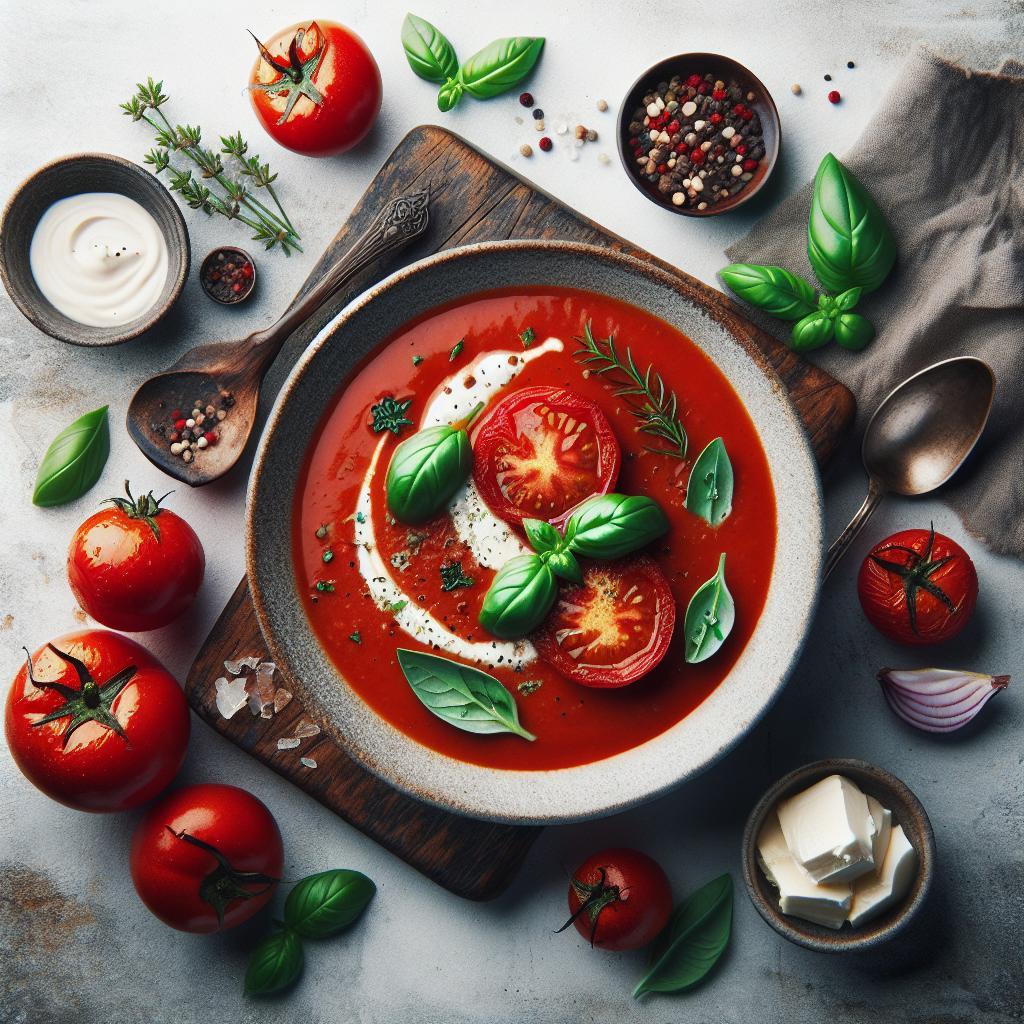
7. Finish and serve. Garnish with chiffonade basil and a drizzle of olive oil. Add a pinch of red pepper flakes if you want warmth.
Tips for Success
Select tomatoes for density and flavor concentration. If tomatoes taste bland, add a teaspoon of tomato paste before simmering to intensify the base.
Control acidity with dairy or fat. Start with less cream and add incrementally; acidity balances with fat and a touch of sweetness if needed.
[TIP]Expert Insight: Roast garlic whole with the tomatoes until soft and just caramelized. Mashed roasted garlic blends into the soup and yields a sweeter, mellow garlic note compared with raw garlic.
If you choose a dairy-free route, coconut cream or cashew purée gives body without dairy flavors. Both maintain a glossy texture and play well with smoked paprika.
[WARNING]Pro-Caution: Avoid over-roasting until blackened; burnt compounds produce bitterness. Stop roasting once edges are deeply colored and the flesh yields easily to a fork.
Serving Suggestions and Pairings
Serve with a swirl of basil oil or a dollop of crème fraîche for a visual and textural lift. Fresh herbs tighten the aromatic profile at the finish.
Pair with grilled sourdough or a classic grilled cheese for contrast. For lighter protein, a simple chickpea salad tossed with lemon and parsley complements the soup’s richness.
Technique Details: Why Each Step Matters
Roasting concentrates sugars and develops Maillard notes; this creates a savory backbone you cannot achieve by simmering raw tomatoes. The method changes texture and amplifies aroma.
Blending technique affects mouthfeel. An immersion blender leaves a slightly rustic texture, while a high-speed blender produces a satin finish. Strain through a chinois if you want an ultra-smooth restaurant-style soup.
Ingredient Substitutions and Variations
For a vegan version, swap heavy cream for coconut cream. Use a neutral-flavored oil if you prefer less olive flavor. Add roasted red peppers for a sweeter, smoky variant.
Add a roasted carrot or a handful of white beans during blending to increase body without extra fat. These swaps thicken the soup naturally and add subtle sweetness.
Nutritional Snapshot
This roasted tomato soup delivers a modest calorie count with a balance of carbs and healthy fats. Adjust cream to manage total fat per serving.
| Nutrient | Per Serving |
|---|---|
| Calories | 180 kcal |
| Protein | 4 g |
| Carbohydrates | 18 g |
| Fat | 10 g |
Pairing Notes and Presentation
Garnish deliberately: toasted pine nuts add crunch, basil oil adds brightness, and shards of Parmesan introduce umami and texture. Visual contrast raises perceived taste.
For beverage pairing, choose a crisp non-alcoholic option like iced herbal tea or sparkling water with cucumber for a refreshing counterpoint to the soup’s warmth.
Q&A
Q&A: Savor the Richness – The Art of Roasted Tomato Soup
What makes roasted tomato soup different from regular tomato soup?
Roasted tomato soup gains depth through caramelization; dry heat concentrates sugars and develops umami. The result is a richer, more complex flavor than soup made from raw or boiled tomatoes.
Roasting also alters texture: roasted flesh breaks down into a thicker, more velvety base that needs less reduction to achieve body.
Why is roasting considered an art?
Roasting trades on timing and temperature. Too brief and the tomatoes remain tart; too long and they risk bitterness. Mastery comes from reading color, aroma, and texture as you roast.
Experienced cooks judge doneness by caramelization level and the scent of sweet, roasted aromatics rather than strict minutes alone.
Which tomatoes work best for roasting?
Use meaty varieties such as Roma or plum tomatoes for concentrated flavor and lower moisture. Heirloom tomatoes can deliver unique, intense flavors but vary widely in water content.
For background on tomato varieties and cultivation, see the tomato entry.
Which herbs and spices elevate roasted tomato soup?
Fresh basil added at the finish brightens the soup with herbal, peppery notes. Thyme and bay leaf contribute woody, savory layers during the simmer stage.
Smoked paprika or a pinch of cayenne introduces warmth and complexity without masking the roasted tomato character. For herb context, explore the basil page.
How can I get creamy texture without dairy?
Use coconut cream or a purée of soaked cashews to add richness without dairy. Roasted vegetables and a small amount of starchy ingredient such as cooked white beans also thicken naturally.
For oil finish and mouthfeel, a touch of high-quality olive oil at service time enhances richness; read about olive oil sourcing on the olive oil page.
Final Notes
Roasted tomato soup rewards precision and patience. The process accentuates natural sweetness and builds savory notes that lift a simple bowl into a memorable dish.
Work in stages: select the right tomato, control the roast, then balance cream and acid at the end. With those fundamentals, you will consistently produce a soup that reads as both comforting and refined.

See also: Tomato Soup