
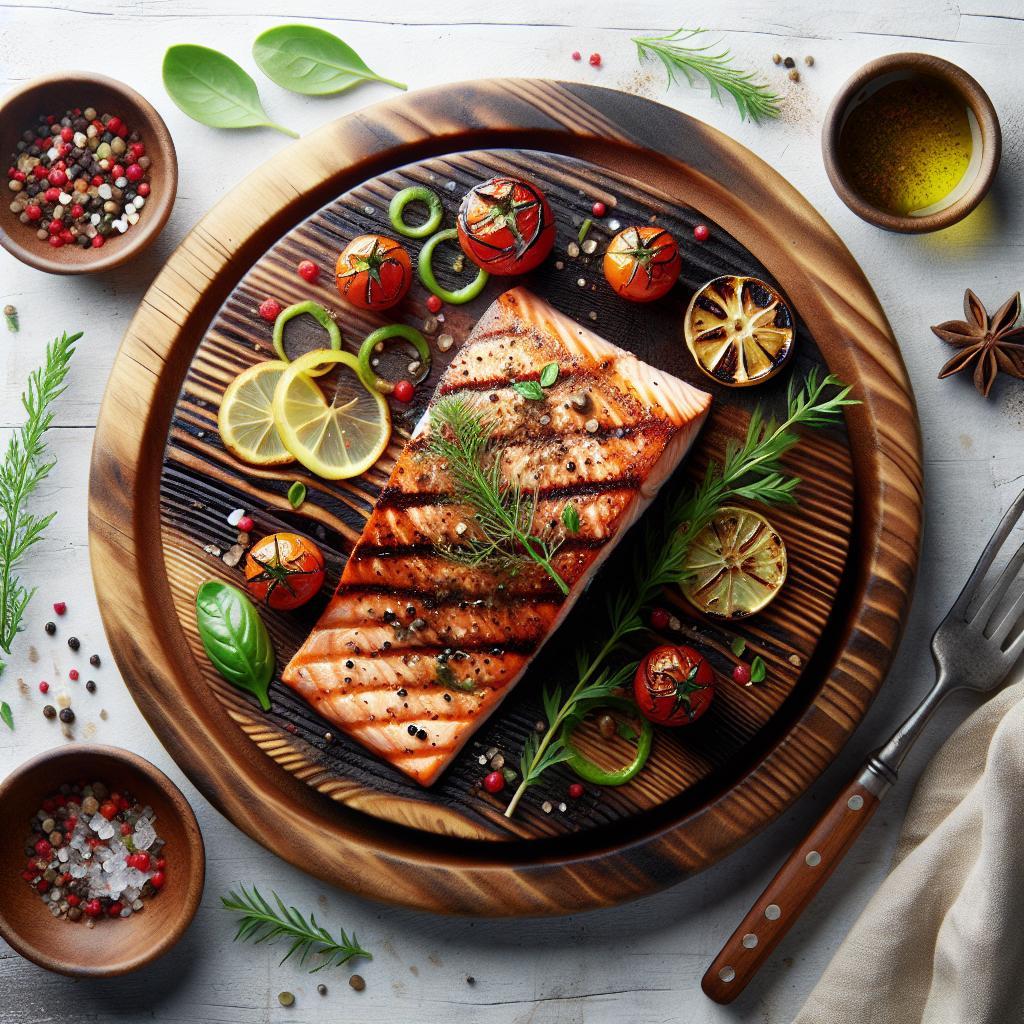

Unlocking flavor with a cedar plank turns simple grilled salmon into a layered sensory dish. A soaked, food-grade cedar plank creates a gentle steam-and-smoke environment that preserves moisture while adding aromatic cedar notes.
- Why Cedar Planks Work
- Prep and Cook Time
- Yield
- Difficulty Level
- Ingredients
- Instructions
- Tips for Success
- Serving Suggestions
- Flavor Variations and Wood Alternatives
- Nutrition Snapshot
- Safety and Cultural Context
- FAQ
- What is a cedar plank and why use it?
- How long should I soak the plank?
- What internal temperature signals doneness?
- Can I reuse cedar planks?
- Can other foods use plank grilling?
- Final Notes
- Soak the plank at least 30 minutes for reliable steam and to prevent charring.
- Grill at medium heat (around 350°F / 175°C) to control cooking and avoid overcooking.
- Use skin-on fillets to protect flesh and improve handling during cooking.
- Finish resting on the plank for 5 minutes to let juices redistribute.
Why Cedar Planks Work
Cedar planks provide a thin insulating layer that moderates direct grill heat and promotes even cooking. As the plank heats, it releases aromatic compounds that subtly flavor the salmon without overpowering it.
Those aromatic compounds come from the natural oils in wood, and they interact with steam to carry scent into the fish. For context on the wood family and properties, see cedar.
Prep and Cook Time
Preparation: typically 30–60 minutes, including plank soaking and a brief marinade. Plan for about 20–25 minutes of active grilling time for standard fillets.
Temperatures: preheat the grill to medium, roughly 350°F (175°C), and monitor internal fish temperature for precision. For procedure on grilling techniques, refer to grilling.
Yield
This recipe serves 4 standard portions using four 6 oz fillets; scale proportions for larger gatherings. For smaller appetites, one plank can accommodate two smaller fillets placed side-by-side.
Adjust marinade and salt levels when scaling and account for slightly longer plank soak time if you use larger boards. Use portion control to maintain consistent cook times across servings.
Difficulty Level
This method rates as medium because it requires prep and active heat control. However, the technique rewards attention with a reliably moist, aromatic result.
Beginner grillers should practice temperature control and plank placement once before serving guests. With repeated use, the timing for smoke and doneness becomes intuitive.
Ingredients
Use quality, food-safe items and simple aromatics to let cedar character shine through. Below are ingredients for four fillets plus a few optional items to customize flavor.
- 1 food-grade cedar plank (~12″ x 7″), untreated.
- 4 salmon fillets (6 oz each, skin on).
- 2 tbsp olive oil, 1 lemon (zest + juice), 2 garlic cloves minced.
- 1 tbsp fresh dill chopped, 1 tsp sea salt, 1/2 tsp black pepper, optional 1 tsp honey.
Choose sashimi-grade or sushi-grade labeling only when you plan to serve very rare; otherwise cook to safe temperatures. For more on the fish species and sourcing considerations, see salmon.
Instructions
Read the full sequence before you start and set up tools: tongs, a thermometer, a timer, and heat-resistant gloves. Prepare the plank and marinade in parallel to streamline workflow.
Follow the numbered steps below; each step aims to reduce guesswork and improve repeatability. Maintain clear spacing between plank and flame and monitor the grill throughout cooking.
- Choosing the plank: Use a food-grade, chemical-free cedar plank about 1/2″ thick. Thicker planks hold heat longer and produce steadier aromatic steam.
- Soak the plank: Submerge the plank in cold water for at least 30 minutes; up to 3 hours is acceptable for larger pieces. Optionally add citrus slices or herbs to the soak for layered aromatics.
- Preheat the grill: Clean and oil grates, then stabilize at medium heat (~350°F / 175°C). Use a two-zone fire if using charcoal to limit flare-ups under the plank.
- Season the salmon: Pat fillets dry and brush with olive oil, lemon juice, garlic, dill, salt, pepper, and optional honey. Keep coatings light to let cedar notes remain prominent rather than masked.
- Heat the plank: Shake off excess water and place plank on preheated grates for 2–3 minutes until it begins to smoke and scent the air. Then move the fillets onto the plank, skin-side down, and close the lid.
- Cook to doneness: Grill for 20–25 minutes depending on thickness; check internal temperature with an instant-read thermometer. Target 125°F (52°C) for medium-rare, or 145°F (63°C) for well-done according to preference and safety guidelines.
- Rest and serve: Remove the hot plank with care and allow the fillets to rest for 5 minutes on the plank to redistribute juices. Finish with lemon zest, a drizzle of high-quality oil, and fresh herbs.
Choosing and Preparing the Plank
Inspect every plank for cracks or remnants of finishes; only use boards explicitly labeled for food use. Splintered or treated wood can release unwanted chemicals and impair flavor safety.
Store unused planks flat in a cool, dry place and discard warped or moldy pieces. Reuse planks only if they remain intact and you can clean them thoroughly between uses.
Tips for Success
Control heat and timing: cedar boosts perceived doneness, so prioritize internal temperature over surface color. Use a probe thermometer and trust numbers rather than appearance alone.
Experiment with soak liquids and herbs but keep the base method consistent for predictable results. Also, be mindful that stronger liquids like wine alter smoke character and may reduce cedar intensity.
Serving Suggestions
Present the salmon on the plank for a dramatic, rustic finish that also prolongs warmth at the table. Garnish simply with fresh dill sprigs and thin lemon slices to complement cedar’s resinous tones.
Serve alongside bright, acidic sides like a cucumber-dill salad or grilled asparagus to balance the wood-smoke notes. For grains, choose neutral or herbed rice to allow the salmon to remain the focal point.
Flavor Variations and Wood Alternatives
If cedar is unavailable, alder and maple planks provide milder smoke profiles that suit fish well. Avoid robust woods like mesquite for delicate salmon because they can overwhelm natural sweetness.
Combine plank grilling with mild glazes such as honey-lemon or soy-ginger to integrate savory and sweet layers. Alter cooking time minimally when using different woods because density affects heat transfer.
Nutrition Snapshot
Salmon provides a dense source of protein and omega-3 fatty acids, while plank grilling adds negligible calories. The result is a nutrient-forward dish that pairs well with vegetables and whole grains.
Per serving estimates: ~350 kcal, 34 g protein, 20 g fat, and minimal carbohydrates. Adjust oil and glaze to reduce calories as needed.
| Nutrient | Per Serving |
|---|---|
| Calories | 350 kcal |
| Protein | 34 g |
| Carbohydrates | 2 g |
| Fat | 20 g |
Safety and Cultural Context
Plank cooking carries historic roots in Indigenous coastal communities where plank-and-stone methods cooked fish over coals. Acknowledge that this technique originates from specific culinary traditions and learn from reputable sources when exploring history.
When adapting traditional techniques, respect provenance and source sustainable fish to support long-term fisheries. For background on Indigenous plank cooking practices, consult reliable historical overviews and museum resources such as this general reference on Indigenous foodways.
FAQ
What is a cedar plank and why use it?
A cedar plank is a thin, food-grade board that sits between the grill and the fish to moderate heat and add aroma. It releases natural oils and steam that carry smoky, slightly sweet notes into the salmon.
How long should I soak the plank?
Soak for at least 30 minutes; up to 3 hours for larger or thicker planks. Longer soaks increase moisture retention but also add time to prep, so plan accordingly.
What internal temperature signals doneness?
Use an instant-read thermometer: 125°F (52°C) for medium-rare and 145°F (63°C) for well-done. Remove the fish from the grill early and allow for 3–5°F of carryover while it rests.
Can I reuse cedar planks?
Reusing planks is possible but aroma strength diminishes; inspect, scrub, and dry properly between uses. For the most consistent flavor, start with a fresh plank.
Can other foods use plank grilling?
Yes, plank grilling suits other fish, shellfish, chicken, and vegetables when you pair wood choice with ingredient intensity. For delicate proteins, use milder woods; for heartier proteins, choose denser woods with stronger smoke.
Final Notes
Cedar plank grilling provides a predictable way to lock moisture and add aromatic depth to salmon when you control soak time and grill temperature. Apply the steps consistently and record timings for your specific grill to achieve repeatable, elevated results.
For deeper exploration of smoke chemistry and cooking techniques, consult reputable culinary texts and peer-reviewed resources on smoke and heat transfer. Also, review the cooking safety guidelines for fish and local sourcing recommendations to ensure both flavor and responsibility.

See also: cedar plank