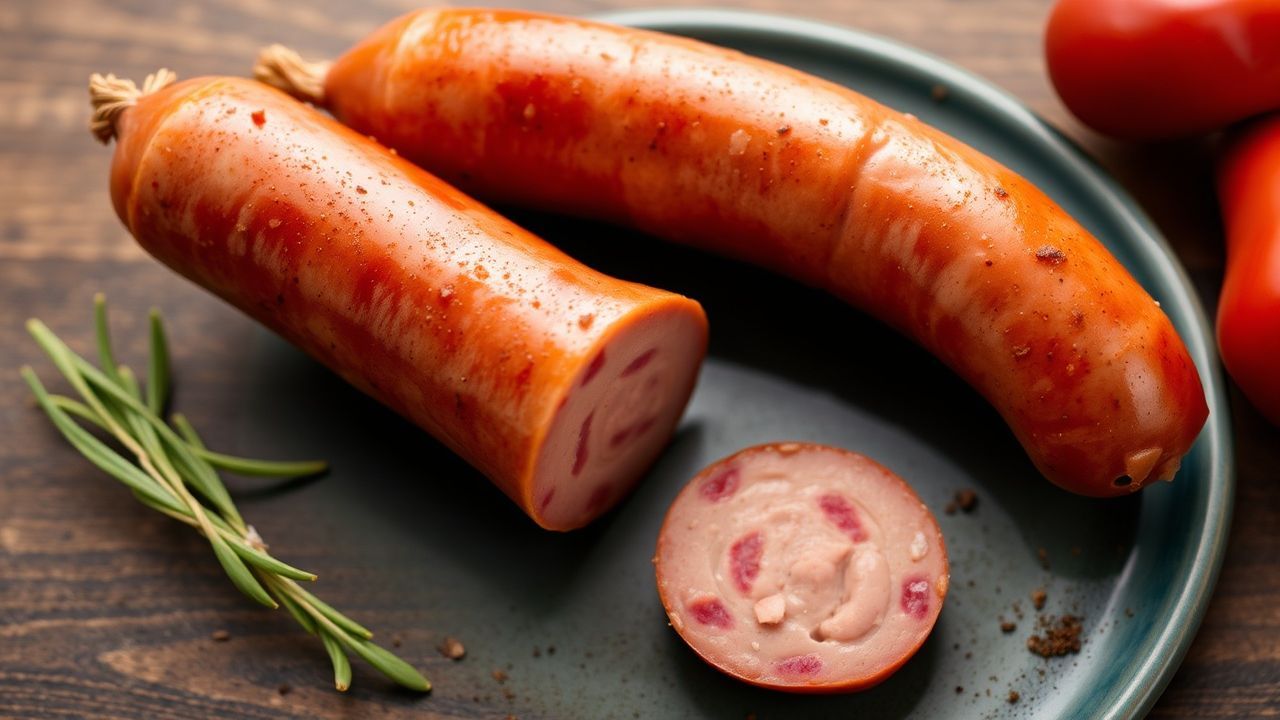

There is quiet precision behind a perfectly boiled sausage: controlled heat, correct timing, and ingredient balance. When you apply these principles, the result becomes reliably tender and flavorful rather than dry or split.
- Gentle heat preserves juices: start cold, aim for a steady simmer.
- Measure doneness: use a thermometer for consistent safety and texture.
- Adjust for fat: fattier sausages tolerate slightly higher heat without drying.
Understanding the science of sausages
Sausages are complex mixtures of muscle proteins, fat, water, and seasonings that respond predictably to heat. Knowing how each component behaves lets you design a cook method that preserves juiciness and texture.
Proteins coagulate and set as temperature rises, while fat liquefies and redistributes inside the meat matrix. For background on muscle proteins and how they react to heat, consult protein chemistry.
Protein coagulation and fat behavior
Muscle fibers contract as they denature; rapid, high heat forces excessive contraction and squeezes out juices. By contrast, gradual heating allows collagen to soften and fat to melt gently, which increases perceived juiciness.
For a concise overview of boiling as a cooking process, the boiling entry highlights how agitation and temperature affect food structure and moisture retention.
Prep and cook time — practical timing guidelines
Plan for a total cook time between 15 and 25 minutes for typical fresh sausages; thicker links need more time. Start with cold water and bring the liquid up slowly so the casing and interior heat evenly.
Use a probe thermometer to confirm internal temperature rather than relying on time alone. The method reduces guesswork and avoids the common mistakes of undercooking or overcooking.
- Preparation Time: 10 minutes
- Cooking Time: 15–25 minutes (varies by size and type)
- Total Time: 25–35 minutes
Ingredients and their functional roles
Choose fresh sausages that match the final texture you want: higher fat content yields juicier results while lean varieties need careful temperature control. Salt, a touch of sugar, and aromatics in the poaching liquid enhance flavor without overpowering the sausage.
Typical aromatics include smashed garlic, bay leaf, and whole peppercorns; they infuse gently during a controlled simmer. For context on sausage types and preparation traditions, see the sausage overview.
- 6 fresh sausages (pork, beef, or mixed)
- 6 cups cold water
- 1 tsp salt
- 1 tsp sugar (optional)
- 2 cloves garlic, smashed (optional)
- 2 bay leaves
- 6–8 whole black peppercorns
Step-by-step instructions
Follow a controlled poach to cook the interior without stressing the casing. The goal is a steady water temperature just below a rolling boil so the sausage cooks evenly.
Below are focused steps you can repeat for consistent results. Each action minimizes stress on the casing and maximizes internal juiciness.
- Make the poaching liquid: Place cold water, salt, sugar, garlic, bay leaves, and peppercorns in a large saucepan. Heat slowly to a gentle simmer—avoid aggressive boiling to prevent casing failure.
- Submerge the sausages: When liquid reaches about 80–85°C (176–185°F), add sausages with tongs and ensure they are covered. Gentle temperature prevents sudden expansion that splits casings.
- Maintain a gentle simmer: Keep the liquid below a rolling boil and simmer for 12–20 minutes based on size. Verify doneness with an internal thermometer rather than appearance alone.
- Avoid crowding: Give each link room to move to ensure even heat distribution and uniform texture development. Crowding traps cold pockets and lengthens cook time unpredictably.
- Rest briefly: Remove sausages and rest 3 minutes to allow juices to redistribute. If finishing with a sear, rest briefly and then sear to add color and texture.
Chef’s notes and technique refinements
Temperature control is the primary variable for repeatable results; start cold and heat slowly. High agitation or a rolling boil increases casing stress and tends to force juices out of the meat matrix.
Fat percentage changes the texture outcome: higher-fat sausages feel juicier and tolerate slightly higher heat, while lean sausages require closer temperature monitoring. If you want more complex aroma, simmer in beer or stock instead of plain water.
- Water temperature matters: Gradual heating reduces bursting and retains moisture.
- Timing is critical: Undercooking risks safety issues; overcooking dries the product.
- Sausage composition: Fat content directly affects juiciness and mouthfeel.
- Make-ahead: Cool sausages in the poaching liquid, refrigerate up to 48 hours, and reheat gently before serving.
- Flavor tweaks: Add thyme, rosemary, or shallots to the liquid for subtle variations.
After resting, consider a brief sear on a hot pan or grill to develop color and the Maillard surface reaction. The Maillard reaction is responsible for the browned flavor and can dramatically improve perceived quality when applied briefly after boiling; read more on the Maillard reaction.
Serving suggestions and pairings
Serve boiled sausages in a soft bun with mustard and sauerkraut for a classic profile, or slice them over mashed potatoes with caramelized onions for a heartier plate. A quick pan-sear after boiling gives a crisp exterior that contrasts with the tender interior.
For complementary techniques, consult our internal guides like the grilling guide or the primer on Sausage 101 to explore finishing methods and regional styles. These internal resources expand on finishing, sauces, and side pairings.
| Nutrient | Per Serving (1 sausage) |
|---|---|
| Calories | 250 |
| Protein | 14g |
| Carbohydrates | 1g |
| Fat | 21g |
Safety fundamentals and sources
Food safety depends on reaching sufficient internal temperatures to destroy pathogens common in ground meats. Aim for verified internal temperatures and practice cross-contamination prevention during preparation.
For a concise overview of standards and safe handling principles, reference material on food safety gives context to temperature targets and hygiene protocols.
FAQ
The following questions answer recurring practical issues cooks face when boiling sausages. Each response gives direct, actionable guidance to reduce common failures.
Use these answers as quick checks during prep and cooking to maintain consistency and safety in your process.
Why does boiling sausage seem simple but often fail?
Boiling looks simple but small changes in temperature or timing cause big sensory differences. Rapid heating or violent boiling stresses the casing and squeezes out juices, leaving the interior dry.
Controlling the water temperature and using a thermometer mitigate most failures and produce repeatable results.
What exactly happens to the sausage during the boil?
Heat denatures proteins, firms muscle fibers, and melts fat. Properly staged heating lets fats melt and redistribute while proteins set gently to retain moisture.
This balance between protein coagulation and fat liquefaction defines the final texture and mouthfeel of the sausage.
Is water temperature more important than boiling time?
Temperature and time interact, but maintaining a steady, moderate temperature is the controlling factor. A gentle simmer around 80–90°C avoids bursting while allowing the interior to reach safe working temperatures.
Use a thermometer to confirm internal temperature rather than relying solely on minutes of cooking.
Why do some sausages burst while boiling?
Bursting usually results from too-rapid heating or overcooking, which creates internal steam and pressure the casing cannot contain. Natural casings tolerate gradual expansion better than synthetic casings, but all casings suffer under aggressive boiling.
Starting in cold water and maintaining a gentle simmer reduces the risk of splits and preserves presentation.
Can I improve flavor while boiling?
Yes. Aromatics such as bay leaf, peppercorns, garlic, or a mild stock add subtle depth to the sausage while it poaches. For a bolder profile, simmer in beer or a seasoned broth for complementary flavors.
Finish with a quick sear to develop surface flavor via the Maillard reaction and to add texture contrast.
Applying these principles—controlled heat, accurate timing, and appropriate finishing—will make boiled sausage a reliably excellent component of your cooking repertoire. Treat temperature as the primary variable, measure doneness, and finish for texture to achieve the best results every time.
See also: boiled sausage