
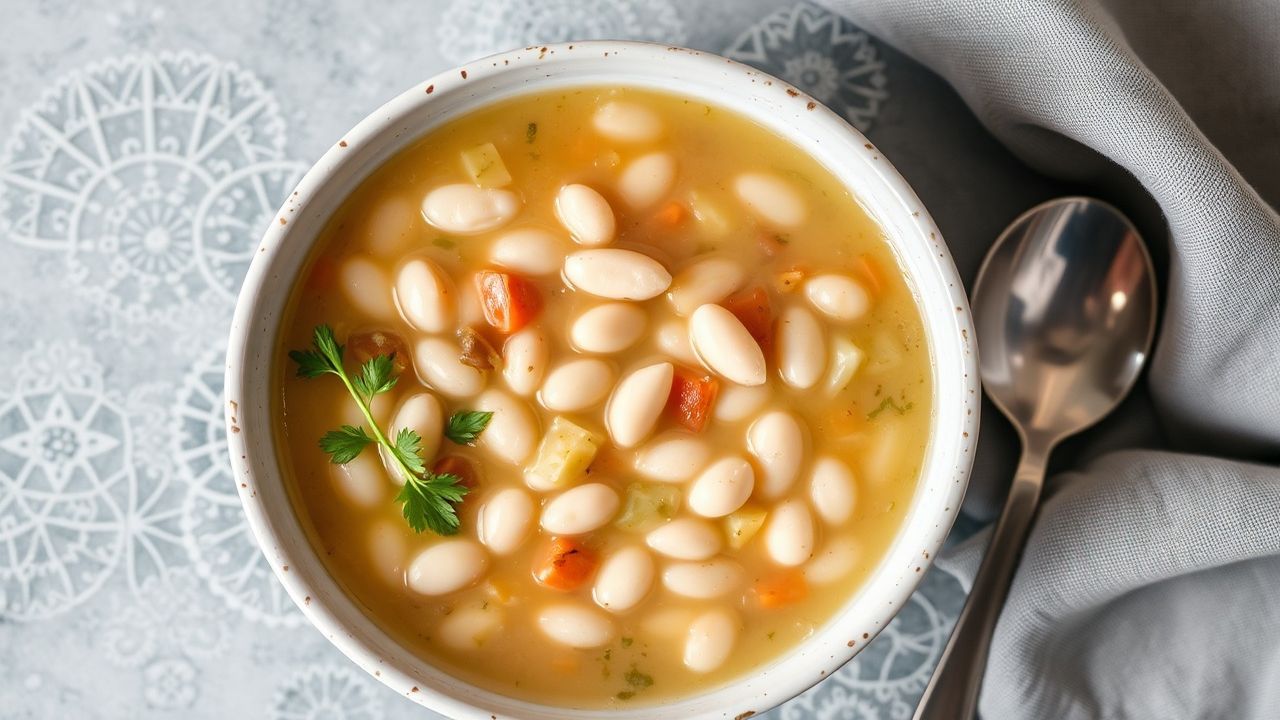

There’s a certain magic in a bowl of slow-cooked white bean soup — a humble dish that transforms simple ingredients into a diverse mix of flavor and texture. Understanding the science behind each step turns predictable results into reliably excellent ones.
- Soak for even hydration: Proper soaking yields uniform cooking and reduces digestive sugars.
- Control low heat: Gentle simmering preserves shape while releasing starches for creaminess.
- Layer aromatics: Timing aromatics and acid protects texture and builds depth.
- Use the right vessel: Even heat distribution matters—choose heavy-bottom cookware or a low slow-cooker setting.
The Science Behind Bean Selection and Soaking Techniques
Choose firm, mature beans such as cannellini or great northern. These varieties contain the starch and cell-wall structure that yield a creamy interior while holding shape during long, moist cooking.
Soak beans in cold water for 8–12 hours to hydrate cells evenly. Cold overnight soaking reduces premature skin splitting and helps leach oligosaccharides that can cause digestive discomfort. For quick preparation, a one-hour hot soak works, but expect a slight loss of texture finesse.
Discard soaking water and rinse thoroughly before cooking. That step removes soluble compounds and reduces foam, improving clarity and flavor of the broth.
For background on bean biology, consult the common bean entry for cultivar and composition details.
Unlocking the Maillard Reaction Through Controlled Simmering
Sautéing onions, celery, and garlic at moderate heat encourages Maillard-like browning of aromatics and builds savory compounds that deepen soup flavor. Use medium heat and watch for gentle color change without burning.
During long simmering, slow chemical changes between amino acids and sugars form complex umami notes. This process differs from high-heat searing but still relies on controlled temperatures to avoid bitterness.
Learn more about the underlying browning chemistry at the Maillard reaction article.
Balancing Aromatics and Broth Composition for Depth and Complexity
Begin with sautéed aromatics to release essential oils. Add herbs and spices at calculated times to keep bright notes where desired and mellow them when needed.
Use a rich stock to contribute collagen-derived mouthfeel and minerals that round out flavor. For vegetable-based depth, concentrated mushroom stock or a reduced vegetable stock supplies umami without meat.
For more on stock building, visit the internal resource Ultimate Homemade Broth Guide to refine your base.
Optimizing Cooking Time and Temperature for Creamy Consistency
Maintain a gentle simmer near 85°C (185°F). That temperature range lets starch granules swell and release slowly, thickening the broth without collapsing bean skins into a puree.
Stir occasionally and monitor the pot base to prevent localized scorching. If using a slow cooker, select the low setting and extend time rather than increasing heat for a shorter interval.
Read about starch behavior and gelatinization at the starch page for technical context on how starches thicken liquids.
Prep and Cook Time
- Prep Time: 20 minutes (plus 8–12 hours soaking)
- Cook Time: 1.5 to 2 hours simmering (or low slow-cooker overnight)
Yield
Approximately 6 servings.
Difficulty Level
Medium — requires temperature attention and timing for best texture.
Ingredients
- 1½ cups dried white beans (cannellini or great northern), soaked and rinsed
- 6 cups high-quality chicken or vegetable broth
- 1 medium yellow onion, finely chopped
- 2 stalks celery, diced
- 3 cloves garlic, minced
- 2 tbsp olive oil
- 1 tsp dried thyme or 2 tsp fresh thyme
- 1 bay leaf
- Salt and freshly ground black pepper to taste
- 1 tbsp freshly squeezed lemon juice (optional, for finishing)
- Chopped fresh parsley for garnish
Instructions
- Drain and rinse the soaked white beans and set aside.
- Heat olive oil in a heavy-bottomed pot over medium heat. Sauté onion and celery until translucent and lightly golden, about 6–8 minutes.
- Add garlic and thyme, stirring for 30–60 seconds until aromatic. Avoid browning the garlic aggressively.
- Pour in stock, add bay leaf and beans, and bring to a gentle simmer over medium-low heat.
- Maintain a low simmer (small, steady bubbles) and cook uncovered for 1.5–2 hours, stirring occasionally to prevent sticking.
- Taste halfway and add salt gradually. Early heavy salting can tighten bean skins; season toward the end for accurate salt balance.
- When beans are tender and the broth has thickened, remove from heat and discard the bay leaf.
- Stir in lemon juice to brighten flavors and finish with fresh parsley.
- Ladle into bowls and serve with crusty bread and a drizzle of extra-virgin olive oil if desired.
Chef’s Notes and Tips for Success
For a silkier mouthfeel, blend one-third of the soup and return it to the pot. This technique thickens without adding extra fat.
Use a Dutch oven or heavy-bottom pot to distribute heat evenly. If using a slow cooker, choose low for longer times to achieve the same texture.
Substitute smoked paprika or a small diced ham hock for smoky depth, or keep it vegetarian with concentrated mushroom stock and a dash of soy sauce for umami.
Make-ahead advantage: flavors meld and improve after resting overnight; reheat gently on low.
When you adjust seasoning at the end, rely on small increments. Over-salting is harder to correct than under-seasoning.
Serving Suggestions and Pairings
Serve piping hot with rustic bread for soaking. A dollop of crème fraîche or a drizzle of extra-virgin olive oil adds a finish layer of richness.
Pair the soup with a bright green salad dressed in lemon vinaigrette or oven-roasted root vegetables for a balanced meal. Offer grated hard cheese at the table for extra umami.
For method variations and appliance tips, see the internal guide on slow cooker techniques to adapt times and temperatures.
Nutritional Snapshot
Per serving estimates: ~320 kcal, 18 g protein, 45 g carbohydrates, 6 g fat. Beans deliver fiber, plant protein, and micronutrients such as iron and folate.
Slow cooking preserves most nutrients. Drinking the broth captures water-soluble vitamins that leach from ingredients during simmering.
Use drained, canned beans to cut time, but note the texture and sodium profile will differ from properly soaked dried beans.
FAQ
Why are white beans ideal for slow cooking?
White beans have a dense starch matrix with a sturdy skin that withstands long, moist heat. Their internal structure softens into a creamy texture while skins often remain intact, producing a pleasing contrast.
The process depends on gradual cell-wall breakdown and starch gelatinization, which slow cooking promotes more predictably than high-heat methods.
Does soaking always reduce cooking time?
Yes. Soaking hydrates cells and starts limited enzymatic activity, which shortens active cook time and improves uniformity. Cold overnight soaks deliver the best textural control.
Quick hot soaks speed the process but can slightly compromise final bite. Rinse soaked beans to remove soluble oligosaccharides and reduce foaming.
When should I add salt and acid?
Season lightly early, then finish seasoning toward the end of cooking. Heavy salting early can toughen bean skins by affecting protein cross-linking.
Add acid such as lemon juice or vinegar only after beans are tender. Acid strengthens pectin in cell walls and can stall softening if added too soon.
Can I use a slow cooker for this recipe?
Yes. Use the low setting and extend time rather than increasing heat. Slow cookers promote even, moist heat and excellent starch release for creamy broth.
Use a heavy-bottomed pot on the stovetop for greater control, especially if you need to adjust heat rapidly or finish by reducing the broth.
How do I fix a soup that’s too thin or too thick?
If too thin, simmer uncovered to reduce liquid or blend a portion of the soup to thicken naturally. If too thick, add warm stock or water and adjust seasoning.
Maintain gentle heat during adjustments to preserve bean integrity and avoid rapid breakdown of texture.
Further reading on cookware properties is available at the Dutch oven page and appliance behavior at the slow cooker page.
See also: white beans