
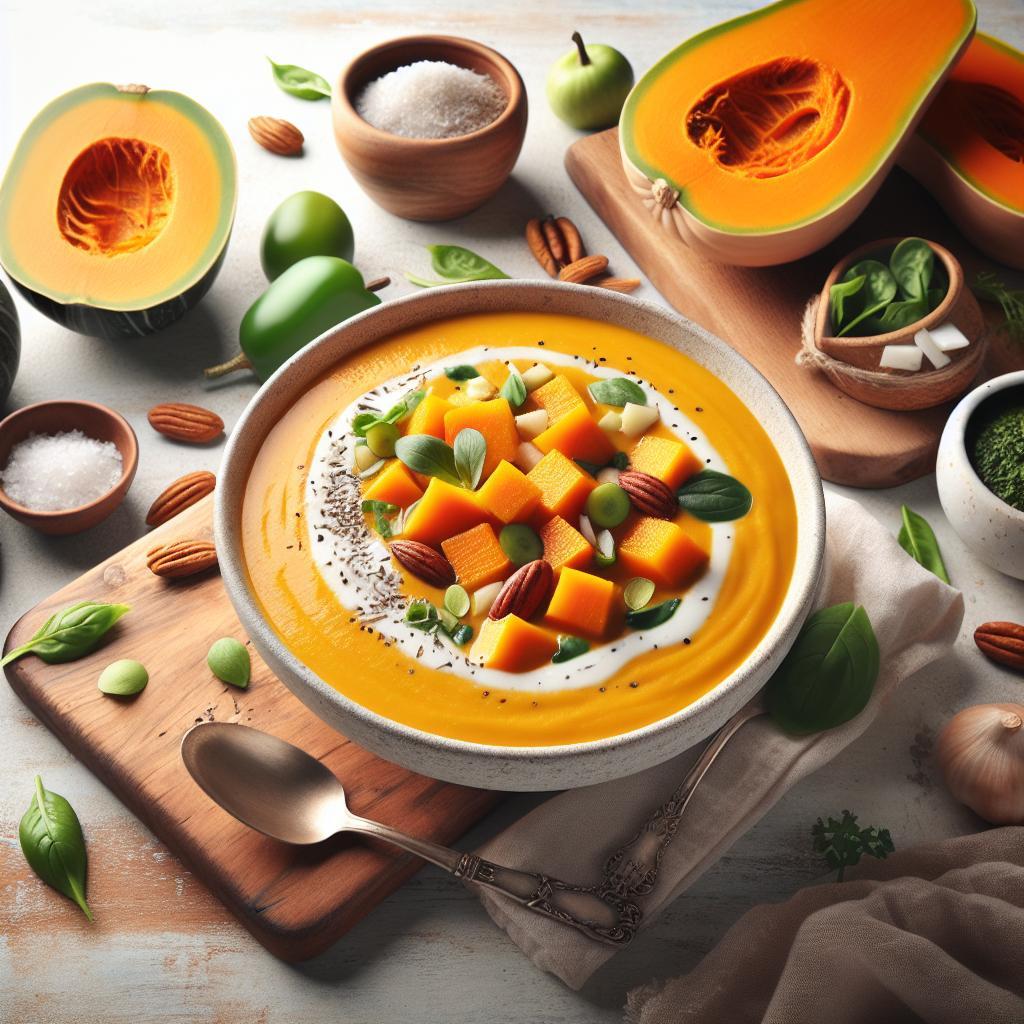

When autumn cools the air, a warm bowl of soup restores calm and appetite. This recipe for velvety butternut squash coconut soup pairs roasted squash with full-fat coconut milk for a rich, silky finish without heavy cream.
- Discover the Blend of Butternut Squash and Coconut Milk for Utter Creaminess
- Prep and Cook Time
- Ingredients
- Instructions
- Sauté aromatics
- Toast spices
- Add butternut squash and simmer
- Blend for creaminess
- Add coconut milk and finish
- Chef’s Notes & Tips for Success
- Practical Safety Note
- Serving Suggestions to Elevate Your Comfort Bowl
- FAQ
- Roast for depth: Roasting the squash amplifies natural sugars and gives caramelized flavor.
- Spice smart: Turmeric and cumin add warmth while ginger brightens the profile.
- Texture matters: Blend thoroughly and finish with coconut milk for true silkiness.
- Make ahead: Flavors improve after resting; store chilled or freeze for later use.
Discover the Blend of Butternut Squash and Coconut Milk for Utter Creaminess
This soup balances the natural sweetness of roasted butternut squash with the round mouthfeel of coconut milk. The result is a velvety bowl that feels indulgent yet remains dairy-free and nutrient-dense.
Using full-fat coconut milk gives body and sheen while keeping the soup plant-based. Moderate spice levels emphasize the squash rather than overpower it, letting each ingredient contribute to a harmonious profile.
Prep and Cook Time
Plan for about 50 minutes from start to finish, including roasting and a short simmer. Active hands-on time runs roughly 15 minutes, with oven time and simmering filling the remainder.
These times assume one cook using a conventional oven and a standard stove. Adjust for altitude, oven efficiency, or when you double the recipe.
- Preparation: 15 minutes
- Cooking: 35 minutes
- Total Time: 50 minutes
Yield
Serves: 4 generous bowls. This yield suits family dinners or an elegant starter for a small group.
Portion sizes assume 1 to 1 1/2 cups of soup per person; adjust for heartier appetites or side-dish presentations.
Difficulty Level
Skill: Easy. The technique relies on basic roast, sauté, and blending steps that beginners can master quickly.
Tools include a baking sheet, a large pot, and either an immersion blender or a countertop blender rated for hot liquids.
Ingredients
Ingredient quality governs flavor; choose ripe butternut squash and a high-quality canned coconut milk. Fresh aromatics—onion, garlic, and ginger—make a measurable difference in depth.
Keep spices measured and taste as you go to balance warmth, earthiness, and heat. For reference on spice chemistry and flavor pairing, see turmeric and ginger.
- 1 medium butternut squash (about 2 pounds), peeled, seeded, and cubed
- 1 tablespoon coconut oil or olive oil
- 1 medium onion, finely chopped
- 3 cloves garlic, minced
- 1 tablespoon fresh ginger, grated
- 1 teaspoon ground turmeric
- 1 teaspoon ground cumin
- 1/2 teaspoon smoked paprika
- 1/4 teaspoon cayenne pepper (optional, for gentle heat)
- 4 cups vegetable broth (low sodium preferred)
- 1 can (13.5 oz) full-fat coconut milk
- Salt and freshly ground black pepper, to taste
- Juice of 1 lime
Instructions
Follow the sequence below to build flavor: sauté aromatics, bloom spices, simmer the squash, then blend and finish with coconut milk. Work carefully when handling hot liquids to avoid steam-related splatter.
Use either an immersion blender or a countertop blender in batches. If using a countertop blender, vent the lid slightly and blend in small portions to avoid steam pressure build-up.
Sauté aromatics
Heat the coconut oil in a large pot over medium heat. Add the chopped onion and sauté until translucent, about 4 minutes.
Stir in garlic and ginger and cook until fragrant, about 1 minute, taking care not to let garlic brown and turn bitter. Maintain medium heat so aromatics soften but do not caramelize excessively.
Toast spices
Sprinkle in turmeric, cumin, smoked paprika, and cayenne pepper. Stir constantly for 30 seconds to wake the spices and release essential oils.
Toasting spices briefly concentrates flavor and reduces raw edge. If the pan looks dry, add a teaspoon of oil to prevent sticking and burning.
Add butternut squash and simmer
Incorporate the cubed squash, stirring to coat with the spiced aromatics. Pour in the vegetable broth and bring to a boil.
Reduce heat to low, cover, and simmer for 25 minutes or until the squash is fork-tender. Test a cube for tenderness before blending to ensure even puréeing.
Blend for creaminess
Carefully transfer soup in batches to a blender or use an immersion blender directly in the pot. Purée until silky smooth; this step defines the soup’s texture.
If you prefer an ultra-smooth finish, strain the blended soup through a fine-mesh sieve before returning it to the pot. Straining removes fibrous bits for restaurant-style texture.
Add coconut milk and finish
Return puréed soup to the pot and stir in the coconut milk and lime juice. Simmer gently for 5 minutes to marry flavors and warm through.
Taste and adjust salt and pepper. If the soup is too thick, add warm broth a few tablespoons at a time to reach your preferred consistency.
Chef’s Notes & Tips for Success
Small technique choices change the final bowl. Roast the squash for more caramelized complexity, or simmer directly in broth for a faster weeknight version.
Choose a canned coconut milk with minimal stabilizers and a high fat content for the creamiest mouthfeel. Quality ingredients translate to better results, and fresh lime brightens the finished soup.
For spice balance, add cayenne gradually. Start with a pinch and increase after tasting, especially if serving children or spice-averse guests.
- Choosing squash: Look for firm fruit with matte skin and no soft spots for best flavor.
- Texture tip: Use a high-speed blender or an immersion blender for a truly smooth result.
- Spice swaps: Substitute chipotle for smoked paprika to add smoky heat.
- Make-ahead: The soup stores in the refrigerator for up to 3 days and freezes for 2 months.
Practical Safety Note
Blending hot liquids presents a burn risk if steam traps under a tight blender lid. Vent the lid, hold a towel over the cap, and pulse slowly to release pressure.
If using an immersion blender, keep the blade submerged and move it gently to avoid splatter. Allow the soup to cool slightly if you are uncertain about handling heat.
Serving Suggestions to Elevate Your Comfort Bowl
Garnishes add texture and visual contrast. A swirl of reserved coconut cream, a scattering of toasted seeds, and fresh herbs make each serving feel deliberate.
Toasted pumpkin seeds lend crunch and nutty notes; they pair well with cilantro or parsley for brightness. For garnish context, review pumpkin seed.
- Drizzle high-quality coconut cream for visual appeal and extra richness.
- Sprinkle toasted pumpkin seeds or chopped cilantro for texture and color.
- Serve with crusty bread or herb flatbreads for dipping.
Nutritional Snapshot
The following estimates provide a general sense of per-serving macronutrients. Values vary with ingredient brands and portion size.
| Nutrient | Per Serving |
|---|---|
| Calories | 230 kcal |
| Protein | 3 g |
| Carbohydrates | 28 g |
| Fat | 10 g |

To understand coconut milk composition and culinary use, refer to the coconut milk entry. It explains differences between full-fat and light varieties and common culinary roles.
FAQ
The following questions address common technique and storage concerns for this soup. Practical answers focus on reproducible steps for reliable results.
Read each answer for precise methods, substitutions, and safe handling. The FAQ covers texture, diet compatibility, storage, spice choices, and topping strategy.
What makes this soup velvety?
The texture comes from thorough puréeing and the emulsifying effect of coconut milk. Blending breaks down fibers and creates a smooth matrix that feels silky on the palate.
Using full-fat canned coconut milk adds body without dairy, while optional straining produces an ultra-smooth finish for refined plating.
Can I make this soup vegan and gluten-free?
Yes. The recipe uses vegetable broth and coconut milk, making it both vegan and gluten-free by default. Double-check store-bought broth labels for hidden animal products or gluten-containing additives.
For gluten-free servings, pair with naturally gluten-free sides like rice-based flatbreads or a simple green salad.
How do I store and reheat leftovers?
Cool the soup to room temperature, then refrigerate in an airtight container for up to 3 days. Freeze for up to 2 months in freezer-safe containers.
Reheat gently over low heat, stirring to reincorporate liquids. Add a splash of coconut milk or broth if the texture tightens after refrigeration.
Which spices work best with butternut squash?
Warm spices such as turmeric, cumin, cinnamon, and a touch of nutmeg complement the squash’s sweetness. Fresh ginger brightens the profile and cuts through richness.
Adjust quantities conservatively and taste as you go. Fresh herbs like cilantro add a finishing bright note at service.
What toppings should I choose for texture?
Choose one crunchy element, one creamy element, and one fresh element for balance. For example: toasted pumpkin seeds, a coconut cream swirl, and a sprinkle of chopped cilantro.
For heat lovers, add thinly sliced red chili or a drizzle of chili oil at the end to lift the flavors.
Velvety Butternut Squash Coconut Soup rewards simple technique and good ingredients. Roast well, blend thoroughly, and finish with coconut milk to deliver a comforting bowl that suits weekday dinners and special menus alike.
See also: Butternut Squash
See also: Butternut Squash