

Turkey soup made with roasted squash delivers warming texture and solid nutrition in one bowl. This guide explains nine practical secrets to deepen flavor, refine texture, and improve reheating so every batch tastes intentional.
- The Flavor Harmony of Turkey Soup and Squash
- Choosing the Perfect Squash for Turkey Soup
- Spice and Herb Combinations to Elevate Turkey Soup
- Serving Suggestions and Pairings for Turkey Soup
- Recipe Overview: Time, Yield, Difficulty for Turkey Soup
- Ingredients for Turkey Soup
- Instructions: Efficient Workflow for Turkey Soup
- Tips for Success with Turkey Soup
- Nutrition and Practical Notes for Turkey Soup
- Visuals and Presentation Tips for Turkey Soup
- Storage, Reheating, and Variations for Turkey Soup
- Practical Links and Further Reading
- FAQ
- Ready fast: One hour or slightly more from prep to table when you roast squash first.
- Flexible: Swap squash varieties and use leftover turkey to speed the process.
- Make ahead: Flavor improves after a day; refrigerate or freeze for easy meals.
- Finish with contrast: Acid, seeds, or yogurt lift the bowl and add texture.
The Flavor Harmony of Turkey Soup and Squash
Balancing lean turkey and sweet squash creates a soup that feels rich without excess fat. The contrast between turkey’s savory protein and roasted squash’s caramelized sugars gives a layered mouthfeel.
Use simple building blocks—brown aromatics, toast spices briefly, and deglaze—to develop depth. For technique background, consult the soup overview on Wikipedia for fundamentals used across cuisines.
Choosing the Perfect Squash for Turkey Soup
Pick dense, sweet-fleshed squash for a silky purée and vibrant color. Butternut squash most often gives a smooth texture and consistent results when roasted or simmered.
For a nuttier profile, try kabocha or other winter varieties that belong to the Cucurbita family. Each variety changes sweetness, water content, and final mouthfeel.
Spice and Herb Combinations to Elevate Turkey Soup
Layer warm spices in measured amounts: a touch of cinnamon and nutmeg emphasizes squash, while smoked paprika brings savory backbone. Use ground ginger sparingly to brighten, not to dominate.
Add fresh herbs at the end to preserve aroma; thyme and sage pair exceptionally well with turkey and squash. For botanical context on thyme, see thyme.
Serving Suggestions and Pairings for Turkey Soup
Serve the soup hot with a contrasting element—tangy yogurt, a squeeze of lemon, or a drizzle of browned butter. Textural contrast from toasted pepitas or crushed nuts makes each spoonful interesting.
Pair with crusty whole-grain bread or a crisp vinaigrette salad to cut through richness. Add a final grind of black pepper and a sprig of fresh herb for an immediate freshness cue.
Recipe Overview: Time, Yield, Difficulty for Turkey Soup
Preparation: about 20 minutes. Cooking: 40–45 minutes. Plan roughly one hour from start to table when you roast squash first for better flavor.
Yield is approximately six bowls. The technique level rates medium because it requires basic knife skills, browning, simmer control, and puréeing safely.
Ingredients for Turkey Soup
Choose lean ground turkey or diced leftover turkey, ripe squash, aromatics, and a quality low-sodium broth. Fresh herbs give brighter results than dried when used as a finishing touch.
Typical ingredient list: 1 lb ground turkey, 4 cups cubed butternut, 1 large onion, 3 garlic cloves, 6 cups low-sodium chicken broth, warm spices, fresh thyme and sage, olive oil, salt, pepper, and garnish options such as yogurt or toasted seeds.
Instructions: Efficient Workflow for Turkey Soup
Sauté aromatics, brown the turkey, add spices briefly to bloom them, then add squash and broth. Simmer until squash is fork-tender, remove whole herbs, and purée to the desired texture.
Finish by adjusting salt and acid; a splash of lemon juice or vinegar brightens the bowl. If you prefer chunkier texture, purée half the pot and stir the rest back in.
Roasting concentrates flavor and reduces the total time in simmer, which preserves color and improves mouthfeel. Spread cubes in a single layer so they caramelize instead of steaming.
Tips for Success with Turkey Soup
Adjust liquid to control thickness: add more broth for a looser bowl or reduce to intensify flavor. For a dairy-free creamy finish, stir in a tablespoon of almond or cashew butter off-heat.
Make ahead: the soup keeps up to three days refrigerated and freezes well for three months. Reheat gently over low heat, stirring and adding a splash of broth to refresh texture.
Nutrition and Practical Notes for Turkey Soup
This recipe balances protein, complex carbohydrates, and healthy fat without heavy cream when served modestly. A typical serving provides substantial protein and fiber depending on portion and accompaniments.
Use low-sodium broth to control salt. Leftover roasted turkey reduces cooking time and concentrates savory flavor while keeping the dish lean.
Visuals and Presentation Tips for Turkey Soup
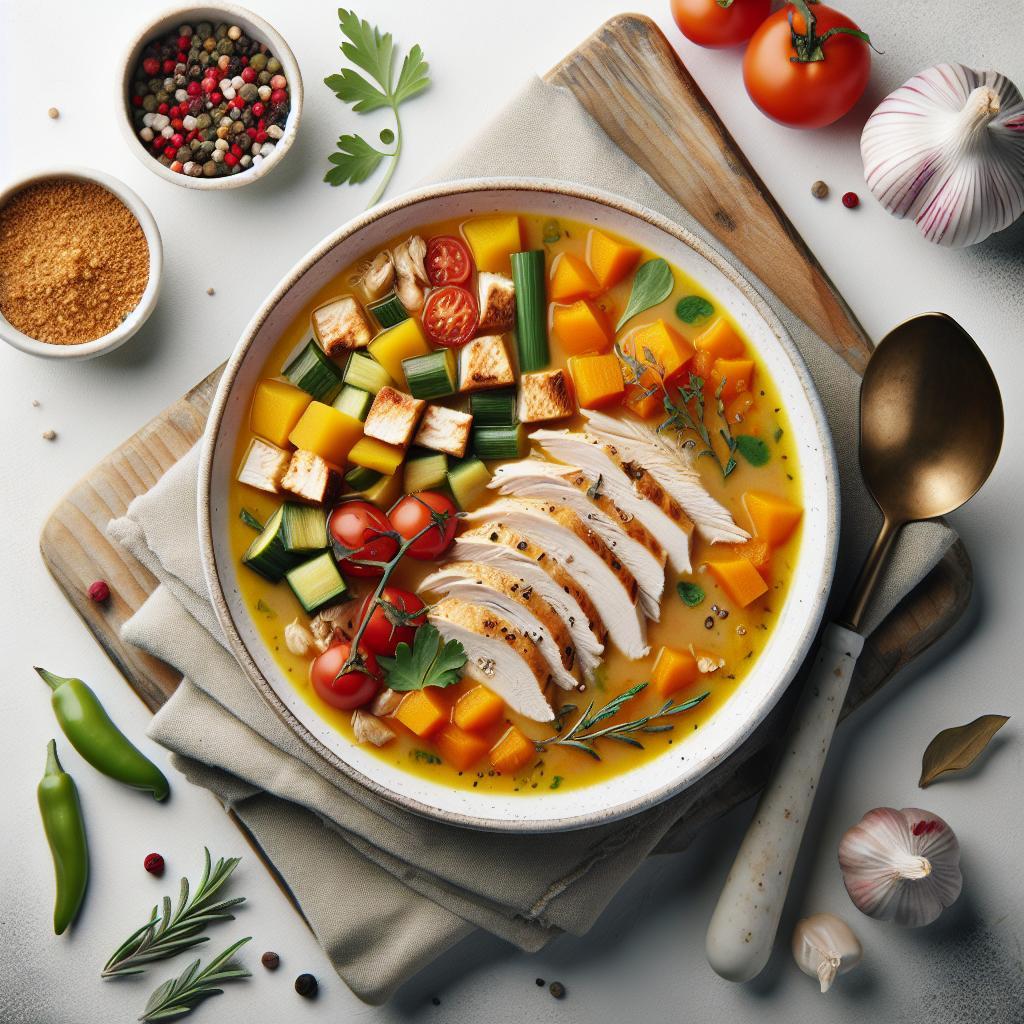
Serve in shallow bowls so the glossy purée surface and garnish contrast read well. A delicate swirl of yogurt and a scatter of toasted pepitas create a professional finish.
Choose warm-toned ceramics to enhance the soup’s orange hue, and serve immediately to preserve aromatic top notes. A final grind of pepper and a small herb sprig signal freshness.
Storage, Reheating, and Variations for Turkey Soup
Cool to room temperature before refrigerating in airtight containers. Refrigerated soup keeps three days; freeze in portioned containers for up to three months for meal prep.
For vegan variations replace turkey with roasted chickpeas or white beans and use vegetable broth. Swap yogurt for coconut cream to maintain richness while keeping a dairy-free profile.
Practical Links and Further Reading
For technique reference and ingredient background, consult Wikipedia resources listed below. These provide concise botanical and culinary context that supports recipe choices.
Suggested pages: butternut squash, Cucurbita, and thyme.
Explore related recipes on this site: turkey soup recipes and our seasonally curated page seasonal soups collection for more ideas and variations.
FAQ
Can I use leftover roasted turkey in this soup?
Yes. Diced leftover turkey adds concentrated flavor and shortens cooking time. Add cooked turkey toward the end of the simmer so it warms through without drying.
Which squash varieties work best if butternut is unavailable?
Kabocha, pumpkin, and other winter squashes work well and change sweetness and texture. Each variety alters the water content and final mouthfeel, so adjust broth accordingly.
How do I adjust the soup for a vegan diet?
Replace turkey with roasted chickpeas, white beans, or lentils and use vegetable broth. Finish with coconut cream or nut butter to retain a rich, creamy mouthfeel without dairy.
What is the best method to store and reheat leftovers?
Cool to room temperature, transfer to airtight containers, and refrigerate up to three days or freeze for longer storage. Reheat on the stovetop over low heat, adding a splash of broth to refresh texture.
Can I make this in a slow cooker or pressure cooker?
Yes. In a slow cooker, cook on low for 4–6 hours; in a pressure cooker, use high pressure for 10–12 minutes with a quick release. Brown turkey and sauté aromatics first for best flavor.
See also: turkey soup