
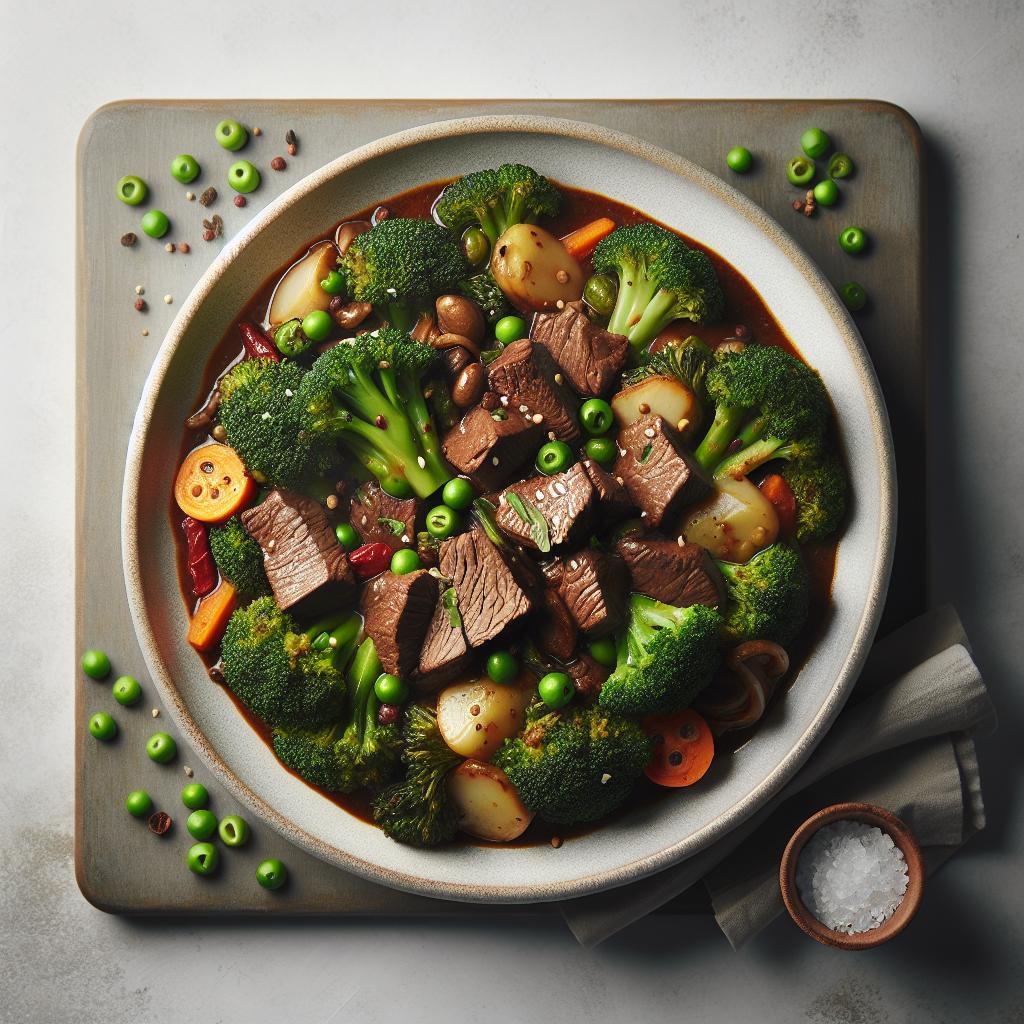

Beef stew that pairs slow-braised beef with crisp broccoli delivers both richness and bright freshness in a single bowl. This version focuses on searing, controlled simmering, and timed vegetable addition so each element keeps its best texture and flavor.
- Tip: Sear in batches to concentrate flavor without steaming the meat.
- Tip: Add broccoli near the end to retain color and snap.
- Tip: Use chuck or brisket for connective tissue that converts to gelatin.
- Tip: The stew often improves after a day—plan make-ahead servings.
The Perfect Balance of Flavors and Textures in Beef Stew
Beef stew relies on two complementary processes: Maillard searing for flavor concentration and slow gelatin extraction for body. Sear first to develop caramelized crusts, then simmer gently so collagen becomes unctuous gelatin.
Proper timing of broccoli preserves its green color and bite, creating contrast with tender beef. For background on the Maillard reaction and why searing matters, see Maillard reaction.
Recipe Overview
This recipe produces a hearty family-style portion suitable for six people when served with rice, mashed potatoes, or crusty bread. Prep is brief; the bulk of time is low-and-slow simmering to reach fork-tender results.
Plan roughly 20 minutes active preparation time and about 2 hours 30 minutes of slow cooking. If you prefer set-and-forget, transfer to a slow cooker for longer, gentler braising.
Prep and Cook Time
Preparation: 20 minutes. Trim and cube meat, chop aromatics, and mix any thickening slurry before cooking. Do as much mise en place as you can to keep searing efficient.
Cooking: 2 hours 30 minutes slow simmer. If using a slow cooker, plan 6–8 hours on low; add broccoli near the finish to maintain texture.
Yield
Serves 6 hearty portions. Adjust sides and portion sizes based on appetite and whether you serve rice, potatoes, or a vegetable-forward accompaniment.
Leftovers refrigerate well and often taste better after resting overnight; refresh broccoli separately if reheating to avoid overcooking.
Difficulty Level
Medium. The techniques—proper searing, deglazing, and maintaining a gentle simmer—require attention but are straightforward for cooks with basic stove skills. Accurate heat control is the primary challenge.
Tools needed: heavy-bottomed pot or Dutch oven and a wooden spoon for deglazing. An instant-read thermometer helps maintain an ideal simmer range.
Ingredients for Beef Stew
Choose quality components: a well-marbled cut of beef, fresh broccoli, and a clear beef broth form the backbone of this stew. Trim excessive surface fat but keep marbling that melts into the sauce.
For information on beef cuts and why certain muscles perform better in long braises, see chuck (cut).
- 2 lbs chuck roast, cut into 1½-inch cubes
- 1 tbsp olive oil for searing
- 4 cups beef broth, preferably low sodium
- 1 large onion, finely chopped
- 4 cloves garlic, minced
- 2 tbsp soy sauce (or tamari)
- 1 tbsp oyster sauce (optional)
- 1 tsp grated fresh ginger
- 1 tsp crushed red pepper flakes, adjust to taste
- 3 cups fresh broccoli florets
- 2 medium carrots, sliced diagonally
- 1 tbsp cornstarch mixed with 3 tbsp cold water (slurry)
- Salt and black pepper, to taste
- Chopped scallions and toasted sesame seeds for garnish
Instructions
Follow the sequence to maximize flavor and texture: sear, deglaze, and simmer. Maintain medium-high for searing and low for the long simmer so collagen converts without drying the meat.
Keep steps short and methodical—searing in batches, scraping browned bits, and controlling simmer temperature yields consistent results. If you need a set-and-forget option, use a slow cooker method described below.
- Prepare the beef: Pat beef cubes dry. Heat oil in a heavy pot over medium-high heat to ensure a quick, even sear.
- Sear in batches: Avoid overcrowding. Brown all sides until rich and golden, about 5–7 minutes per batch. Transfer seared pieces to a plate.
- Sauté aromatics: Reduce heat to medium. Cook onion until translucent, about 5 minutes. Add garlic and ginger and stir until fragrant, roughly 1 minute.
- Deglaze and build sauce: Add soy sauce and a splash of beef broth. Scrape browned bits; they carry concentrated savory flavor into the stew.
- Simmer the beef: Return beef to the pot with carrots and red pepper flakes. Bring to a gentle simmer, cover, and reduce heat to low. Cook 2 hours or until fork-tender.
- Add broccoli: Stir in broccoli during the final 8–12 minutes to preserve bright color and a pleasing bite. Overcooking broccoli results in dull color and mushy texture.
- Thicken the sauce: Whisk in the cornstarch slurry gradually while stirring. Cook 3–5 minutes until the broth glazes the meat and vegetables. Adjust seasoning.
- Finish and serve: Let the stew rest off heat for a few minutes. Garnish with scallions and sesame seeds before serving.
Tips for Success
Small technique adjustments yield big improvements: dry the beef before searing, brown in small batches, and deglaze to capture all the flavor. These steps give a concentrated, stock-like base without extended reduction time.
Use a heavy pot for even heat distribution; an oven-safe Dutch oven helps if you choose oven braising. For more on slow cooking vessels, see slow cooker.
When converting to an oven braise, keep the temperature between 275–300°F for even collagen conversion. Cover the pot to limit evaporation and keep meat submerged in liquid.
For internal resources on similar recipes, see our Beef Stew collection and the slow-cooker beef methods page for hands-off adaptations.
[NOTE: The preceding internal links are site-relative and designed to improve navigation and dwell time.]
Make-Ahead and Variations
The stew often improves after resting a day; flavors meld and the broth rounds out. Refrigerate in airtight containers for up to 3 days and reheat gently to avoid overcooking broccoli.
To lighten the dish, substitute half the beef broth with low-sodium vegetable stock and boost aromatics like ginger and scallions for a brighter profile. Mushrooms or miso will increase umami without extra salt.
Serving Suggestions and Nutrition
Serve in shallow bowls to showcase glossy sauce and contrasting textures. Pairings like jasmine rice, mashed potatoes, or rustic bread help balance sauce richness and create a complete plate.
Per serving this dish provides substantial protein and moderate fat. Vegetables add fiber and micronutrients, while portioning sides controls carbohydrate intake.
| Nutrient | Per Serving |
|---|---|
| Calories | 340 kcal |
| Protein | 38 g |
| Carbohydrates | 12 g |
| Fat | 14 g |
Freeze in airtight containers for up to 3 months if you prefer long-term storage. Thaw overnight in the refrigerator and reheat gently; refresh broccoli separately if needed to maintain texture.
Q&A
Short, practical answers to common execution questions keep the cooking process predictable. Use these notes while you cook to troubleshoot quickly.
These responses focus on technique and substitutions that preserve texture and flavor without adding unnecessary complexity.
Q1: What makes this beef stew a comfort food classic?
Slow-braised beef releases gelatin that gives the broth a silky mouthfeel while vegetables provide freshness and balance. That combination yields a bowl that is warming and satisfying.
Q2: How is this stew different from quick stir-fry beef and broccoli?
Stir-fries cook quickly at high heat and rely on tender cuts and thickening sauces. This stew uses prolonged simmering to break down connective tissue and develop a richer, thicker broth.
Q3: What cuts of beef should I use?
Chuck, brisket, or short ribs work best because they contain collagen that converts into gelatin during slow cooking. These cuts become tender and add body to the sauce.
Q4: Can I substitute other vegetables for broccoli?
Yes. Leafy greens such as kale or Swiss chard can be added late, while root vegetables like parsnips and turnips pair well with beef richness and can be cooked longer.
Final Thoughts
This beef stew with broccoli rewards precise technique: sear to build flavor, simmer low to extract gelatin, and add broccoli late for bright contrast. These steps create a consistently excellent, comforting meal.
Use the make-ahead suggestions and internal recipe links to plan batch cooking and variations for weeknight dinners or meal prep. Practical technique produces repeatable, restaurant-level results at home.
FAQ
How do I prevent the beef from drying out?
Maintain a low, steady simmer after searing so collagen converts to gelatin gradually. Keep the pot covered to limit evaporation and keep the beef partially submerged in liquid.
Also, avoid overcooking small cubes; once fork-tender, remove from heat and allow a short rest to redistribute juices.
Can I thicken the stew without cornstarch?
Yes. Reduce the broth uncovered until it concentrates, or whisk in a beurre manié (equal parts soft butter and flour) near the end to achieve a similar glaze. Both methods add body without altering flavor sharply.
Another option is puréeing a portion of cooked carrots and stirring them back into the pot for natural thickening and added sweetness.
What temperature is ideal for slow simmering?
A gentle simmer roughly equals 180–205°F (82–96°C). Look for small, steady bubbles rather than a rolling boil to avoid muscle fiber tightening and dry meat.
An oven at 275–300°F provides steady low heat if you transfer the pot to the oven for a consistent braise.
Is it safe to freeze the stew?
Freeze in airtight containers for up to 3 months. Thaw in the refrigerator overnight and reheat gently. Add fresh or briefly steamed broccoli after reheating to maintain the vegetable’s texture.
How can I boost umami without adding salt?
Use mushrooms, a small amount of miso, or anchovy paste to amplify savory notes. A splash of low-sodium soy or a teaspoon of mushroom powder concentrates umami without excessive sodium.
For more on the key ingredients, see beef and broccoli.
See also: beef stew