
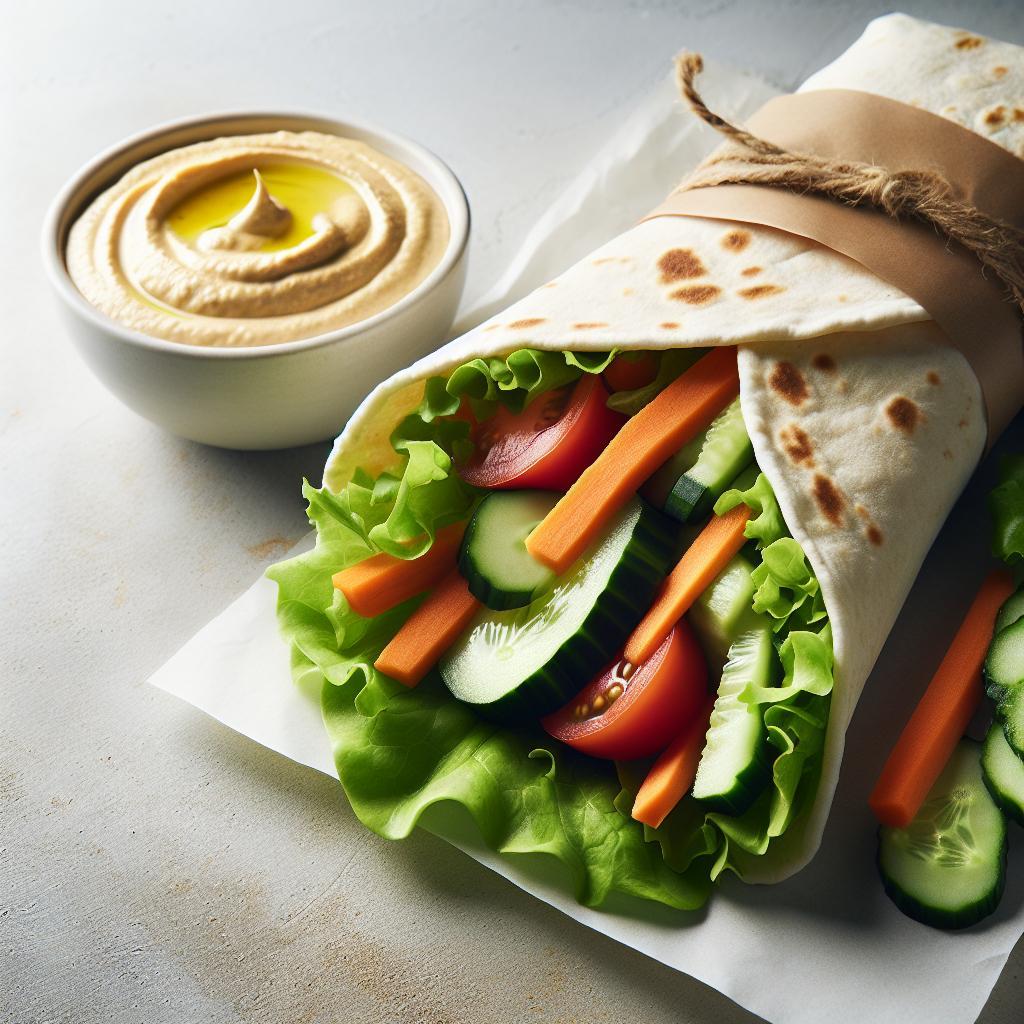

Bright, vibrant, and nourishing, homemade hummus veggie wraps pair creamy, freshly blended hummus with crisp seasonal vegetables for a balanced, portable meal.
- Prep and Cook Time
- Yield and Difficulty
- Ingredients
- Instructions
- Tips for Success
- Serving Suggestions
- Nutrition Snapshot
- FAQ
- What makes homemade hummus veggie wraps better than store-bought?
- How do I make hummus creamy and smooth every time?
- Which vegetables hold up best inside a wrap?
- Can I prep these for meal prep and how long will they last?
- What wrap options work if I need gluten-free or low-carb?
- Final Notes
This guide presents clear technique, practical ingredient swaps, and storage guidance so you can make consistent, flavor-forward wraps every time. For background on the classic spread, see hummus, and for the main legume used, review chickpea.
- Key takeaways: Make hummus silky by blending hot-peeled or well-processed chickpeas.
- Layer smart: Use a thin hummus barrier and place crunchy leaves closest to the wrap surface to preserve texture.
- Meal prep: Store components separately for best freshness; assemble within 24 hours.
Prep and Cook Time
Plan for a quick build: active prep takes about 20 minutes and optional roasting adds 10 minutes. These timings let you assemble four hearty wraps efficiently.
Use the optional roast step when you want warm, caramelized vegetables; otherwise the recipe remains fully no-cook and ready in twenty minutes.
- Preparation: 20 minutes
- Cook Time: 10 minutes (for any roasted veggies, optional)
- Total Time: 30 minutes
Yield and Difficulty
This recipe yields 4 hearty wraps, ideal for lunch or a light dinner for a small group or meal prep. The method suits cooks of all levels and focuses on technique rather than complexity.
Difficulty is Easy. You need basic knife skills and a food processor or high-speed blender to achieve a silky hummus texture.
Ingredients
Ingredients split into hummus base and wrap components let you scale or swap items per preference or diet. Read each subsection for specific proportions and alternative suggestions.
Use quality staples: canned or cooked chickpeas, a good olive oil, and fresh produce improve the final flavor and mouthfeel significantly.
Hummus Ingredients
For smooth hummus, combine chickpeas with tahini, lemon, olive oil, garlic, and precise seasoning. Learn more about tahini to understand its impact on texture and flavor.
Use the following: 1 ½ cups canned chickpeas (drained and rinsed), ¼ cup tahini, 3 tbsp fresh lemon juice, 2 tbsp extra virgin olive oil, 2 garlic cloves, ½ tsp ground cumin, ½ tsp smoked paprika, salt to taste, and 3–4 tbsp cold water to adjust consistency.
Wrap Ingredients
Select sturdy, flexible wraps that hold fillings without tearing; whole wheat or spinach tortillas work well. For alternatives, large collard leaves or romaine can serve as low-carb wraps; review the structure of the traditional tortilla to match flexibility needs.
Use: 4 large tortillas, 1 cup julienned carrots, 1 cup thinly sliced red bell peppers, 1 medium seeded cucumber cut into strips, 1 cup chopped romaine, ½ cup shredded purple cabbage, ¼ cup chopped cilantro or parsley, and optional ½ avocado sliced.
Instructions
Follow the steps in sequence to preserve texture and flavor. Each phase focuses on a single task so you maintain control over consistency and timing.
Work efficiently: clean and prep produce first, then make hummus while vegetables drain and dry. This parallel workflow shortens total time.
Make the Creamy Hummus
Place chickpeas, tahini, lemon juice, garlic, olive oil, cumin, and smoked paprika into a food processor. Blend until smooth, scraping the sides; add cold water one tablespoon at a time to reach a luscious, spreadable consistency.
Taste and season with salt incrementally. For extra silk, peel the skins from a handful of chickpeas before blending when time permits.
Prepare the Veggies
Wash and dry all produce thoroughly; moisture causes soggy wraps. Julienne carrots, thinly slice peppers, seed the cucumber, shred cabbage, and chop lettuce and herbs for layered texture.
Arrange vegetables in bowls for assembly. Quick roasting of peppers or carrots adds sweetness; roast at 400°F for 8–10 minutes if using.
Assemble and Wrap
Lay a tortilla flat and spread a 3–4 tablespoon layer of hummus across approximately three-quarters of its surface. Place greens first (closest to the hummus) to create a moisture barrier, then add carrots, peppers, cucumber, cabbage, cilantro, and avocado slices if using.
Fold the bottom edge up, tuck the sides inward, and roll snugly to form a tight log. Wrap in parchment or press lightly with a grill pan for 30 seconds if you prefer a warm, sealed finish.
Tips for Success
Small technique changes produce big sensory improvements. For example, using cold water at the end of blending lifts the emulsified tahini and produces a silkier hummus.
Layering order matters: place crisp leaves against the hummus, then add firmer vegetables on top. This simple barrier preserves crunch during storage and transport.
Serving Suggestions
Serve wraps with extra hummus for dipping and a simple side salad for variety. Garnish with toasted sesame seeds or a light chili-oil drizzle to add visual contrast and a flavor lift.
Pair with chilled herbal tea or sparkling lemon water to refresh the palate. For added protein, include grilled chicken, roasted chickpeas, or crumbled feta as optional fillings.
Nutrition Snapshot
Below is an estimated nutrient table per serving based on typical ingredient portions. Use this as a reasonable guideline for planning balanced meals.
| Nutrient | Per Serving |
|---|---|
| Calories | 320 kcal |
| Protein | 12g |
| Carbohydrates | 38g |
| Fat | 11g |
FAQ
What makes homemade hummus veggie wraps better than store-bought?
Homemade wraps let you control ingredient quality, salt, and oil levels for a fresher result. You also avoid unnecessary preservatives and customize textures and flavors per meal.
How do I make hummus creamy and smooth every time?
Process chickpeas thoroughly and add cold water gradually to reach the right spreadable consistency. Using a food processor with sharp blades and occasionally scraping the bowl improves uniformity.
Which vegetables hold up best inside a wrap?
Crunchy vegetables like carrots, bell peppers, and cabbage keep texture while cucumbers and avocado add freshness. Always dry vegetables thoroughly and layer leafy greens closest to the hummus to create a moisture barrier.
Can I prep these for meal prep and how long will they last?
For best results, store hummus and chopped vegetables separately and assemble wraps within 24 hours. If you must assemble ahead, wrap tightly in parchment and refrigerate, but expect some softening over time.
What wrap options work if I need gluten-free or low-carb?
Use gluten-free tortillas or large leafy greens like collard leaves for a low-carb base. Both alternatives provide structure while keeping the wrap portable and satisfying.
Final Notes
These fresh hummus veggie wraps offer reliable technique and flexible ingredient choices for everyday meals. They present a nutritious, flavorful option that scales from single lunches to family meal prep.
Practice the assembly and blending steps a few times to dial in your preferred hummus texture and vegetable mix. You will consistently produce wraps that stay crisp, flavorful, and ready to go.

See also: hummus wraps