
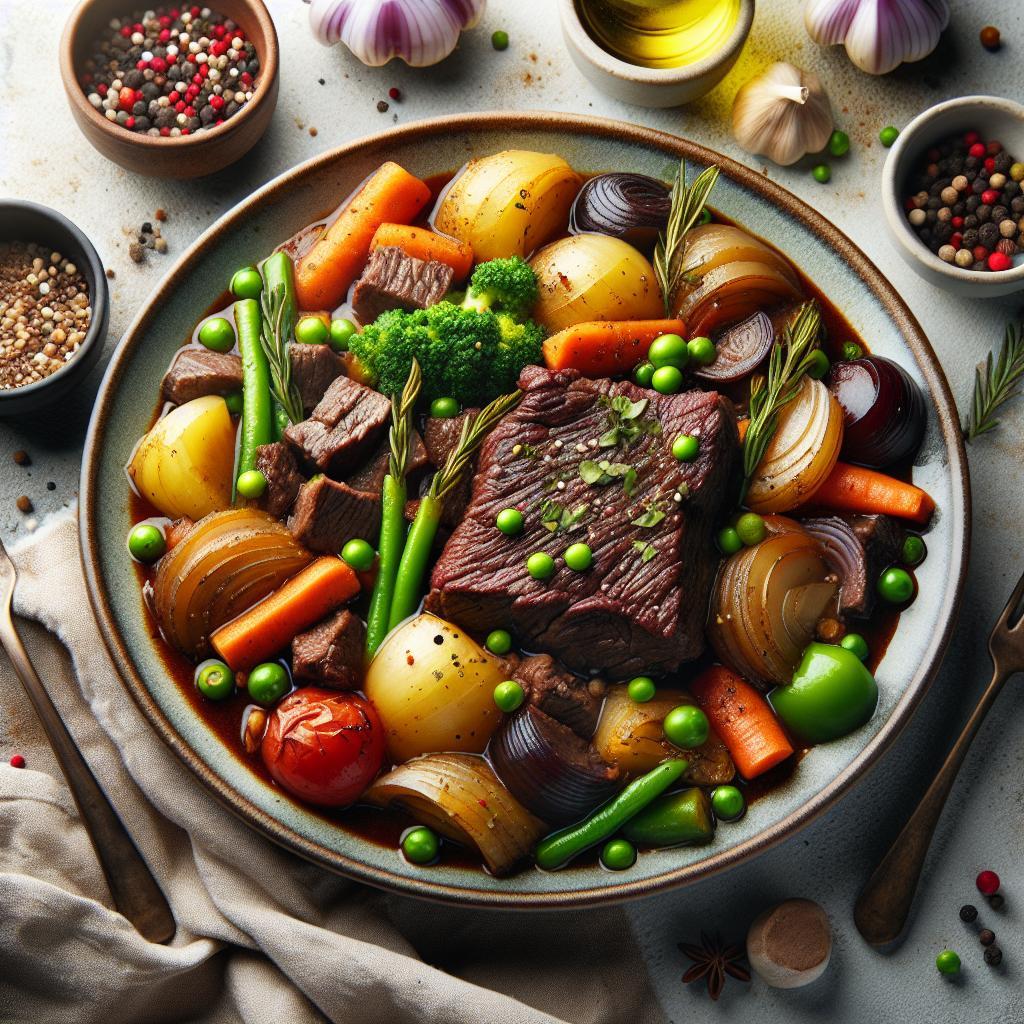

Hearty Slow Cooker Beef Stew: Comfort in Every Spoonful
When the world outside feels chilly and hectic, a warm bowl of beef stew restores balance and comfort. This slow cooker version turns inexpensive cuts into tender, flavorful bites that satisfy deeply.
- Why This Slow Cooker Method Works
- Prep and Cook Time
- Yield and Difficulty
- Ingredients
- Instructions
- Tips for Success
- Serving Suggestions
- Nutritional Overview
- FAQ
- How long should I cook beef stew in a slow cooker?
- Which beef cut is best for slow cooker stew?
- Can I make this stew ahead of time?
- How do I thicken the stew without flour?
- Can I adapt this for dietary needs?
- Wrapping Up
- Cook low and slow: it yields tender meat and deeper flavor.
- Brown first: searing beef adds savory depth that the slow cooker can’t create on its own.
- Use starchy veg: potatoes or parsnips help thicken naturally while adding body.
- Make ahead: flavors meld overnight; leftovers often taste better the next day.
Why This Slow Cooker Method Works
Slow cookers maintain low, steady heat that breaks down collagen in tougher beef cuts into gelatin, improving mouthfeel and richness. That gentle process also lets aromatics and herbs infuse the whole pot without overcooking vegetables.
For background on the technique, see the slow cooker reference on technique and appliances. Use that knowledge to adjust timing and liquid ratios for your model.
Prep and Cook Time
Preparation: 20 minutes; Cooking: 7 hours on low or 4 hours on high. Shorter high-heat cycles produce edible results, but low heat maximizes tenderness and gelatin extraction.
Total time including searing and finishing runs about 7 to 7.5 hours on low. Plan ahead so you can brown the meat and sauté aromatics before placing everything in the cooker.
Yield and Difficulty
This recipe yields about six hearty portions suitable for family dinners or meal prep. It rates easy for cooks who can sear meat and follow basic timing; the slow cooker handles the rest.
If you want to scale the recipe, increase liquids proportionally and avoid filling the cooker beyond two-thirds to maintain consistent heat circulation. For tips on cuts, consult the beef cuts guide.
Ingredients
Use quality ingredients in balanced proportions for the richest result. The list below uses beef chuck, aromatics, root vegetables, and modest seasonings to build depth.
Substitute sparingly and keep liquids controlled so the stew achieves a thick, clingy consistency rather than a thin broth. For tomato detail, see tomato paste.
- 2 lbs beef chuck roast, trimmed and cut into 1½-inch cubes
- 3 tbsp olive oil
- 1 cup all-purpose flour, for dredging
- 1 large yellow onion, diced
- 3 cloves garlic, minced
- 4 large carrots, peeled and sliced
- 3 stalks celery, sliced
- 4 medium russet potatoes, peeled and cubed
- 2 cups low-sodium beef broth
- 1 cup water
- 1 tbsp tomato paste
- 2 tsp Worcestershire sauce
- 1 tsp dried thyme
- 1 tsp dried rosemary
- 2 bay leaves
- Salt and black pepper, to taste
- 2 tbsp fresh parsley, chopped for garnish
Instructions
Follow the steps for a reliable, restaurant-worthy stew. Short prep and a few technique priorities yield consistent, deep flavor from the slow cooker.
Keep each step focused: sear, sauté, assemble, and then cook low and slow. Finish by correcting seasoning and optionally thickening the sauce if needed.
- Prepare the beef: Pat cubes dry, then dredge lightly in flour, shaking off excess to avoid a pasty coating.
- Sear the meat: Heat oil in a skillet on medium-high and brown beef in batches until caramelized; transfer to the slow cooker.
- Sauté aromatics: In the same pan, cook onion until translucent, add garlic for one minute, then scrape browned bits into the cooker for flavor.
- Add vegetables and liquids: Layer carrots, celery, and potatoes. Whisk broth, water, tomato paste, Worcestershire, and herbs; pour over contents and add bay leaves.
- Cook low and slow: Cover and cook on low for 7 hours or on high for 4 hours until beef is fork-tender and vegetables are soft.
- Finish: Remove bay leaves, taste, and adjust seasoning. If the sauce is thin, thicken with a cornstarch slurry in the last 15 minutes.
- Garnish and serve: Sprinkle chopped parsley just before serving for brightness.
Tips for Success
Choosing the beef: Use beef chuck for its marbling; connective tissue converts to gelatin and yields a silky mouthfeel. Lean cuts lose moisture and can turn dry even in long cooks.
Layer flavors: Browning meat and sautéing aromatics create Maillard compounds and fond that deepen the final stew. Never skip this step when you want a richer sauce.
[hint-block-replace]
After the expert tip, allow the stew to rest for at least 20 minutes before serving to let the juices redistribute. Resting also helps the sauce thicken naturally as it cools slightly.
Vegetable and Thickening Options
For texture balance, add sturdier root vegetables early and delicate additions like peas during the last 30 minutes. If you want a creamy body, mash a few potatoes into the broth.
To thicken without flour, stir 1 tablespoon cornstarch into 2 tablespoons cold water and add during the last 15 minutes. This yields a glossy, clingy sauce without altering flavor noticeably.
Serving Suggestions
Serve stew hot in deep bowls with a garnish of fresh parsley and cracked black pepper. Offer crusty bread or buttered egg noodles for soaking up the sauce and creating a more substantial meal.
Complement the richness with a simple green salad dressed with lemon vinaigrette to add acidity and crunch. For additional ideas, see our internal collections on slow cooker recipes and beef recipes for pairing inspiration.
Nutritional Overview
The following approximate nutrition reflects common portions for this stew: moderate protein, balanced carbs from root vegetables, and controlled fat from chuck and cooking oil. Adjust ingredients to meet dietary targets.
Use leaner cuts or reduce oil for lower fat, or add legumes for higher fiber and satiety. For general context on the dish type, review beef stew background and variations.
| Nutrient | Per Serving |
|---|---|
| Calories | 390 kcal |
| Protein | 35 g |
| Carbohydrates | 28 g |
| Fat | 15 g |

FAQ
How long should I cook beef stew in a slow cooker?
Cook on low for 7 to 8 hours for best tenderness and flavor development. If pressed for time, 4 to 5 hours on high works, but expect slightly firmer meat and less gelatin in the sauce.
Which beef cut is best for slow cooker stew?
Beef chuck is the preferred choice because the marbling and connective tissue break down into gelatin, producing tender meat and a rich mouthfeel. For an overview of cuts and their uses, consult the beef cuts resource.
Can I make this stew ahead of time?
Yes. Stew often improves after a night in the refrigerator as flavors meld and the sauce firms slightly. Reheat gently on the stovetop or in a slow cooker on low to preserve texture.
How do I thicken the stew without flour?
Use a cornstarch slurry (1 tbsp cornstarch + 2 tbsp cold water) added in the final 15 minutes. Alternatively, mash a portion of the potatoes into the sauce for a natural, starch-based thickener.
Can I adapt this for dietary needs?
Yes. For gluten-free stew, use a gluten-free flour or cornstarch for dredging and thickening. To lower fat, choose a leaner cut and reduce added oil while maintaining proper browning technique.
Wrapping Up
Hearty slow cooker beef stew rewards patience and basic technique with a reliably comforting meal. Follow these expert tips to achieve consistent tenderness, rich flavor, and crowd-pleasing results every time.
Keep a reference to slow cooker best practices and cut selection handy, then adapt vegetables and seasonings to your household preferences. A well-made stew becomes a go-to centerpiece for cozy dinners and easy leftovers.
See also: beef stew