
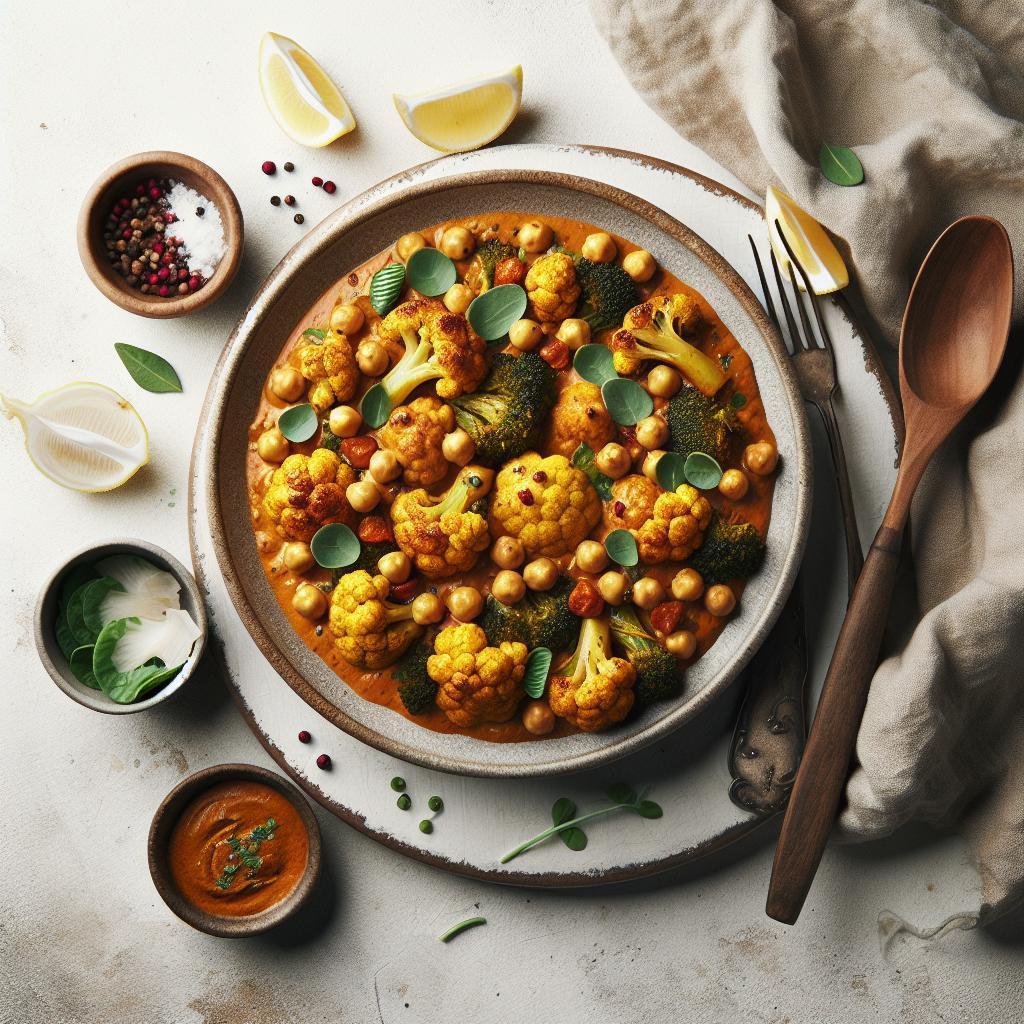

Roasted Cauliflower & Chickpea Curry: A Flavorful Feast
Cauliflower curry here pairs smoky roasted florets and crisped chickpeas with a layered, spiced coconut sauce. The approach uses high-heat roasting, progressive spice toasting, and a bright finish so every bite stays textured and balanced.
- Roast first: caramelization adds savory depth and texture to this cauliflower curry.
- Layer spices: bloom whole spices and toast ground spices early to release oil and aroma.
- Finish bright: acid from lemon or lime lifts richness and clarifies flavors.
- Scale easily: the method doubles well for batch cooking or weeknight meals.
Prep and Cook Time for Cauliflower Curry
Preparation: 15 minutes. Roast at high heat for 25 minutes and simmer the sauce 15–20 minutes. Work in parallel: while the cauliflower roasts, build the sauce to minimize active time.
Expect about 60 minutes total from start to finish for this cauliflower curry. Use the oven time to prepare rice, naan, or a cooling side salad to complete the plate.
Yield for Cauliflower Curry
This recipe serves 4 generous portions when plated with rice or flatbread. The dish scales predictably: double ingredients for 8 servings or halve for two people without affecting technique.
Leftovers improve after a night in the fridge as the sauce and roasted pieces meld. Reheat slowly on low heat to preserve texture and prevent chickpeas from becoming dry.
Difficulty Level for Cauliflower Curry
Skill level: Medium. The technique focuses on two dependable methods: high-temperature roasting and progressive spice cooking. These steps reward precision rather than advanced skill.
Begin with accurate knife work and drying the florets; small prep details—like removing excess water—make the biggest texture difference when roasting. Even home cooks will achieve excellent, repeatable results.
Ingredients
These core ingredients build a balanced, aromatic cauliflower curry. Use good-quality canned coconut milk for consistent creaminess and store-bought chickpeas for convenience.
Substitutions work well: swap coconut milk for cashew cream if needed, or substitute other legumes. See notes below for textural tweaks and ingredient links for technical details.
- 1 medium head cauliflower, cut into bite-sized florets
- 1 can (15 oz) chickpeas, drained and rinsed
- 3 tbsp olive oil, divided
- 1 tsp smoked paprika
- 1 tsp ground cumin
- 1 tsp turmeric powder
- 1/2 tsp cayenne pepper (optional)
- 1 large onion, finely chopped
- 3 cloves garlic, minced
- 1 inch fresh ginger, grated
- 2 medium tomatoes, pureed
- 1 cup coconut milk
- 1/2 cup vegetable broth
- 1 tbsp garam masala
- Salt to taste
- Fresh cilantro, chopped for garnish
- Juice of half a lemon
For background on the produce and pantry items used here, consult trusted references: cauliflower, chickpea, and coconut milk. Use those pages to confirm storage and basic culinary traits.
Instructions
Follow the sequence: roast, build the sauce, then combine and finish. This order preserves the roasted texture and concentrates the flavors properly for a successful cauliflower curry.
Use high heat in the oven to develop color, and moderate stovetop heat for sauce work to avoid scorching. Stir the sauce frequently during simmering to maintain an even texture and to prevent sticking.
Roast the Vegetables and Chickpeas
- Preheat the oven to 425°F (220°C). Toss cauliflower florets and chickpeas with 2 tablespoons olive oil, smoked paprika, cumin, turmeric, cayenne, and a pinch of salt. Spread in a single layer on a parchment-lined tray.
- Roast for 25 minutes, flipping once. Aim for golden edges and slight charring for a nutty aroma. Proper roasting concentrates sugars and adds an essential smoky note to this cauliflower curry.
Make the Curry Sauce
- Heat the remaining tablespoon of oil in a large skillet. Add the chopped onion and sauté over medium heat until translucent and lightly golden, about 7 minutes. Slow caramelization builds a sweet, savory base.
- Add garlic and ginger. Cook 1–2 minutes until fragrant but not browned. Then stir in the pureed tomatoes and simmer for 8 minutes until thickened.
- Incorporate garam masala and salt, then add coconut milk and vegetable broth. Combine to form a smooth sauce and simmer gently so flavors meld without breaking the coconut milk.
Finish and Serve
Fold the roasted cauliflower and chickpeas into the sauce. Simmer uncovered for 8–10 minutes so the sauce clings to the roasted pieces and thickens slightly. This final simmer integrates the roasted flavor without sogginess.
Finish with lemon juice and chopped cilantro. The acid brightens the curry and balances richness. Serve with rice or flatbread and garnish to taste.
Tips for Success with Cauliflower Curry
Dry the florets and chickpeas thoroughly before roasting to ensure crisping rather than steaming. A well-dried surface develops a superior Maillard reaction and better texture in the final cauliflower curry.
Avoid overcrowding the tray; give pieces breathing room so hot air circulates. Flip halfway through to develop uniform color and even texture across the pan.
For creamier sauce texture, blend a quarter of the chickpeas with coconut milk and stir the puree back into the pan. This trick thickens the sauce without adding dairy or changing the flavor profile of the cauliflower curry.
Serving Suggestions and Pairings for Cauliflower Curry
Serve this curry over fluffy basmati rice or with warm flatbread to soak up the sauce. A cooling yogurt raita or cucumber salad balances spice and richness effectively.
Complement the dish with a small chutney or pickled vegetable for contrast and acidity. Toasted nuts or crispy shallots add welcome crunch and a more sophisticated texture contrast.
Explore related recipes on the site for pairing ideas: roasted cauliflower recipes and additional chickpea recipes that share technique and flavor profiles.
Nutritional Snapshot
This cauliflower curry is plant-forward, offering fiber and protein from chickpeas and healthy fats from coconut milk. The dish balances macronutrients for a satisfying vegetarian main.
Per serving estimates depend on portion size and accompaniments. Use leaner coconut milk or lower oil to adjust calories, or serve over bulkier grains to increase carbohydrates for active eaters.
| Nutrient | Per Serving |
|---|---|
| Calories | 320 |
| Protein | 12g |
| Carbohydrates | 40g |
| Fat | 12g |

Why These Ingredients Work in a Cauliflower Curry
Cauliflower provides a neutral, absorbent canvas that crisps when roasted and soaks up the coconut sauce. Controlled roasting concentrates sugars and changes texture, giving the curry contrast between tender interior and browned exterior.
Chickpeas add plant protein and bite while holding shape under heat. Coconut milk smooths acidity and delivers richness without dairy. For technical notes consult the curry reference for historical context and the role of spices in flavor building.
FAQ
What makes roasted cauliflower and chickpea curry special?
Roasting amplifies umami and caramelization, adding a toasty, savory layer to the sauce. Combined with spiced coconut sauce, the textures and aromas create a well-rounded vegetarian main.
Using roasted components prevents the dish from tasting flat; the contrast between roast and sauce is essential to an excellent cauliflower curry.
How do I roast cauliflower perfectly for this curry?
Dry the florets thoroughly, toss with oil and spices, and spread them in a single layer on a hot tray. Roast at 425°F (220°C) until golden, flipping once for even browning.
Smaller, uniformly sized florets brown more predictably. Remove any overcrowded pieces and roast in batches if necessary to retain crispness.
Can I substitute other legumes or vegetables?
Yes. Lentils, white beans, or diced sweet potato work as alternatives though texture will differ. Adjust cooking times and seasoning to match the substitute ingredient’s water content.
For leafy greens, add spinach at the end of the simmer to wilt quickly without losing color or nutrient value.
Is this curry suitable for vegan and gluten-free diets?
Yes. The recipe uses plant-based ingredients by design. Confirm that packaged spices and broth are labeled gluten-free if you require strict gluten-free handling.
Swap in gluten-free sides like rice or certified gluten-free flatbread to keep the full plate compliant with dietary restrictions.
How can I make the curry creamier without coconut milk?
Blend soaked cashews into a smooth cream or pulse some cooked chickpeas with a splash of broth for a silky texture. These options maintain the plant-based profile while increasing body and mouthfeel.
Adjust seasoning after adding thickened bases, as blends can mute spice intensity. Finish with acid to brighten the final dish.
See also: Technical and culinary notes on basmati rice and ingredient specifics at chickpea.
See also: cauliflower curry