

Umami sits at the center of savory cooking, the taste that makes broths, sauces and roasted vegetables feel complete. Chefs and food scientists study how specific molecules create that deep, mouth-filling sensation and learn to apply those principles to everyday dishes.
- Tomatoes are rich in free glutamate, a primary umami contributor.
- Mushrooms supply nucleotides that synergize with glutamates.
- Cooking methods like roasting and browning release more umami molecules.
- Smart pairings boost savory depth without excessive salt.
Understanding the chemistry makes you deliberate about technique rather than guessing. Practical steps—choice of variety, heat control and finishing—deliver predictable umami impact.
Prep and Cook Time
This recipe balances short active time with a little roasting to concentrate flavor. Plan for a quick sauté plus a brief oven step to extract and marry umami compounds effectively.
Prep is minimal but purposeful: dice, slice and get aromatics ready so heat treatment proceeds without interruption. That keeps Maillard reactions and caramelization controlled for maximum savory payoff.
- Preparation: 15 minutes
- Cooking: 30 minutes
- Total: 45 minutes
Yield & Difficulty
Serves 4 generous portions when used as a sauce or topping. The technique suits home cooks who want to improve flavor control without advanced skills.
Difficulty: Medium. The recipe emphasizes heat management and timing rather than complex techniques. Follow the sequence for predictable results.
Ingredients
Ingredient choice drives how much umami you extract; ripe fruit and firm mushrooms perform best. Use quality olive oil and a modest amount of savory seasonings to support—not mask—the natural chemistry.
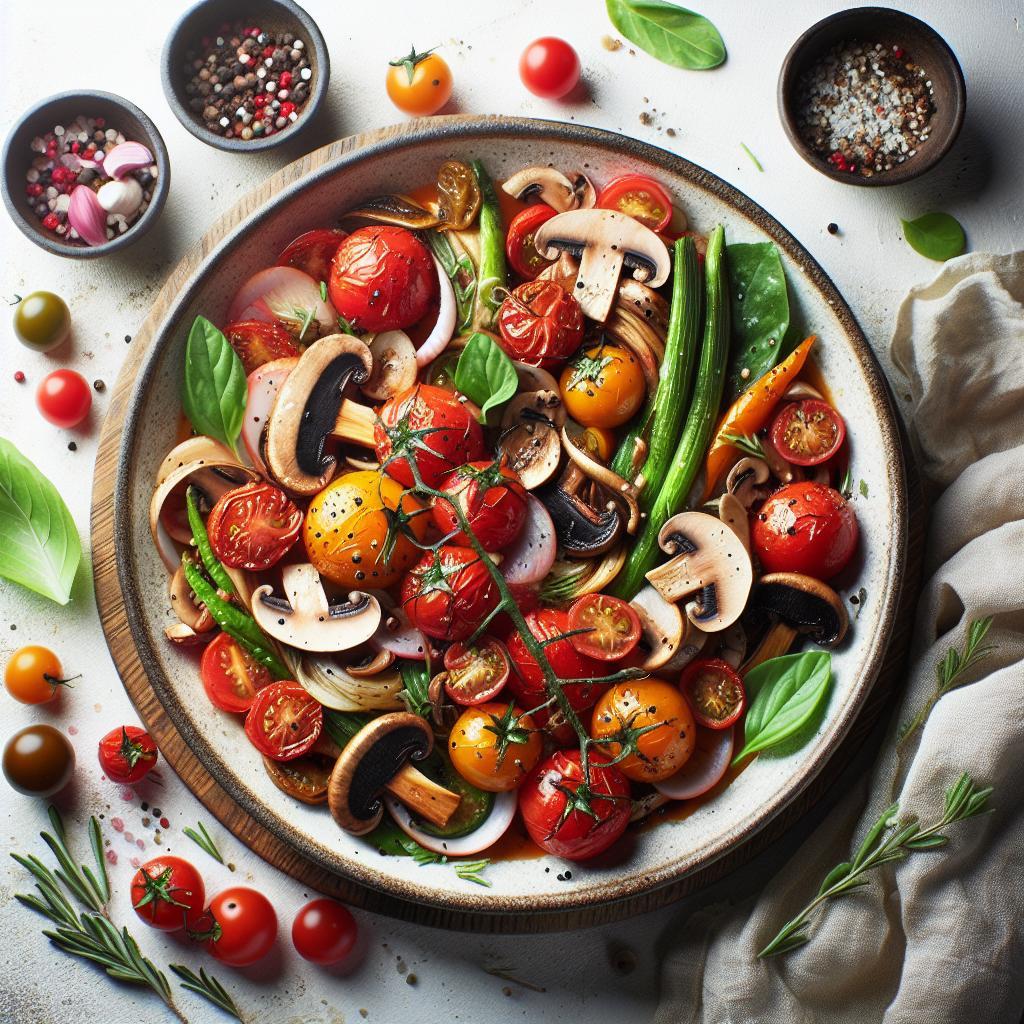
- 3 large ripe tomatoes, diced (Roma or vine-ripened)
- 250g cremini mushrooms, cleaned and sliced
- 1 medium yellow onion, finely chopped
- 3 cloves garlic, minced
- 2 tbsp extra virgin olive oil
- 1 tbsp soy sauce (adds controlled umami)
- 1 tbsp tomato paste (concentrated flavor)
- ½ cup vegetable broth
- 1 tsp dried oregano
- Salt and freshly ground black pepper, to taste
- Fresh basil leaves, for garnish
- Grated Parmesan cheese (optional for extra umami)
Instructions
Start with temperature control: roast to concentrate sugars and glutamates, then use medium heat to build a savory base. Sequence matters; roast first, then build the sauce so each ingredient contributes fully.
Follow the steps deliberately and taste as you go. Small adjustments to salt, acidity or finish can change perceived umami without masking the dish’s core flavors.
- Roast the tomatoes: Preheat oven to 425°F (220°C). Toss diced tomatoes with 1 tablespoon olive oil on a sheet and roast 12–15 minutes until edges caramelize.
- Sauté aromatics: Heat remaining olive oil in a large skillet over medium. Cook onion and garlic until soft and translucent, about 4–6 minutes, forming a savory backbone.
- Cook mushrooms: Add sliced mushrooms and raise heat to medium-high briefly to brown them evenly, about 6–8 minutes. Browning releases nucleotides and concentrates their savory profile.
- Enhance umami: Stir in tomato paste and soy sauce, coating the vegetables. The paste-add and soy provide concentrated glutamates and seasoning that deepen the sauce.
- Add liquids and simmer: Add roasted tomatoes and vegetable broth, sprinkle oregano, then simmer uncovered 8–10 minutes to meld flavors and reduce slightly.
- Season and rest: Adjust salt and pepper. Remove from heat and rest 5 minutes; resting lets flavor molecules redistribute for a balanced finish.
- Serve: Spoon the sauce over pasta, grains, or grilled vegetables. Finish with basil and optional Parmesan for expanded savory notes.
Science of Umami
Umami arises when specific molecules bind to specialized taste receptors on the tongue, amplifying savory perception. The key players include free glutamate and certain nucleotides that interact synergistically to heighten flavor.
Tomatoes contain abundant free glutamate, while many edible fungi supply nucleotides such as inosinate. Combining sources yields a greater response than either alone, a practical principle chefs exploit for depth and balance.
Key Compounds and Mechanisms
Glutamate refers to the amino acid often freed during ripening and heat; it stimulates umami receptors directly. See the biochemical background on glutamic acid for molecular context.
Nucleotides such as inosinate amplify receptor response when paired with glutamate. For a general overview of the umami concept and its role in taste perception, review the umami entry.
Tomato biochemistry changes with ripeness and heat; see how cellular breakdown releases more free amino acids by reference to the tomato article. Likewise, the structural features of edible fungi influence nucleotide content; explore the mushroom page for species context.
Tips for Success
Choose fully ripe tomatoes to maximize innate glutamate. Roasting concentrates sugars and opens cells so more free glutamates become available.
Prefer cremini or dried shiitake rather than watery button types to avoid a thin sauce. Proper browning yields both texture and volatile compounds that enhance savory perception.
If you want additional layers without excess salt, use a small splash of soy sauce or a teaspoon of miso dissolved into the broth. These fermented additions add complex molecules that complement natural glutamates.
Serving Suggestions
This sauce works as a pasta topping, a grain bowl binder, or a warm condiment for roasted vegetables. Toss with al dente spaghetti or spoon over creamy polenta to highlight texture contrast and depth.
Try it as a base for protein: grilled chicken or seared tofu both benefit from the sauce’s savory lift. For vegetarian richness, finish with grated Parmesan or a sprinkle of nutritional yeast for a vegan option.
For more plant-forward ideas, see related recipes like our Vegan Umami Boosters and the pasta variants under Pasta Sauces. These internal resources offer techniques to layer umami across menus.
Nutrition Snapshot
This sauce provides modest calories with vegetables as the primary nutrient source. When paired with whole-grain pasta or polenta, it becomes a balanced, satisfying meal with fiber and micronutrients.
| Nutrient | Per Serving |
|---|---|
| Calories | 180 kcal |
| Protein | 5g |
| Carbohydrates | 18g |
| Fat | 9g |
FAQ
What is umami and how does it differ from other tastes?
Umami describes a savory sensation driven by specific molecules like glutamate and nucleotides. Unlike sweet or salty, umami enhances the perceived fullness and roundness of flavors rather than supplying a single dominant note.
Why do cooked tomatoes and mushrooms taste more savory?
Cooking breaks cell walls and frees amino acids plus ribonucleotides, increasing the abundance of umami-active molecules. Maillard browning and caramelization also produce volatile compounds that intensify flavor complexity.
Can I get similar umami from vegetarian ingredients?
Yes. Plant sources such as tomatoes, mushrooms, fermented soy products, and aged plant-based cheeses provide glutamates and nucleotides. Combine different sources for synergy rather than relying on high salt alone.
How should I store and reheat the sauce to preserve umami?
Store cooled sauce in an airtight container in the refrigerator for 3–4 days; flavors often meld and deepen overnight. Reheat gently over low heat to avoid over-reducing and concentrating saltiness.
Are there health concerns tied to umami compounds?
Natural glutamates in whole foods differ from isolated additives in how they occur within the food matrix. Most people tolerate natural sources well; individuals with specific sensitivities should consult a healthcare provider for personalized guidance.
Unlock umami deliberately: choose ripe produce, control heat to extract flavor, and combine complementary ingredients to create dishes that feel complete and satisfying. Apply these scientific principles, and everyday tomatoes and mushrooms will deliver restaurant-caliber savory depth.

See also: umami