
There is a simple, repeatable formula for building a show-stopping brisket bark. With focused technique and the right timing, you convert surface seasoning and smoke into a deep, caramelized crust that balances texture and flavor.
- Understanding brisket bark
- Prep and Cook Time
- Ingredients
- Instructions
- Trim and set up
- Mix and apply the rub
- Smoke technique
- Monitoring, spritzing and the stall
- Wrap and finish (optional)
- Tips for success
- Serving suggestions
- Quick reference: smoker settings and signals
- FAQ
- What is brisket bark and how does it form?
- Why did my bark go soft after resting?
- How much pepper and salt should I use?
- When should I wrap the brisket?
- Can I develop great bark on a gas smoker or oven?
- Final notes
- Low and steady heat encourages proper Maillard browning without drying the meat.
- Salt and coarse pepper form the backbone of a classic bark.
- Surface moisture control—limited spritzing and proper resting—preserves crispness.
- Wood choice and smoke exposure fine-tune aroma and color.
Understanding brisket bark
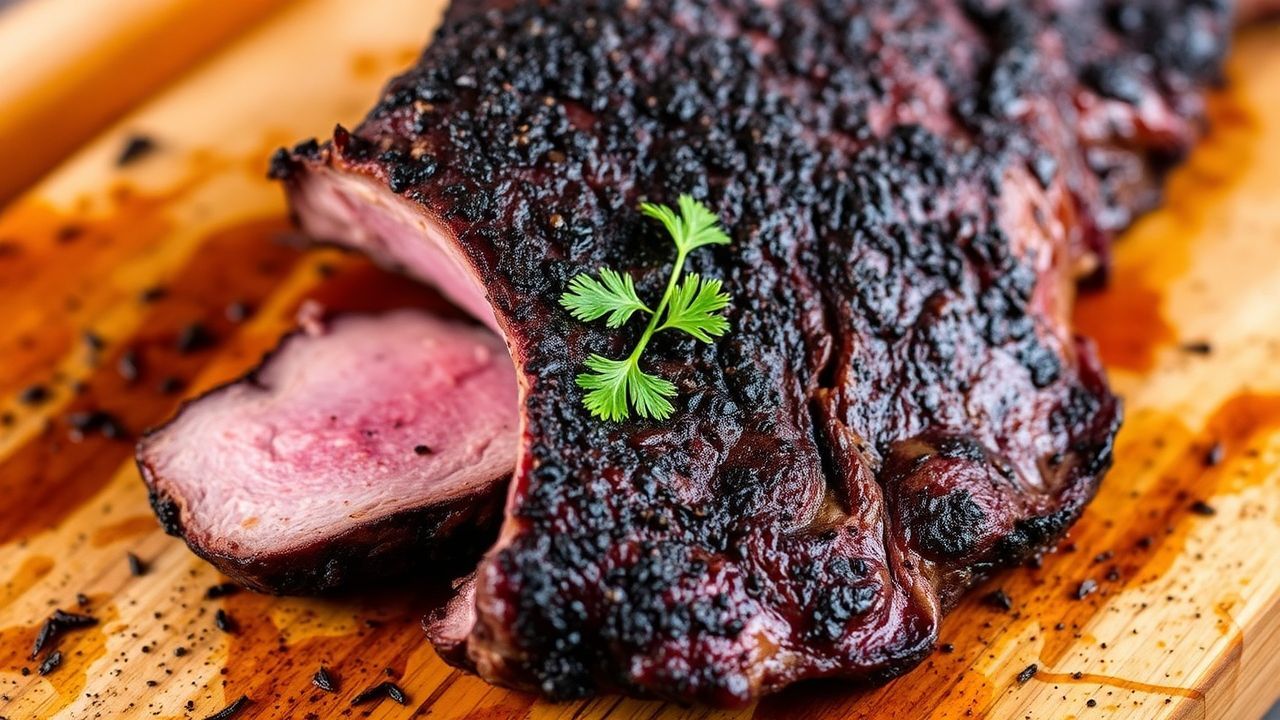
The term brisket bark refers to the dark, crisp crust that forms on smoked brisket. It results from a mix of seasoning concentration, smoke deposits, and the Maillard reaction acting on surface proteins and sugars.
For background on the cut itself, review the anatomy and common uses of brisket. For the chemistry behind crust formation, see the Maillard reaction for a technical explanation of browning and flavor generation.
Prep and Cook Time
Plan the schedule carefully: brisket cooks long and benefits from deliberate pacing. Typical timing helps you manage bark development and internal tenderness without rush.
Estimated time breakdown:
- Preparation: 30 minutes (trimming, rub prep)
- Smoking: 8–12 hours at 225–250°F depending on size
- Resting: 1 hour minimum wrapped
- Total: ~10–14 hours
Ingredients
Use simple, high-impact ingredients so the bark speaks clearly. Heavy, evenly distributed seasoning and a subtle binder deliver consistent coverage.
Keep these items on hand and measured before you start:
- 1 whole packer brisket (10–14 lb), trimmed to about 1/4″ fat cap
- 1/4 cup kosher salt and 1/4 cup coarse black pepper
- 2 tbsp smoked paprika, 1 tbsp garlic powder, 1 tbsp onion powder
- 2 tsp cayenne (optional), 2 tbsp brown sugar (optional)
- Binders: yellow mustard or light vegetable oil to help rub adhesion
- Wood chunks: oak, hickory, pecan, or fruitwoods as desired
Instructions
Trim and set up
Trim the silver skin and any loose fat from the meat side. Leave a clean 1/4″ fat cap on the top to protect muscle during the long smoke.
Trim with a sharp knife and keep a shallow curve to the fat edge so you get even render. Dry the surface with paper towels to help the rub stick.
Mix and apply the rub
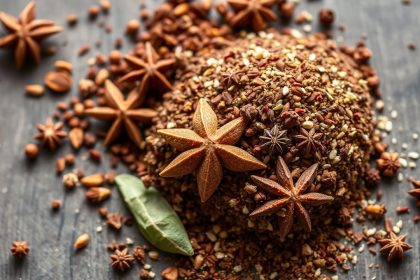
Combine salt, pepper, smoked paprika, garlic powder, onion powder, cayenne and brown sugar in a bowl. Mix until even; taste a small pinch to confirm balance.
Lightly coat the brisket with mustard or oil as a binder. Apply the rub generously, pressing it into the surface—cover every square inch for an even bark foundation.
Smoke technique
Preheat the smoker to 225–250°F (107–121°C). Use steady airflow and consistent fuel to avoid temperature swings that can weaken bark formation.
Place the brisket fat-side up to allow rendered fat to baste the meat. Resist frequent lid openings; each peek releases heat and smoke that your bark needs.
Monitoring, spritzing and the stall
Start checking internal temp after 6–8 hours with a probe. Target 195–205°F for finished tenderness, but rely on probe feel—brisket should yield like soft butter between the probe and your hand.
Sparingly spritz with apple juice or a light vinegar mix every 60–90 minutes if the surface feels dry. Too much liquid softens the rub and prevents proper crusting.
Wrap and finish (optional)
If the brisket stalls around 160–170°F and progress stalls for hours, wrap it tightly in butcher paper or foil to shorten the stall while protecting most of the bark. Butcher paper preserves texture better than foil.
Once the internal temp hits your target, rest the brisket wrapped for at least one hour. Resting redistributes juices and firms the bark for cleaner slicing.
After resting, unwrap and, if any bark zones softened, return the brisket to the smoker at 225°F for 20–30 minutes without wrap to re-crisp sparingly softened areas.
Tips for success
Salt and coarse black pepper form a classic Texas-style bark. Salt extracts surface moisture which concentrates flavor; coarse pepper creates textural contrast when it chars lightly.
Keep smoker temps steady. A stable 225–250°F produces gradual Maillard browning without driving moisture loss or collapsing connective tissue too fast.
Choose wood to complement your profile: oak and hickory give bold smoke for a strong bark, while fruitwoods like apple and cherry add milder sweetness and color. For background on smoking methods, see smoking (cooking).
Practice trimming technique on lower-cost trays first. A consistent, thin fat cap and neat seams promote even cook and predictable bark development.
Serving suggestions
Slice brisket thin against the grain to reveal the contrast between crisp bark and tender interior. Serve simply to let the bark shine: pickles, light sauce on the side, and a neutral starch.
Pairings like charred corn, creamy slaw, or smoked baked beans complement the bark’s smoky, savory intensity. For context on barbecue styles and traditions, consult the barbecue entry.
Quick reference: smoker settings and signals
Use these practical checkpoints during the cook to protect your bark and finish the point predictably. Keep a log to refine timing for future cooks.
- 225–250°F: Smoking window for most briskets.
- 160–170°F: Common stall region; consider wrapping.
- 195–205°F: Typical target range for probe tenderness.
For basic system checks and troubleshooting, refer to our internal guides on smoking techniques and on selecting fuel in best wood for smoking. These pages include equipment setup and wood pairings that influence bark outcome.
FAQ
What is brisket bark and how does it form?
Brisket bark is the dark crust on smoked brisket formed by seasoning concentration, smoke deposits, and browning reactions on the surface. It forms when sugars and proteins undergo the Maillard reaction while smoke compounds deposit on the meat.
Why did my bark go soft after resting?
Soft bark after resting usually means the meat steamed while cooling. Rest brisket wrapped loosely, not sealed tight under hot conditions, and avoid resting in a humid chamber. A short re-crisp in the smoker will restore texture if needed.
How much pepper and salt should I use?
A robust base is roughly equal parts coarse black pepper and kosher salt by volume for a classic profile. Adjust to taste, but keep the ratio close to preserve the structural role each plays in crust formation.
When should I wrap the brisket?
Wrap when the cook stalls near 160–170°F and you need to reduce cook time without over-smoking. Use butcher paper to retain texture; use foil only when speed and moisture retention outweigh bark crispness.
Can I develop great bark on a gas smoker or oven?
You can build good bark with indirect heat if you provide smoke and surface dryness. A dedicated smoker with wood smoke gives the most consistent results, but controlled setups in other appliances can succeed with careful airflow and smoke management.
Final notes
Focus on fundamentals: consistent rub coverage, steady low heat, measured spritzing, and a smart wrap decision. These elements work together to create a brisket bark that looks, smells, and tastes like true barbecue craft.
Track each cook and refine the small details—fat trim, rub grind, and wood mix—until you compress experience into repeatable steps that produce a crisp, flavorful bark every time.
See also: brisket bark