
Imagine reaching for a jar labeled olive oil powder and finding it clumped and slick with oil. That mismatch between expectation and reality frustrates cooks and food technologists alike.
- Why Is My Olive Oil Powder Clumpy and Oily?
- Prep and Cook Time
- Yield and Difficulty Level
- Ingredients
- Instructions
- Understanding Common Causes of Clumping and Oiliness
- How Storage Conditions Affect Olive Oil Powder Quality
- Practical Tips to Keep Your Olive Oil Powder Smooth and Free-Flowing
- Chef’s Notes
- Serving Suggestions
- Nutritional Information
- FAQ
- What exactly is olive oil powder?
- Why does my powder become clumpy and oily?
- Can I fix oily olive oil powder?
- How should I store olive oil powder long-term?
- Is clumpy powder unsafe to eat?
- The Conclusion
- Key takeaway: Humidity, carrier choice, and temperature drive clumps.
- Fixes: Drying, sieving, and anti-caking agents restore flow.
- Storage: Airtight, cool, opaque containers extend shelf life.
- Make-or-buy: Encapsulation quality dictates stability.
Why Is My Olive Oil Powder Clumpy and Oily?
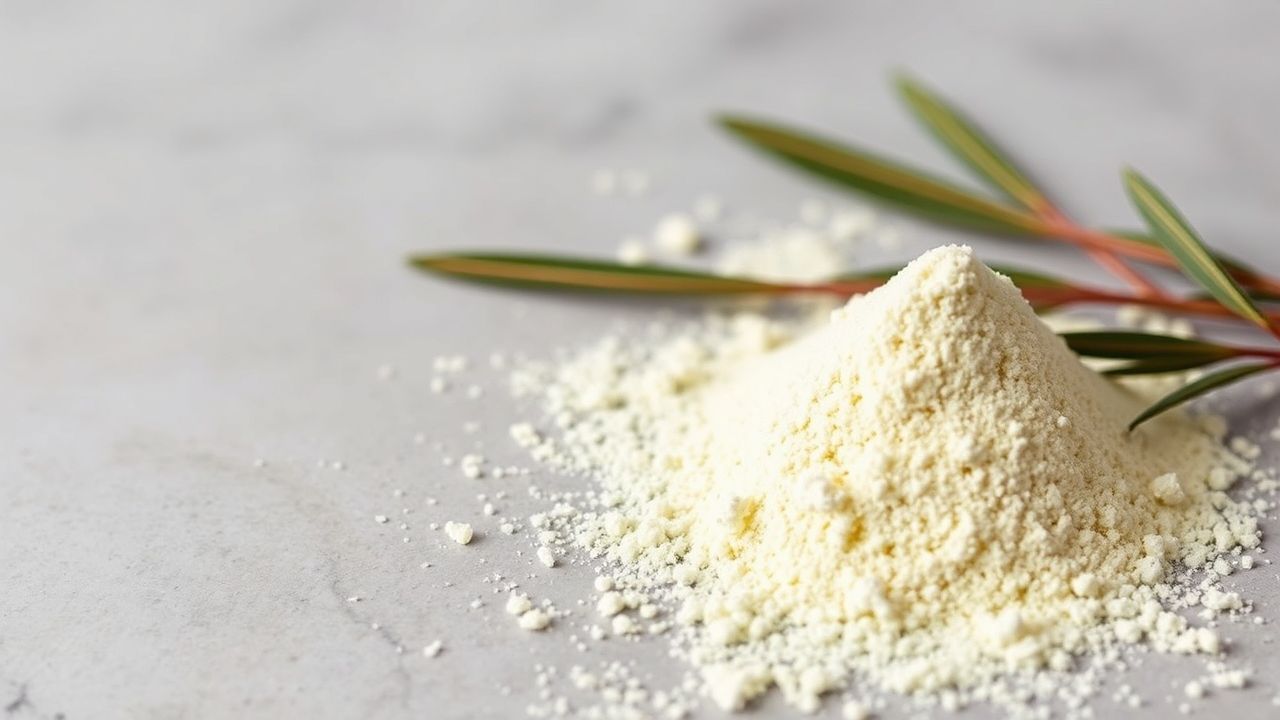
Olive oil powder is a powdered form of oil created by binding oil to a carrier. When the encapsulation or storage fails, the oil migrates to the surface and particles stick together.
Two mechanics explain the problem: moisture makes particles tacky, and weak encapsulation releases oil. Understanding both helps you choose the right fixes and storage steps.
Prep and Cook Time
Preparation: 10 minutes. This covers mixing oil with carrier and initial checks for texture. Keep tools dry to limit humidity pickup.
Cook / Dry time: None for most commercial powders. For homemade batches, a low-temperature drying cycle of about 15–20 minutes reduces surface moisture without degrading flavor.
Yield and Difficulty Level
Yield: About 2/3 cup (approx. 80 g) of finished powder from 1 cup oil and 1 cup carrier. Yield varies with carrier absorption rate and mixing efficiency.
Difficulty: Medium. The process requires attention to carrier selection, mixing technique, and moisture control to avoid oily clumps.
Ingredients
Core components: High-quality extra virgin olive oil and an appropriate carrier, most commonly maltodextrin. Carrier choice determines absorption and shelf stability.
Optional: A pinch of sea salt or dried herbs for infusion is common. For alternate texture, try tapioca or potato starch as the carrier in small trials first.
Instructions
Bring oil and carrier together slowly to ensure uniform encapsulation. Pour oil gradually into the carrier while stirring to create a sand-like crumb, indicating adequate absorption.
Dry the mix on a shallow tray at low temperature if homemade, then sieve to break lumps and store immediately in airtight packaging. Quick handling reduces exposure to ambient humidity.
- Combine: Add oil slowly to maltodextrin while mixing.
- Texture: Aim for crumbly, sand-like mix; that shows good oil uptake.
- Dry: Spread thinly; dry at ~50°C (120°F) for 15–20 minutes if needed.
- Sift: Break clumps with a fine sieve or fork once cool.
- Store: Seal in airtight container away from heat and light.
Understanding Common Causes of Clumping and Oiliness
Moisture absorption is the most frequent culprit. When ambient humidity contacts powder, surface tension increases and particles adhere, creating clumps.
The carrier matters too. Maltodextrin with the wrong DE value can behave gummy rather than dry. Low-DE maltodextrin usually stabilizes oil better than high-DE variants.
How Storage Conditions Affect Olive Oil Powder Quality
Temperature swings force oil migration. Heat softens the encapsulate and allows oil to weep out; cooling then leaves small oily clusters behind. Keep powder below 21°C (70°F) when possible.
Humidity is equally damaging. Use moisture-barrier packaging and consider a desiccant packet in the container. For more on storing delicate powders, see our internal guide at Keeping Herbs and Powders Fresh and the basics at Powder Storage Basics.
Practical Tips to Keep Your Olive Oil Powder Smooth and Free-Flowing
Choose packaging that resists water vapor: vacuum-sealed pouches, glass jars with tight seals, or metal tins with liners. Opaque containers also protect the oil from light-driven oxidation.
When using the powder, avoid steam and wet hands. Small habits—using a dry spoon and scooping over a dry surface—prevent immediate re-clumping.
- Include a food-grade desiccant to control moisture.
- Add a small pinch of anti-caking agent like rice flour or food-grade silica if long storage causes clumping.
- Break clumps with a fork, sift, or briefly warm in a dry pan to redistribute oil.
- Make smaller batches when humidity is high.
Spray-dried powders generally exhibit fewer oily clumps than hand-mixed home batches because the process creates a consistent wall around oil droplets. If you experiment at home, test small batches and record carrier ratios for reproducible results.
Chef’s Notes
Infuse oil with herbs or garlic before powdering to boost aroma, but strain solids thoroughly to prevent moisture pockets. Infused oil can add moisture if not well filtered.
Substitute carriers to test mouthfeel changes. Tapioca and potato starches yield different textures; record sensory notes and shelf stability data for each variation.
If oil separates and clumps recur after fixes, it usually signals poor encapsulation or oxidized oil. Replace the batch if sensory tests fail.
Serving Suggestions
Olive oil powder works as a finishing seasoning on vegetables, breads, and salads. Use light, even sprinkles to avoid concentrated oily pockets on the food surface.
Combine the powder with dried herbs or citrus zest for a seasoning blend. The powder adds olive flavor without the wet mouthfeel of liquid oil, useful on crisp snacks and fried garnishes.
Nutritional Information
Olive oil powder retains much of the fat profile of olive oil, depending on carrier ratio. A typical sample per 10 g often shows calories driven mainly by fat.
Use the powder as a flavor tool rather than a primary fat source when precise nutrition is critical, since carrier percent dilutes fat content compared with pure oil.
| Nutrient | Amount per 10g |
|---|---|
| Calories | 90 kcal |
| Protein | 0 g |
| Carbohydrates | 3 g |
| Fat | 10 g |
FAQ
What exactly is olive oil powder?
Olive oil powder is liquid olive oil encapsulated within an edible carrier to form a dry, free-flowing powder. Encapsulation traps oil droplets and allows the powder to be sprinkled or blended into dry mixes.
Why does my powder become clumpy and oily?
Clumping arises from moisture uptake and oil migration. High humidity, poor encapsulation, and temperature swings all promote sticking and surface oiling.
Can I fix oily olive oil powder?
Yes. Sift to remove clumps, dry briefly at low heat to drive off surface moisture, or add a small amount of food-grade anti-caking agent. Severe oil separation usually requires replacement.
How should I store olive oil powder long-term?
Store in airtight, opaque containers with a desiccant at cool, stable temperatures. Limit opening frequency and keep away from heat sources and direct light to reduce oxidation and moisture ingress.
Is clumpy powder unsafe to eat?
Clumps are usually a quality issue rather than a safety hazard. However, if the powder smells rancid, discard it to avoid off-flavors and possible degraded compounds.
The Conclusion
Clumping and oiliness reflect physical and chemical behavior: moisture, carrier performance, and temperature. Addressing each factor—encapsulation, drying, and storage—returns the powder to a usable state or warns you to replace it.
Follow dry handling practices, test carriers when experimenting, and store powders with barriers to moisture. These steps reduce oily clumps and keep your olive oil powder functional and flavorful.
Further reading on related topics: olive oil, maltodextrin, and humidity.
See also: olive oil