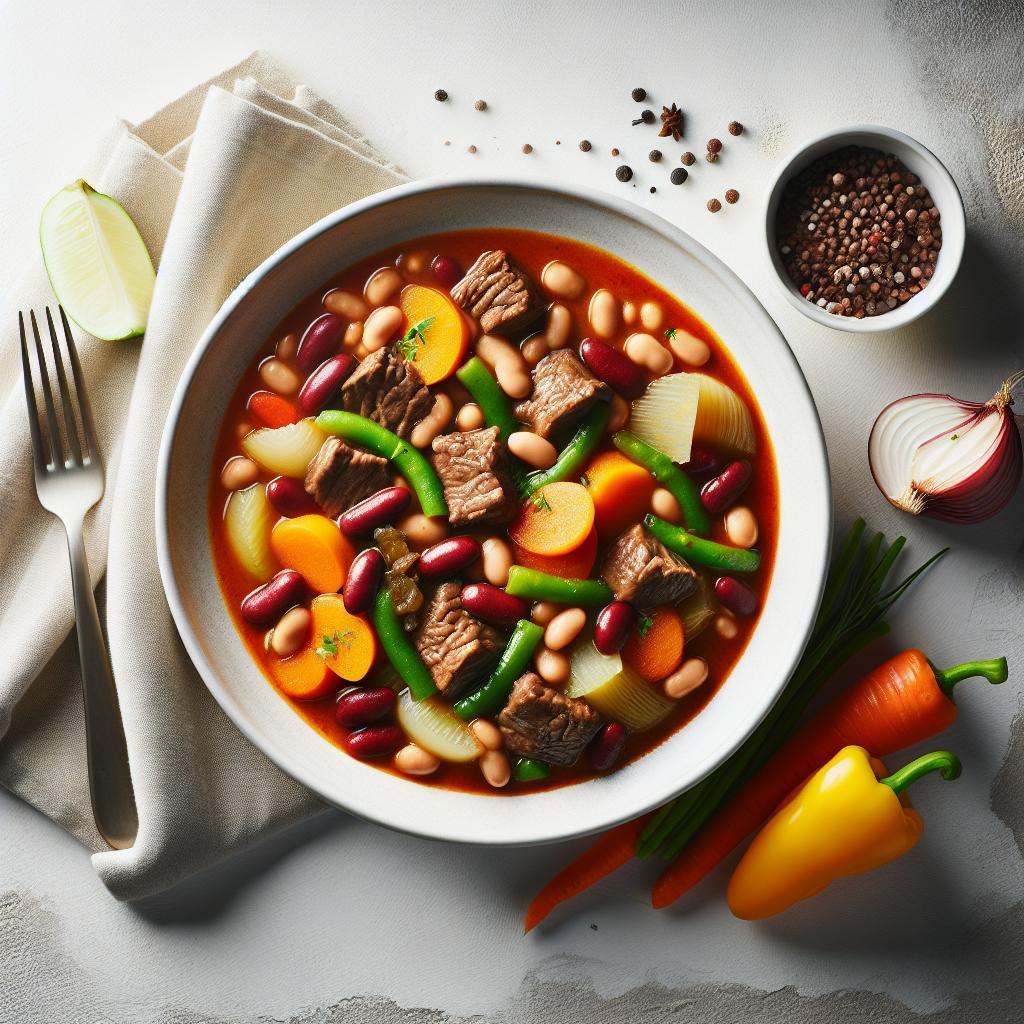

When the evening chill sets in, a properly executed beef stew restores appetite and morale. This beef stew blends slow-simmered, richly seasoned beef with tender beans to produce deep, layered flavor and a velvety texture.
- Slow simmering builds depth: low heat converts collagen into silky texture for a better beef stew.
- Soak beans: an overnight soak yields even cooking and improved digestibility.
- Brown then deglaze: fond adds concentrated umami that enriches the sauce.
- Make ahead: resting overnight improves texture and flavor integration.
Prep and Cook Time for Beef Stew
Preparation: 20 minutes. Clear the work area, trim beef into uniform cubes, and organize vegetables and drained soaked beans. A tidy mise en place speeds searing and prevents overcooking.
Cooking: 2 to 2½ hours. Maintain a gentle simmer to let connective tissue break down and beans reach full tenderness without splitting. Adjust time if using a slow cooker or pressure cooker.
- Preparation: 20 minutes
- Cooking: 2 hours 30 minutes
- Total Time: 2 hours 50 minutes
Yield
Serves 6 generous portions. Pair this beef stew with mashed potatoes, buttered egg noodles, or polenta to showcase the sauce and extend servings.
Scale easily: multiply ingredients by 1.5 for a crowd or halve for two dinners. Leftovers improve with rest and store well for batch meals.
Difficulty Level
Medium. Technique focuses on searing, controlled simmering, and monitoring bean texture. These skills reward attention rather than advanced equipment.
If you opt for a slow cooker, perform the browning steps first to retain flavor complexity. For quicker results, a pressure cooker will reduce time but needs careful timing to avoid overcooked beans.
Ingredients
Choose well-marbled beef chuck for collagen-rich texture and dried kidney beans for a creamy bite when cooked properly. For background on beef cuts, see the beef entry.
Keep pantry spices focused: smoked paprika, cumin, thyme, and bay leaves add aromatic depth without competing with the beef. For reference on legumes, consult the kidney beans page.
- 2 lbs beef chuck, cut into 1½-inch cubes
- 1 cup dried kidney beans, soaked overnight and drained
- 1 large yellow onion, finely chopped
- 3 cloves garlic, minced
- 2 medium carrots, diced
- 2 stalks celery, chopped
- 1 can (14 oz) crushed tomatoes
- 4 cups beef broth, low sodium
- 2 tbsp tomato paste
- 1 tbsp smoked paprika
- 1 tsp ground cumin
- 1 tsp dried thyme
- 2 bay leaves
- Salt and freshly ground pepper, to taste
- 3 tbsp olive oil
- Fresh parsley, chopped (for garnish)
Instructions
Work in stages: sear beef first, then sweat aromatics, deglaze, and combine with beans and liquid. This ordered sequence builds flavor through Maillard reaction and careful extraction of fond.
Keep the simmer low once combined; a vigorous boil tightens meat fibers and risks splitting beans. Use a heavy-bottomed pot for even heat distribution and fewer hotspots.
- Prepare the beef: Pat beef cubes dry to encourage browning. Heat 2 tbsp olive oil in a heavy pot over medium-high heat and brown in batches for 4–6 minutes per batch; remove browned pieces.
- Sauté the aromatics: Reduce heat to medium and add remaining oil if needed. Sauté onion, carrots, and celery 6–7 minutes until softened, adding garlic in the last minute to avoid burning.
- Deglaze and build: Stir in tomato paste and cook 1–2 minutes to caramelize. Add crushed tomatoes and beef broth, scraping up browned bits to dissolve concentrated flavor into the liquid. For the science behind browning, review the Maillard reaction overview.
- Add spices and beans: Return beef to the pot with soaked beans, smoked paprika, cumin, thyme, and bay leaves. Season moderately; adjust salt near the end when liquids reduce.
- Simmer slowly: Bring to a gentle boil, then lower heat to maintain a barely perceptible simmer. Cover partially and cook 2–2½ hours, stirring occasionally until beef is fork-tender and beans are fully cooked.
- Finish: Remove the lid for the last 15 minutes to reduce liquid for a naturally thickened stew. Discard bay leaves, taste, and finish with chopped parsley before serving.
Key technique: Browning and Deglazing
Browning develops umami via the Maillard reaction; do not overcrowd the pan or the meat will steam. Deglaze with broth or a splash of wine to lift fond and fold it back into the sauce.
This capture of concentrated flavors is what defines a great beef stew. For broader context on simmered dishes, see the stew article.
Tips for Success with Your Hearty Beef and Bean Stew
Small technique choices change the result: choose chuck for marbling, do not skip the sear, and keep the simmer low. These adjustments produce tender beef and intact beans without overcooking.
Test beans partway through cooking and add liquid gradually; starch release will thicken the pot. If you use canned beans, add them late to avoid mushiness.
- Beans: Soak dried beans overnight to reduce cooking time and ensure uniform hydration. If using canned beans, add in the last 30 minutes.
- Beef cut: Use well-marbled cuts like chuck for collagen breakdown and silky mouthfeel.
- Flavor layering: Brown meat and briefly toast spices to release essential oils and aroma compounds.
- Make-ahead: Refrigerate overnight; flavors meld and texture often improves with rest.
- Adjust thickness: Stir in extra broth if too thick; mash a few beans to thicken naturally if too thin.
- Slow cooker: After browning, transfer to a slow cooker and cook on low 6–8 hours for similar tenderness. For guidance on extended low-heat methods, consult the slow cooking page.
Serving Suggestions
Serve this stew piping hot over creamy mashed potatoes, buttered egg noodles, or polenta to absorb the sauce. A sprinkle of fresh parsley or a dollop of sour cream brightens the dish.
Pair with crusty whole-grain bread for dipping and a crunchy green salad to cut richness. These accompaniments keep the meal balanced and highlight the stew’s texture and depth.

| Nutrient | Amount per Serving |
|---|---|
| Calories | 430 kcal |
| Protein | 38 g |
| Carbohydrates | 28 g |
| Fat | 15 g |
Q&A
This section answers practical questions cooks ask when preparing a beef-and-bean stew. Expect concise, actionable answers that you can test in the kitchen.
The responses focus on technique, substitutions, and storage to preserve both flavor and safety. Use them to adapt the recipe to equipment and dietary needs.
FAQ
What makes this beef and bean stew especially comforting?
The combination of collagen-rich beef and starchy beans produces a velvety mouthfeel and sustained satiety. Slow simmering concentrates flavors and creates a cohesive, warming dish ideal for cool weather.
Layered browning, tomato paste caramelization, and low heat blending make the pot feel unified and comforting on the palate.
Can I skip soaking beans?
Soaking reduces cooking time and helps beans hydrate uniformly. If you use unsoaked dried beans, expect a much longer simmer and uneven textures; canned beans are a practical shortcut when time is short.
Always ensure dried kidney beans reach full tenderness; undercooked beans can cause digestive upset, so test frequently if you skip soaking.
How do I adapt the recipe for a slow cooker?
Brown the meat and sauté vegetables first to capture fond and caramelized aromatics. Transfer all components to the slow cooker and cook on low 6–8 hours until beef and beans are tender.
If using a timer, verify bean tenderness before serving and adjust final seasoning after reduction. Slow, low heat yields consistent collagen breakdown and a silky sauce.
Are substitutions possible for dietary preferences?
Yes. For a vegetarian version, replace beef with hearty mushrooms and use lentils or chickpeas instead of kidney beans. Increase umami with miso or soy sauce to compensate for the missing beef richness.
Adjust cooking times: lentils cook faster than dried beans and do not require long braising; plan accordingly to avoid disintegration.
How should I store and reheat leftovers?
Cool quickly and refrigerate in an airtight container for up to 4 days, or freeze for 2–3 months. Reheat gently over low heat and add a splash of broth if the sauce tightens excessively.
Allow reheated stew to rest briefly off heat to let gelatin settle and flavors rebind before serving for best texture.
See also: For technical background on cooking methods referenced here, consult entries on beef, kidney beans, and the Maillard reaction.
See also: beef stew